Forest Bathing · Shinrin-Yoku

What is forest bathing?

Forest bathing — Shinrin-Yoku — is the deliberate, unhurried immersion of the senses in a forest environment. No destination, no pace, no phone. Immerse yourself in the art and the science of the practice, and in the profound healing effects of connecting with nature.
Definition

The essence of forest bathing: a journey to inner peace.

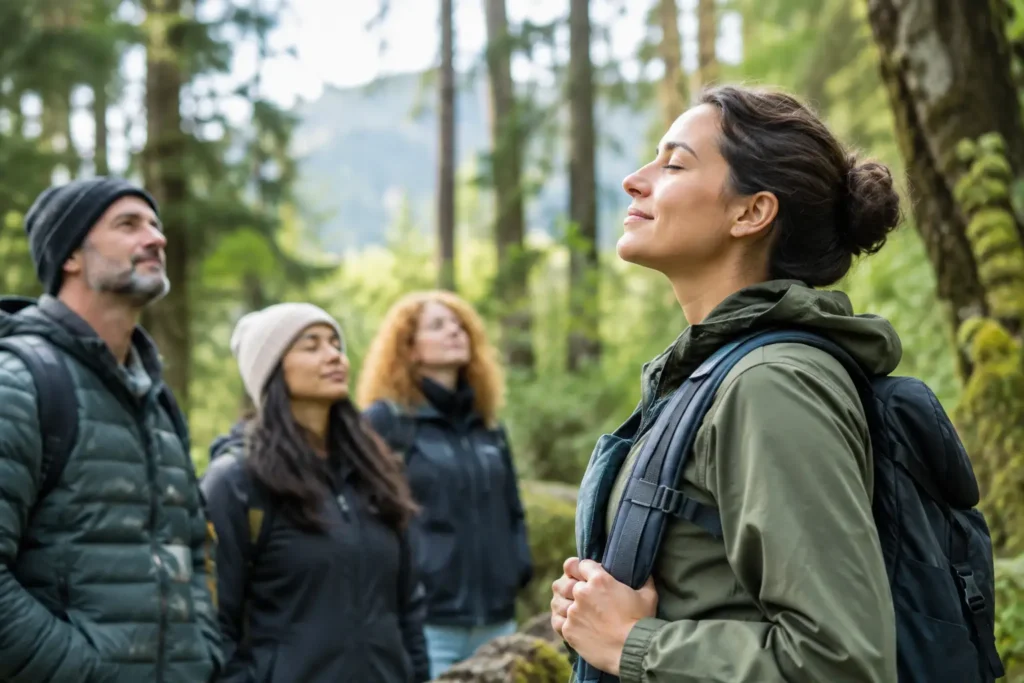
In the bustling chaos of modern life it is easy to become disconnected from nature and from ourselves. Forest bathing, also known as Shinrin-Yoku, is a therapeutic practice that encourages us to slow down, step into the forest, and embrace the healing power of nature.
Through guided experiences you learn to immerse yourself fully in the natural world, allowing the gentle whispers of the wind and the rustling leaves to soothe your soul. The essence of forest bathing lies in the mindful connection with the environment — bringing about serenity, clarity and profound self-discovery.
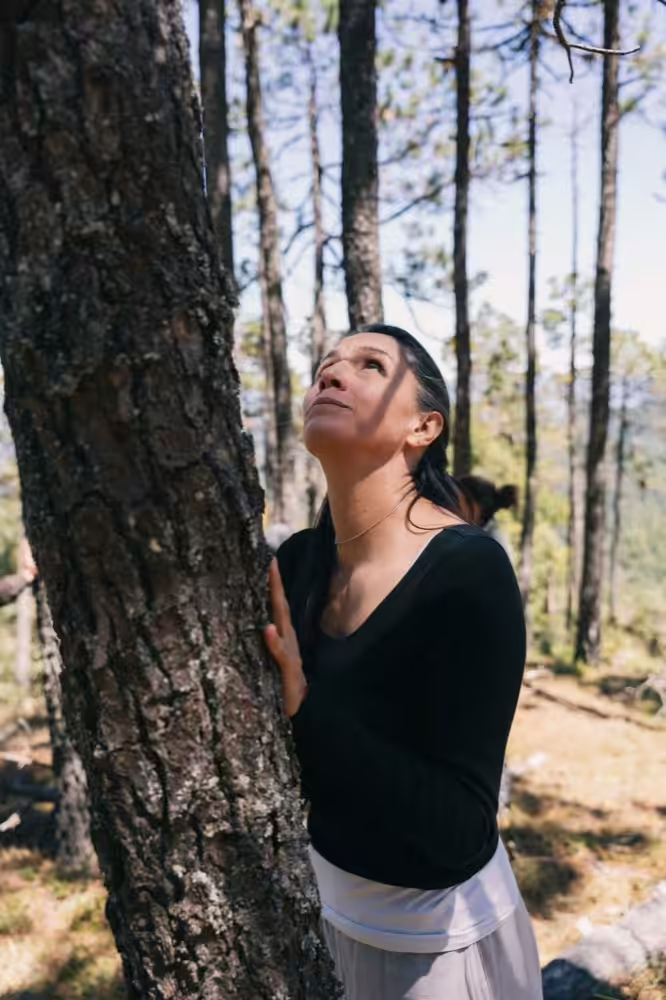
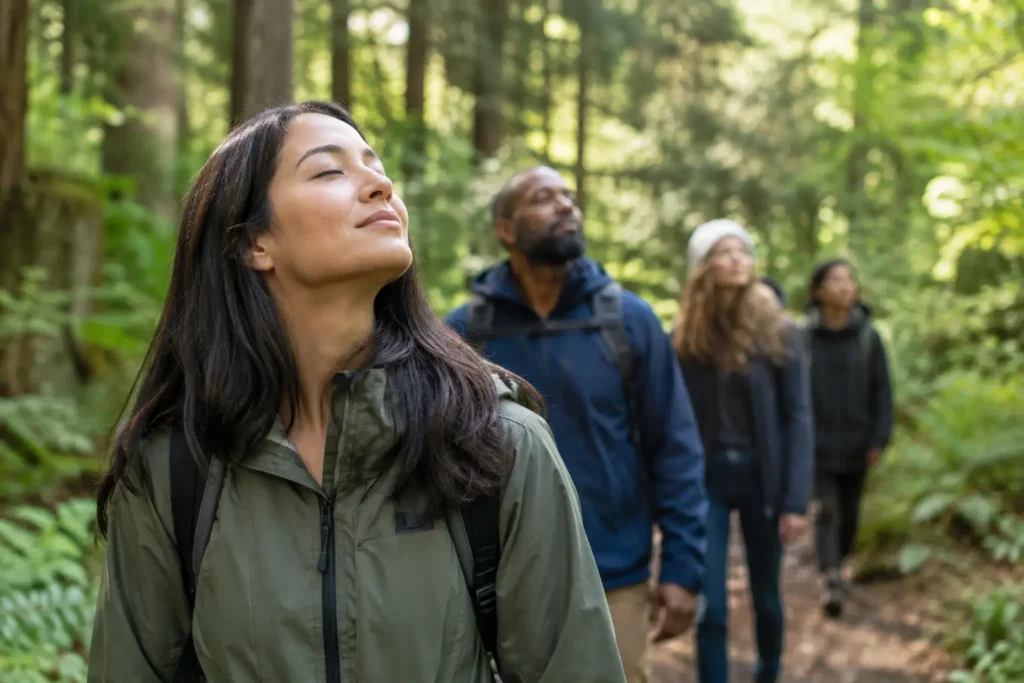
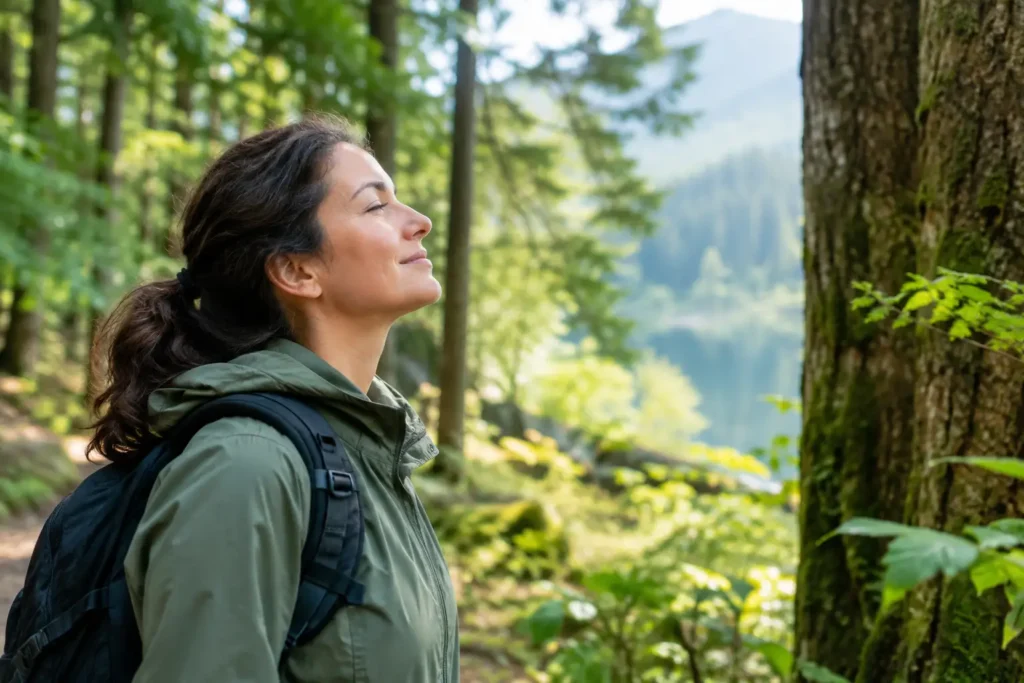
Looking up into the canopy of a broadleaf forest
Looking up: the first exercise of almost every session.
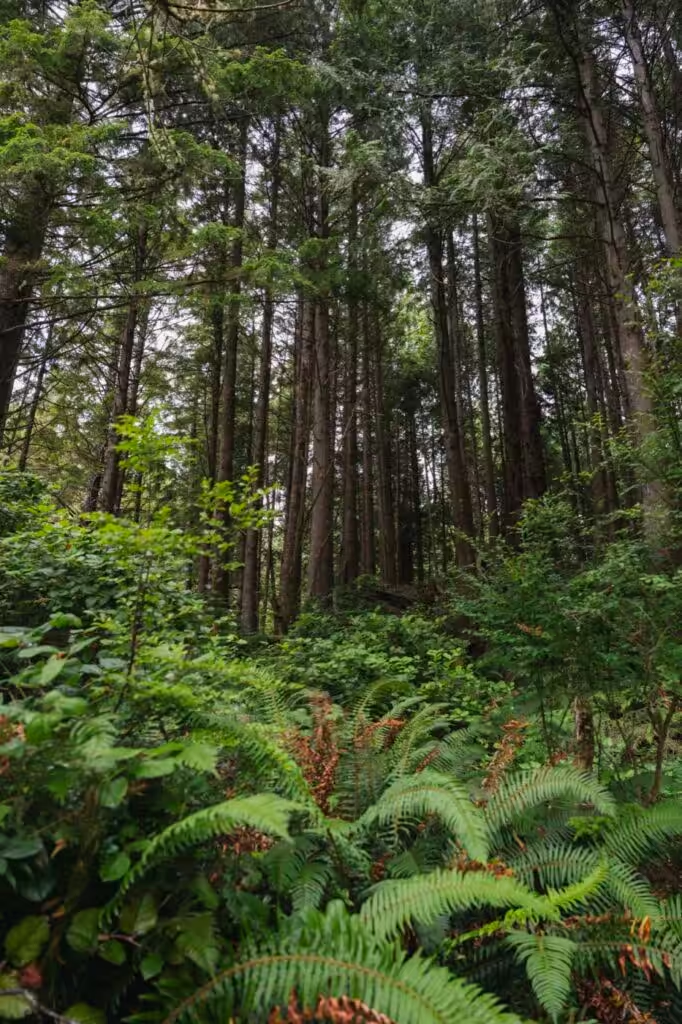
Narrow path leading through a misty forest
森林浴 — “taking in the forest atmosphere”.
Origins

Shinrin-Yoku: Japanese public health policy, 1982.

The term was coined by the Japanese Forestry Agency as a national health program: citizens were encouraged to spend slow, sensory time in the country’s forests as a counterweight to urban stress. Research followed, and with it a network of certified forest therapy bases across Japan.
The science

The science behind nature’s healing power.

As humanity becomes more aware of the importance of well-being, research keeps uncovering the benefits of time in nature. Forest bathing is backed by empirical evidence: lower cortisol, calmer cardiovascular rhythm, stronger immune response, restored attention. These are the numbers we teach — with the studies behind them.
+ 0 %

natural killer cell activity

Li et al., 2008 — NK activity rose about 50% after a three-day forest trip and stayed elevated for a month.
− 0 %

lower cortisol

Park et al., 2010 — salivary cortisol was 12% lower after forest walks than after comparable city walks, pulse 6% lower.
+ 0 %

higher creativity scores

Atchley et al., 2012 — four days in nature without devices raised creative problem-solving by 50%.
0 studies

agree on the direction

Twohig-Bennett & Jones, 2018 — a meta-analysis of 143 studies links greenspace exposure to lower cortisol, heart rate and blood pressure.
0 min

is enough to measure an effect

Hunter et al., 2019 — a twenty-minute “nature pill” lowered cortisol; the effect was strongest between 20 and 30 minutes.
0 h

of forest walking improved sleep

Morita et al., 2011 — two-hour forest walks improved sleep duration and quality in people with sleep complaints.
Our curriculum explores these foundations in depth — what terpenes are and how they affect immunity, how evergreen trees, natural light and forest air support physical health, and what forty years of Japanese, Korean and European research agree on.
Medical aspects

What the forest does to the body.

Forest bathing brings new zest for life, helps to reduce stress and replenishes energy reserves. The immunologist Dr. Qing Li was able to prove that fresh forest air has a positive effect on our defenses.
Hand resting on rough tree bark
Contact: bark, moss, resin — the phytoncides are in the air around them.

Biophilia — the attraction of natural elements

The Greek term biophilia comes from the well-known psychologist Erich Fromm, who used it to describe people’s love for living things and their longing for nature. Biophilia means as much as “the love of life.” We feel comfortable and secure in the forest. The color green stands for life, nature, fertility, renewal and growth and has a special effect on us. As soon as people connect with their natural roots, the effect of biophilia occurs.
The forest brings with it a positive energy. Insecurities, bad mood, anger or lack of strength are transformed into increased creativity and new, positive energies through the fascination of nature. Spending time in the forest can reduce anger, anxiety, high blood pressure, heart conditions and even chronic pain. Well-being and vitality are increased by forest bathing.

Forest bathing reduces stress and minimizes the risk of permanent stress becoming the trigger for illness. Blood pressure, pulse and stress hormones are brought into balance.
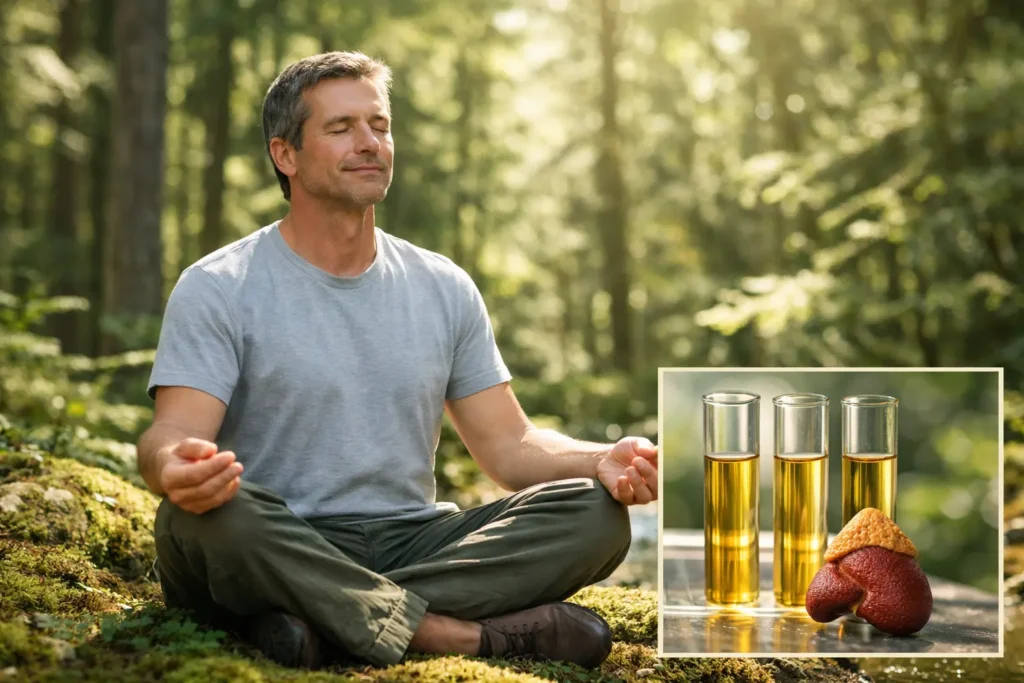
The fragrances present in the forest have a relaxing effect on the human body. Terpenes are fragrances emitted by trees. They smell good and have a positive effect on our health. Phytoncides are plant fragrances emitted mainly by coniferous trees; they serve as a defense against fungi, bacteria and insects. When a person absorbs these substances through breathing, positive effects set in: a calm feeling, lower blood pressure, a lower level of the stress hormone cortisol, improved heart-rate variability, and an increase in killer cells that fight pathogens.
Spending time in the forest activates the body’s own defense cells, which support the immune system. This is due to the essential oils emitted by the trees and the special light conditions in the forest. The number of killer cells increases with the stay in the forest — cells that fight pathogens and cancer.
How to practice

The art of sensory awakening.

In our fast-paced lives we overlook the sensory wonders of the natural world. Forest bathing invites us to awaken our senses and engage with the environment in a mindful, intentional way: to see the forest with fresh eyes, hear its symphony with heightened awareness, feel the earth beneath your feet, inhale the healing scents — and perhaps even taste the gifts of nature. A first session, in six steps:
Looking up into the canopy of a broadleaf forest

01 · Arrive

Stop at the edge of the trees. Three slow breaths. Phone off, not silent — off.
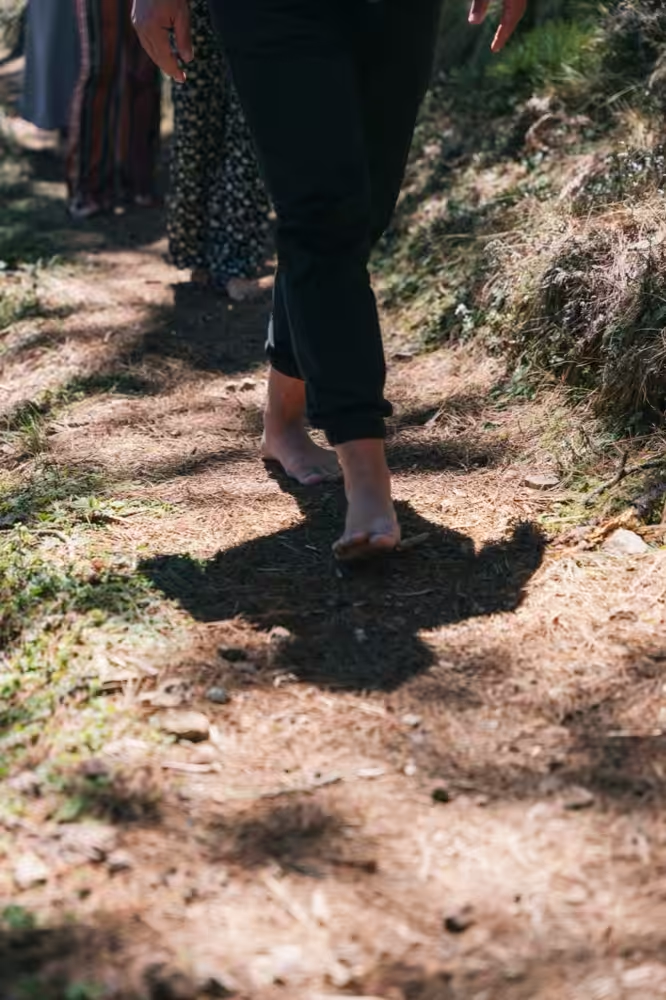
Bare feet on a forest floor of moss and leaves

02 · Ground

Shoes off where it is safe. Feel temperature, texture, moisture. Walk slower than feels reasonable.
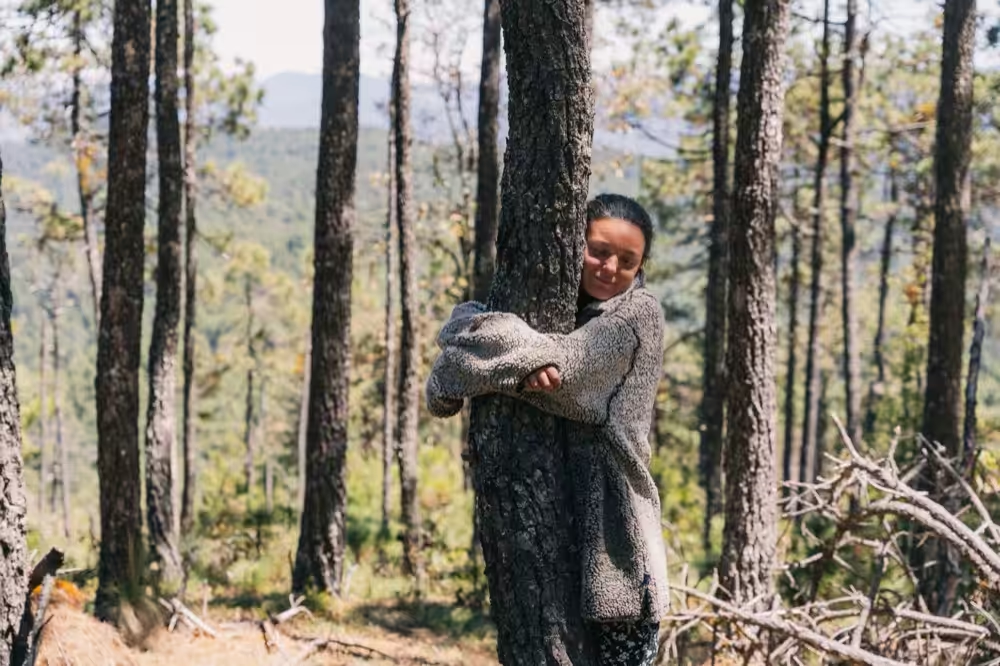
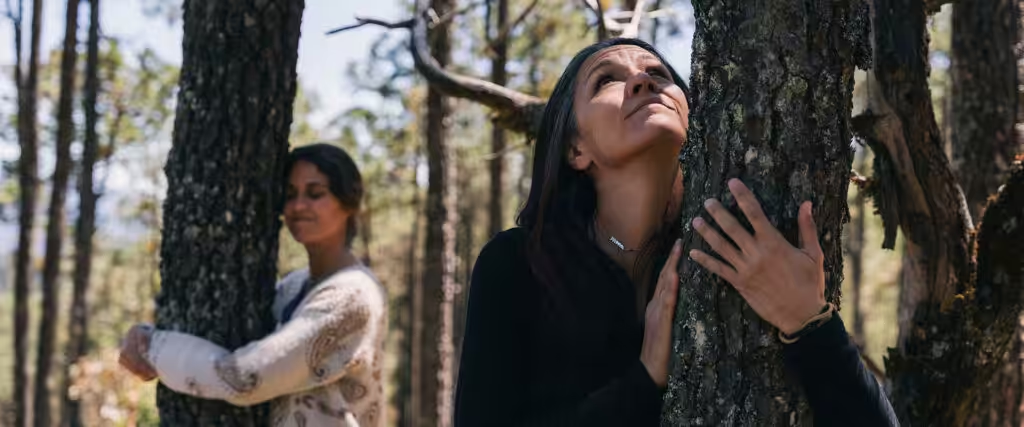
Hand resting on rough tree bark

03 · Touch

Choose a tree. Bark, moss, resin, roots. Stay with one sense for several minutes.
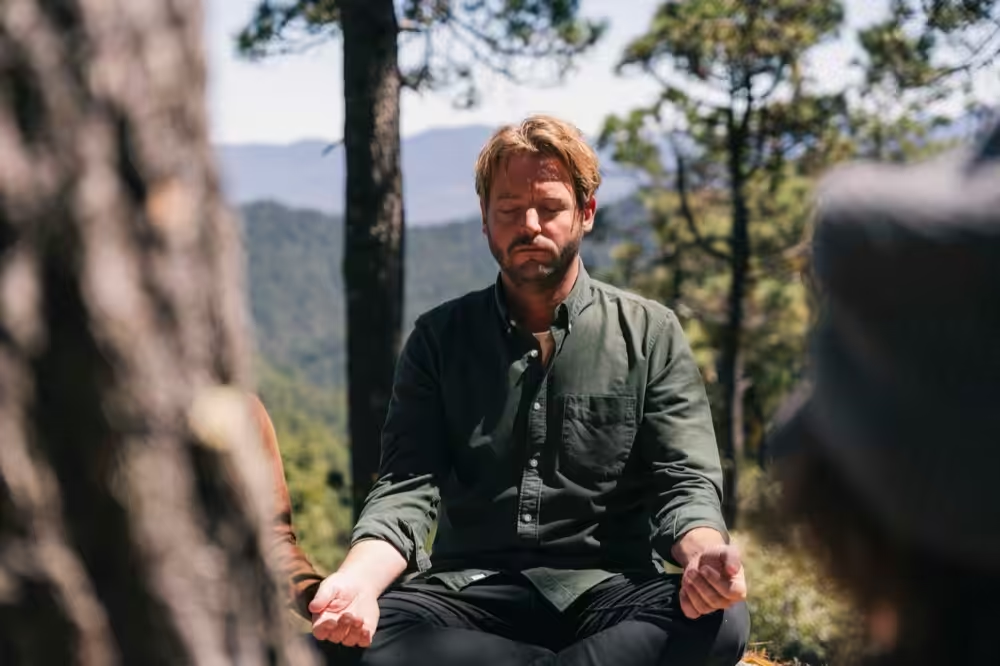
Person meditating while leaning against a tree trunk

04 · Sit

Find a sit spot. Let sounds arrive from far to near. Fifteen minutes is plenty.
Fingers brushing over fern fronds

05 · Silence

A stretch of the walk in complete silence — the element participants remember years later.
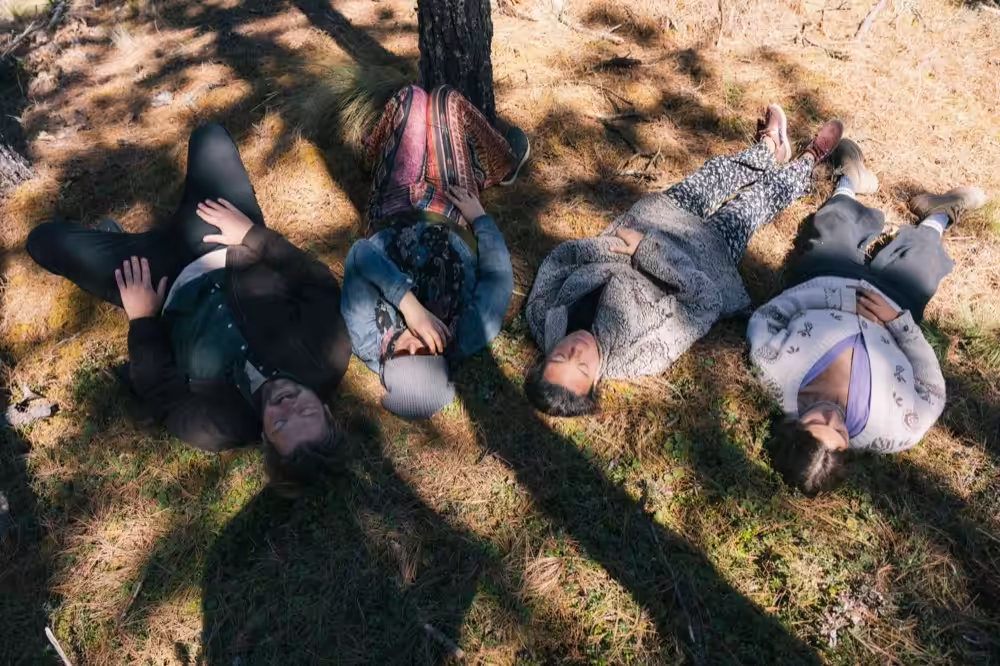
Hands touching soil and roots on the forest floor

06 · Close

Rest on the ground. Name one thing you noticed. Leave slower than you arrived.
Deeper practice

Movement, ritual, and the sacred bond.

Mindful movement

Yoga and meditation in nature

Incorporating mindful movement elevates the experience to a deeper state of mindfulness. Yoga and meditation are time-honored practices that cultivate inner peace and balance; integrated with the tranquility of nature they foster a harmonious connection between mind, body and environment. You learn to synchronize your breath with the rhythm of the forest, to move with grace and intention, and — through gentle poses and guided meditations amid the trees — to cultivate presence and inner stillness.
Forest healing rituals

Embracing ancient traditions

Throughout history, cultures around the world have recognized the sacred bond between humans and the natural world, fostering age-old rituals and ceremonies to honor this connection. Forest bathing offers an opportunity to embrace these traditions and tap into their transformative power. Our course guides you through time-honored practices that deepen your reverence for nature — a profound sense of gratitude for the gifts of the earth and a heightened sense of interconnectedness with all living beings.
Learn to guide

Begin your journey of forest bathing.

Unlock inner peace and well-being with our online course — designed to guide you through a transformative experience of self-reconnection and healing, for yourself or to guide others professionally.
Questions

Frequently asked questions.

Is forest bathing the same as hiking?

No. A hike has a destination and a pace. A forest bathing session covers a few hundred meters in two hours — the point is sensory attention, not distance.
Guided sessions run two to three hours. A personal practice can be twenty minutes; research measures effects from a single thirty-minute stay.
A forest helps, but a city park, a river bank or a single old tree in a garden all work. The practice is about attention, not wilderness.
Four decades of Japanese, Korean and European research measure lower cortisol, lower blood pressure, higher natural killer cell activity and better sleep after forest exposure. The studies are listed in the science section above.
Yes. Treeming’s accredited certification (ICAHP, IPHM, CPD, IAOTH) trains you to guide groups safely and professionally — 150+ video lessons, 150+ audio lessons, lifetime access.
Forest bathing is low-intensity and adaptable. Sessions for children, seniors and people with limited mobility are part of the guide training.
Further reading

From the Treeming journal.

Looking up into the canopy of a broadleaf forest
Free mini course · no card required

See what forest bathing actually involves.

A free preview of the forest bathing guide training: the first exercises, a look inside the curriculum, and the person who teaches it.
This field is for validation purposes and should be left unchanged.
Name(Required)
Instant access by e-mail. No spam, unsubscribe anytime.
Looking up into the canopy of a broadleaf forest
Free mini course · no card required

See what forest bathing actually involves.

A free preview of the forest bathing guide training: the first exercises, a look inside the curriculum, and the person who teaches it.
This field is for validation purposes and should be left unchanged.
Name(Required)
Instant access by e-mail. No spam, unsubscribe anytime.
Based on 4853 Reviews 4.9