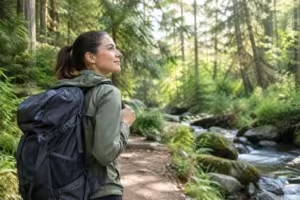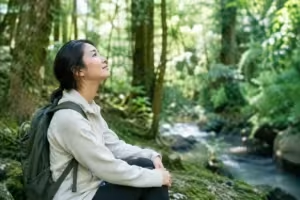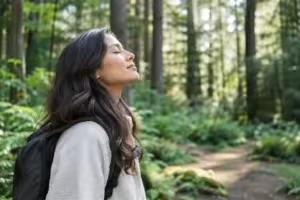
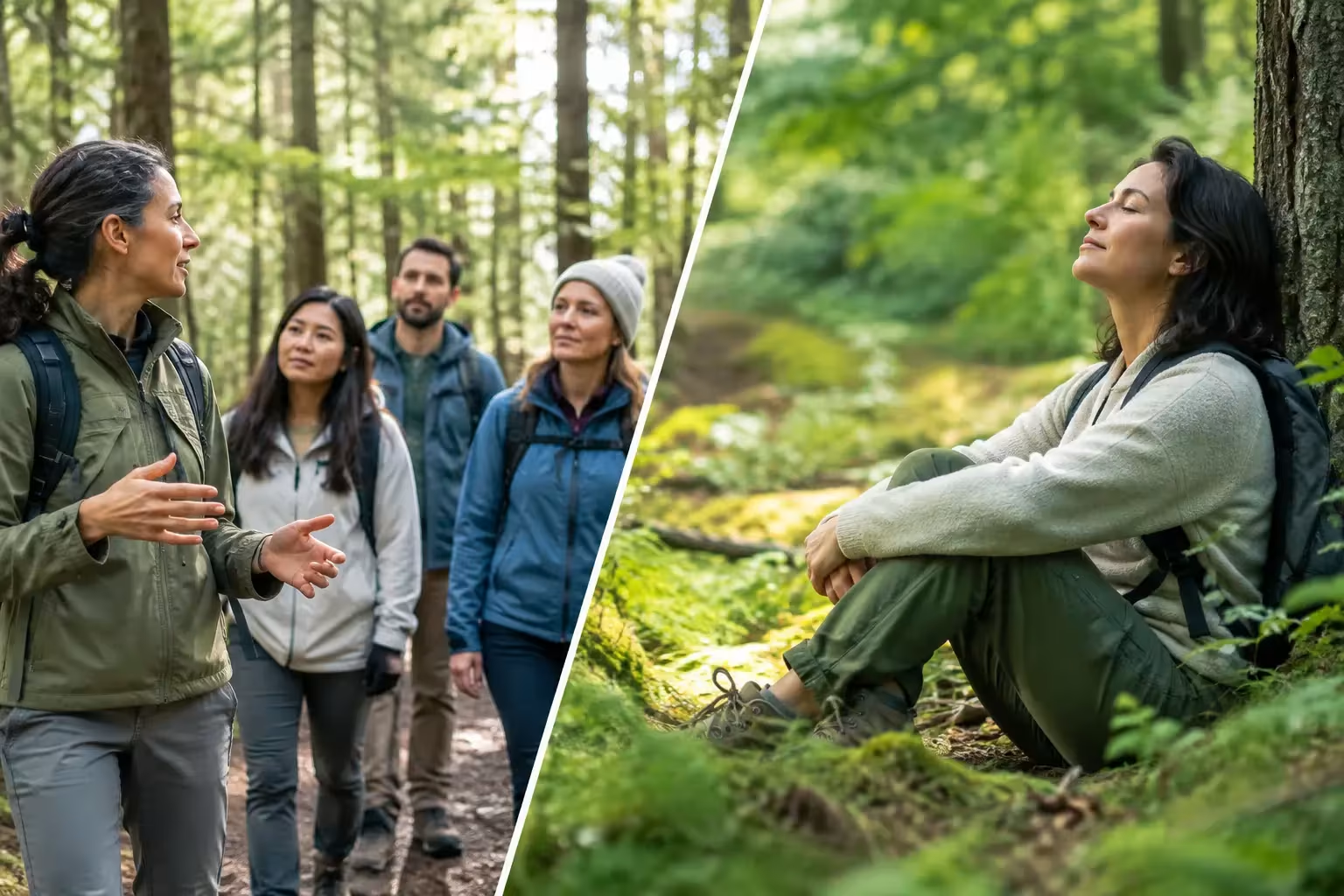
A quiet trail can ask very little of you. It does not need you to perform, optimize, or explain how you feel. Yet the way you enter that quiet matters. Guided versus solo forest bathing is not a contest between a better and worse practice. It is a question of what kind of support, structure, and spaciousness will help you truly arrive in nature.
Forest bathing, also known as Shinrin-Yoku, is the intentional practice of slowing down and engaging the senses in a natural setting. It is not a hike measured by distance, nor an outdoor workout with another goal attached. Research into time spent in natural environments suggests meaningful potential benefits for stress reduction, attention restoration, and emotional well-being. The experience itself, however, can feel very different when a trained guide is holding the container.
What a Guided Forest Bathing Session Offers
A guided session is designed to help participants move from the pace of daily life into a more receptive relationship with the forest. A guide does not lecture participants through the woods or rush them toward a destination. Instead, they offer gentle invitations that bring attention to sight, sound, texture, scent, breath, and the living systems around them.
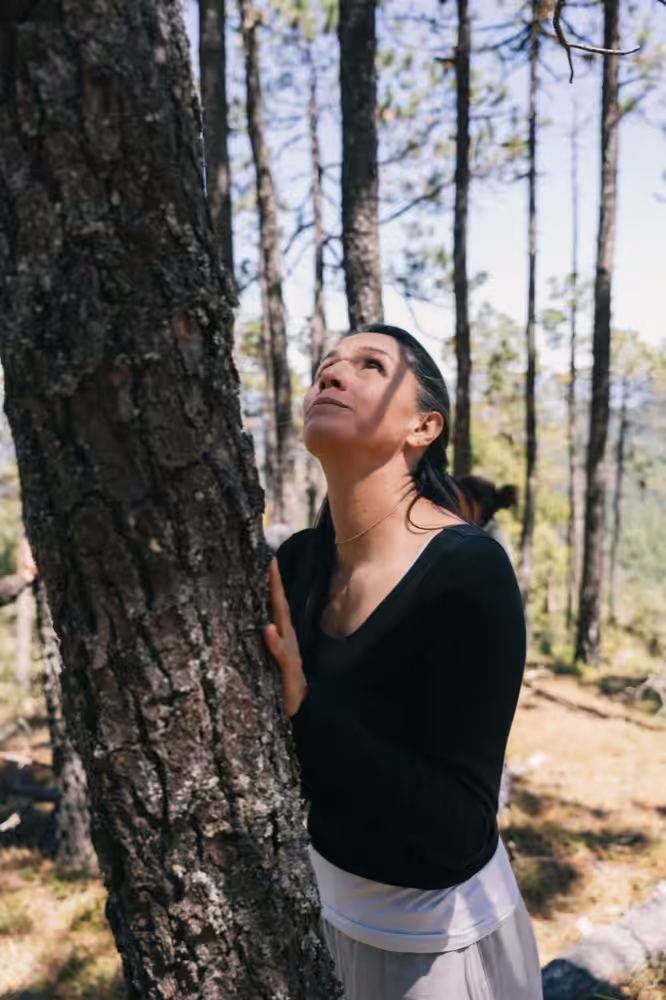
One invitation may ask you to notice the many shades of green within a single view. Another may encourage you to sit beside a tree, feel the ground beneath your feet, or listen for the most distant sound you can hear. These prompts can seem simple, but they give an overactive mind somewhere softer to rest. Rather than wondering whether you are doing forest bathing correctly, you are invited to become curious.
The value of guidance is often strongest for people who find it difficult to slow down alone. Many professionals, caregivers, and high-achieving individuals are used to turning even restorative time into another task to complete. A thoughtful guide creates permission to pause. The pace is deliberate, the silence is purposeful, and there is no pressure to have a profound experience on demand.
Guided sessions can also offer a meaningful sense of connection. Sharing quiet time with others is different from socializing. Participants may spend much of the session in silence, then gather to reflect on what they noticed. For some people, this gentle communal element makes nature feel more accessible and less solitary without becoming draining.
Structure Can Deepen Presence
A quality guide considers the setting, group needs, physical accessibility, weather, and emotional tone of the experience. They choose a route that supports slowness rather than achievement. They can adjust invitations for a participant who is new to mindfulness, uneasy in the outdoors, or navigating stress and mental fatigue.
This structure matters because forest bathing is often misunderstood as simply taking a walk outside. Walking outdoors can certainly be beneficial. Forest bathing adds intentional sensory awareness and an unhurried pace. A guide helps protect those qualities when the mind wants to check notifications, make plans, or judge the experience.
For wellness professionals, guided practice also reveals the care behind a well-facilitated session. It demonstrates how invitations are phrased, how silence is held, and how a group is welcomed back into conversation. These are practical skills for anyone considering forest bathing as part of coaching, retreats, mindfulness teaching, or nature-based wellness work.
The Strengths of Solo Forest Bathing
Solo forest bathing offers something a group cannot fully replicate: complete freedom to follow your own rhythm. You can spend twenty minutes watching leaves move in the wind, change direction because a patch of sunlight catches your attention, or end early because that is what your body needs. There is no shared schedule and no need to speak when you return.
For people with an established mindfulness practice, this independence can be deeply restorative. A familiar park, backyard, neighborhood tree canopy, or nearby trail can become a reliable place to reset. Regularity is one of solo practice’s greatest strengths. You do not need to wait for an event or reserve a morning to receive the calming influence of nature.
Solo sessions can also help you develop your own language of attention. Perhaps you begin by standing still for three slow breaths. Perhaps you leave your phone on airplane mode and let each sense lead you for a few minutes. Over time, these small rituals can signal that you are stepping out of urgency and into presence.
There is a practical advantage as well. Solo forest bathing is flexible and accessible. It can be ten minutes beneath a mature tree before work or an hour in a local woodland on a weekend. The practice does not require remote wilderness. What matters is approaching a natural environment with openness, care, and enough time to notice more than you usually would.
Guided Versus Solo Forest Bathing: Key Trade-Offs
The right choice depends on where you are in your practice and what you need on a particular day. Guided experiences provide external support. Solo practice builds internal confidence. Neither replaces the other.
Choose a guided session when you are new to forest bathing, feeling disconnected from your senses, or craving a carefully held experience. Guidance may be especially useful during periods of stress, transition, burnout, or grief, when making even small decisions can feel tiring. A trained guide can reduce the pressure to plan while offering a safe, intentional framework.
Choose solo forest bathing when you want flexibility, privacy, and an ongoing personal ritual. It may be the better fit if group settings make you self-conscious or if you already know the natural places that help you settle. Solo practice can be remarkably nourishing when it is approached with the same gentleness and attention as a guided session.
Safety should be part of the decision, not an afterthought. If you are visiting an unfamiliar area alone, choose a well-known location, check conditions, dress for the weather, and tell someone where you will be. Stay aware of trail closures, wildlife guidance, footing, daylight, and your own physical limits. Forest bathing asks you to slow down, but it does not ask you to abandon good judgment.
How to Make a Solo Session Feel More Intentional
If you are drawn to solo practice but do not know where to begin, start smaller than you think. Choose one accessible natural place and give yourself 20 to 30 minutes without an agenda. Before you begin, pause at the edge of the space. Notice your breathing, the temperature on your skin, and the sounds closest to you.
Then walk slowly enough that your attention can move beyond the path. Let your eyes rest on pattern and color. Touch bark or a fallen leaf if it is appropriate to do so. Notice where the air feels cool, damp, fragrant, or still. When thoughts interrupt, there is no need to push them away. Simply return to one sensory detail.
A helpful practice is to end with a brief reflection. You might ask yourself what the forest seemed to offer today: steadiness, movement, shelter, perspective, or simply quiet. There is no correct answer. The purpose is not to turn nature into a productivity tool. It is to recognize the relationship you are building.
When Professional Training Matters
If you feel called to lead others, personal experience is a valuable beginning, but it is not the whole preparation. Facilitating forest bathing involves more than knowing a beautiful trail or offering relaxation prompts. It calls for an understanding of participant care, ethical boundaries, inclusive design, risk awareness, group dynamics, and the science that informs nature-based wellness.
Formal, accredited training can help aspiring guides translate their appreciation for nature into a responsible professional offering. Treeming.org’s Forest Bathing Guide Certification is designed for those who want flexible, science-backed education while developing the skills to create thoughtful sessions for clients, communities, or retreat guests. For practitioners, this foundation helps ensure that the experience is both restorative and professionally held.
Whether your path is guided, solo, or a blend of both, resist the urge to grade the experience. Some days the forest will feel vivid and expansive. Other days, you may only notice that your shoulders dropped an inch. Return anyway, with patience. Nature does not demand a breakthrough. It offers a place to practice being present.