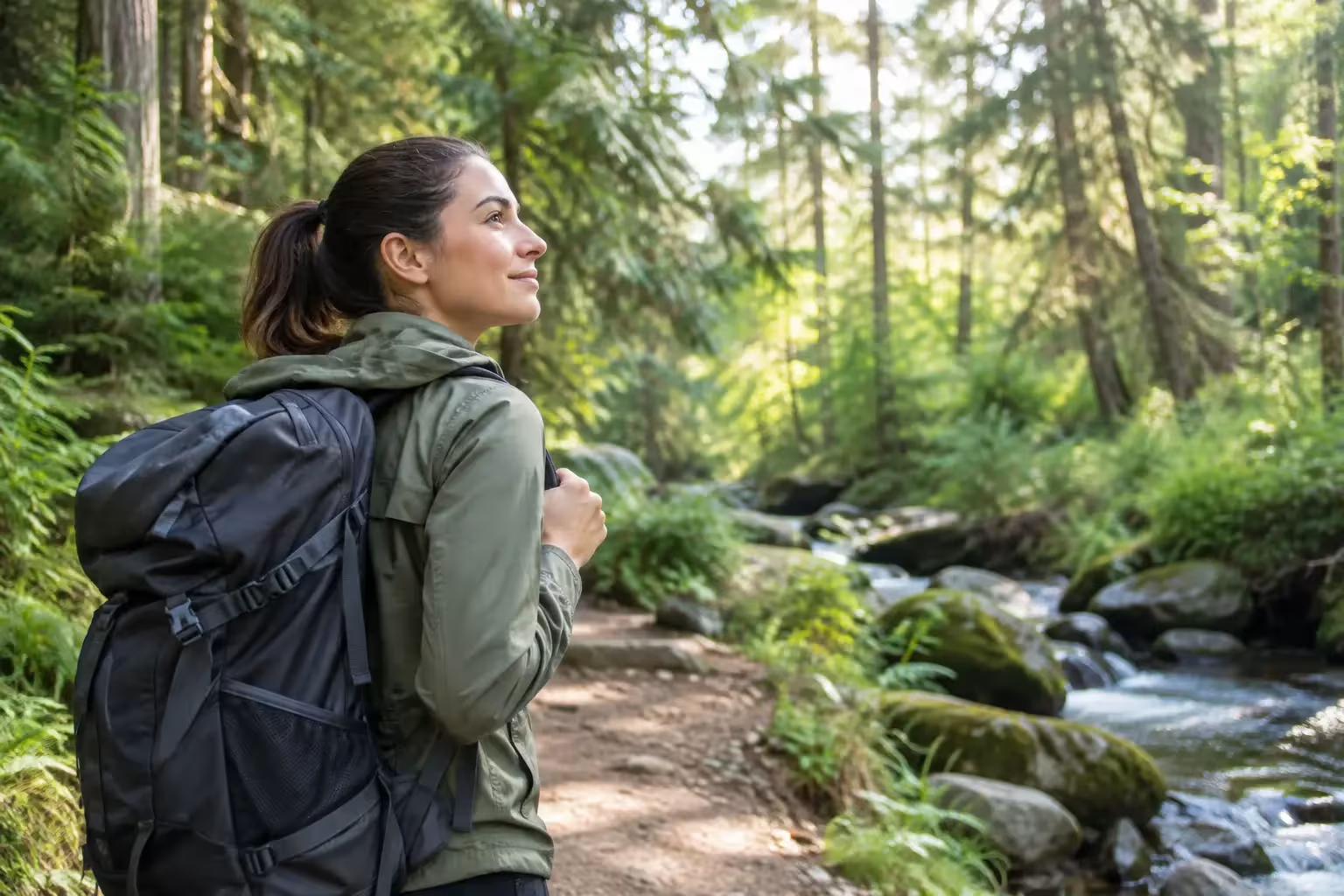
A forest bathing practice asks you to slow down, soften your focus, and notice what is already present. That becomes difficult if you are worried about getting lost, navigating unstable ground, or racing an incoming storm. Learning to choose safe forest bathing locations creates the conditions for genuine restoration: enough ease to let your nervous system settle, enough awareness to remain connected to your surroundings.
Safety does not mean choosing only manicured parks or avoiding wild places altogether. It means matching the location to your experience, your body, the season, and the kind of practice you hope to have. A quiet 30-minute sit beneath mature trees can be just as meaningful as a longer walk in a remote woodland – and often far more supportive.
Begin With the Purpose of Your Practice
Before looking at a map, decide what you need from the experience. If your intention is stress relief after a demanding week, a nearby nature preserve with clear paths and reliable cell service may be ideal. If you are building confidence in a personal Shinrin-Yoku practice, choose a place you can revisit in different weather and seasons. Familiarity allows your attention to move beyond navigation and toward sensory awareness.
For professional guides, the purpose is broader. A location must support the participants, the invitations you plan to offer, and an unhurried group pace. A beautiful trail that requires steady climbing may be appropriate for experienced hikers, but it is not automatically suitable for a mixed group seeking gentle, accessible nature connection.
The best location is rarely the most dramatic one. It is the one where people can breathe more slowly, move at a comfortable pace, and feel held by the landscape rather than challenged by it.
How to Choose Safe Forest Bathing Locations
Start by considering access. Look for legal public access, a clear entrance, established parking or transit options, and a route that is easy to follow. Check whether permits, timed reservations, entrance fees, or seasonal closures apply. Respecting site rules is part of forest bathing ethics: the land is not simply a backdrop for wellness, but a living community with boundaries and needs.
Then assess the walking surface. Forest bathing does not require difficult terrain. In fact, a slow practice often works best on gentle, well-maintained paths with room to pause safely without blocking others. Notice exposed roots, loose stones, muddy sections, steep drop-offs, and narrow trail edges. If you are attending to birdsong or the texture of bark, a trip hazard can quickly interrupt your sense of ease.
Accessibility deserves the same care. Paved or compacted trails, benches, nearby restrooms, and clear signage can make nature-based wellness available to more people, including older adults, those with limited mobility, and participants recovering from stress or illness. An accessible location is not a lesser experience. It may offer the spaciousness and security needed for deeper presence.
Read the Site Before You Arrive
A few minutes of research can prevent a disappointing or unsafe visit. Review recent weather, daylight hours, trail alerts, wildfire conditions, and local notices about flooding or fallen trees. A trail that is welcoming in dry weather can become slippery, obstructed, or hazardous after heavy rain.
Also consider the area’s natural risks. Depending on the region, this may include ticks, poison ivy, venomous snakes, biting insects, extreme heat, sudden cold, or large wildlife. The goal is not fear. It is informed preparation. Wear appropriate footwear, bring water, use sun and insect protection when needed, and know what local plants and animals require extra distance.
If you have allergies, asthma, a medical condition, or are taking medication that affects heat tolerance or balance, let those factors guide your choice. Forest bathing can be a gentle wellness practice, but it is not a reason to ignore your individual health needs.
Choose a Place That Supports Calm Attention
Physical safety and emotional comfort are connected. A location can be technically safe yet still feel overstimulating because of traffic noise, crowded trailheads, nearby construction, or frequent mountain bike traffic. Consider visiting at a quieter time of day, such as early morning or a weekday, while still ensuring adequate light and access.
Look for a setting with natural pauses: a grove of trees, a streamside bench, an open understory, or a clearing where you can stand and observe without feeling exposed. These features invite the small, sensory moments that distinguish forest bathing from exercise. You might notice cool air on your hands, the movement of leaves overhead, or the changing scent of soil after rain.
At the same time, avoid becoming so secluded that you feel uneasy. For many people, especially when practicing alone, the most restorative choice is a lightly used trail within a managed park or preserve. There is no prize for selecting the most remote location. Safety helps your body receive the calming benefits of nature contact.
Use the Solo Practice Safety Check
When you go alone, tell someone where you are going, when you expect to return, and how to reach you. Keep your phone charged, but place it on silent so it does not pull you out of the practice. Download directions or carry a printed map in areas where service may be limited.
Trust your instincts. If a trailhead feels unusually isolated, a path is poorly marked, weather changes quickly, or you simply feel uncomfortable, leave without judging yourself. Choosing another place is not abandoning the practice. It is practicing awareness and self-respect.
A simple rule can help: stay within a distance and terrain level that you could comfortably navigate if you became tired, distracted, or needed to return promptly. Forest bathing is deliberately slow, but the route home should never be uncertain.
Additional Care When Guiding Others
Professionals have a responsibility to create conditions where participants can relax without assuming unreasonable risk. Visit potential sites in advance, preferably at the same time of day and season as the planned session. Walk the full route slowly. Identify places for gathering, invitations, quiet reflection, restrooms, emergency access, and an alternative shelter or shorter route if weather changes.
A guide should also set expectations clearly before the session. Share the meeting point, duration, terrain, weather forecast, clothing recommendations, restroom availability, and any relevant site rules. Invite participants to disclose mobility concerns privately, and make it clear that opting out of an invitation or pausing at any time is welcome.
For groups, choose locations with enough space to spread out while keeping everyone within a reasonable area. Avoid places where participants could accidentally wander toward cliffs, water hazards, busy roads, or private property. It can be helpful to establish a visible boundary for solo wandering invitations, especially for first-time participants.
Training develops the judgment behind these choices. Treeming.org’s accredited Forest Bathing Guide Certification emphasizes the balance between evidence-informed wellness facilitation, participant care, and respectful relationship with the natural world.
Let Stewardship Shape Your Choice
A safe location is also one that can sustain respectful visitation. Stay on designated paths where required, avoid disturbing nesting areas and sensitive habitats, and do not collect plants, fungi, stones, or other natural materials unless it is expressly permitted. Keep voices low, carry out what you bring in, and give wildlife generous space.
Forest bathing is rooted in reciprocity. As you receive the restorative qualities of a forest, consider how your presence can remain light. That may mean choosing less sensitive sites for groups, limiting repeated use of a favorite clearing, or moving your practice when seasonal conditions place added pressure on the ecosystem.
The right forest bathing location does not need to be perfect. It needs to offer a realistic sense of safety, a respectful relationship with the land, and enough quiet for your attention to return to the present moment. Choose that place, arrive prepared, and let the trees meet you at a pace that feels kind to both body and mind.