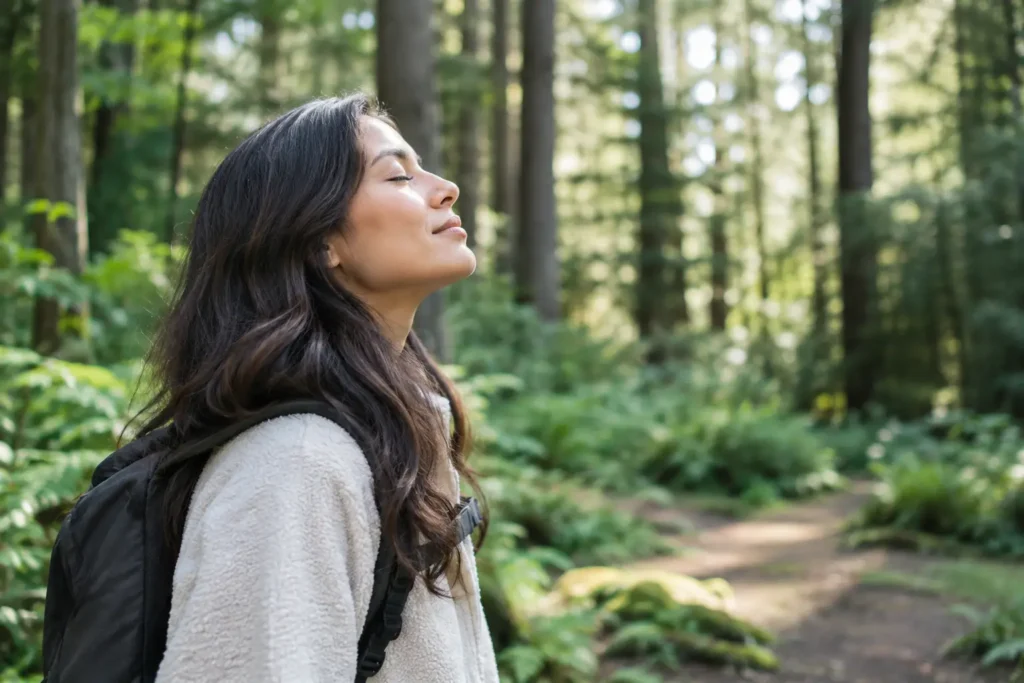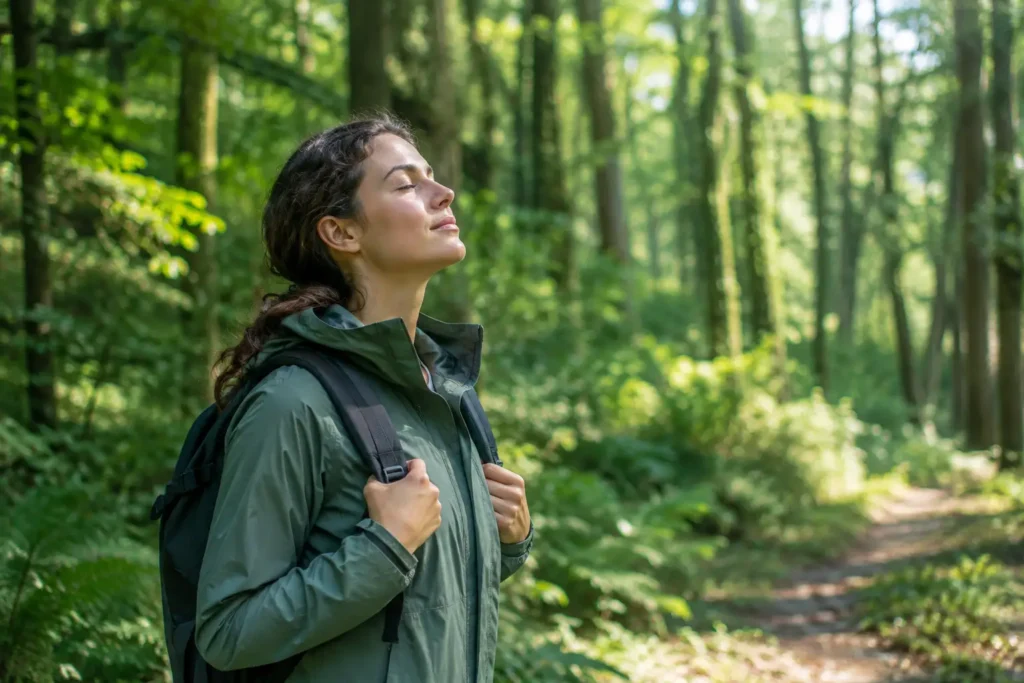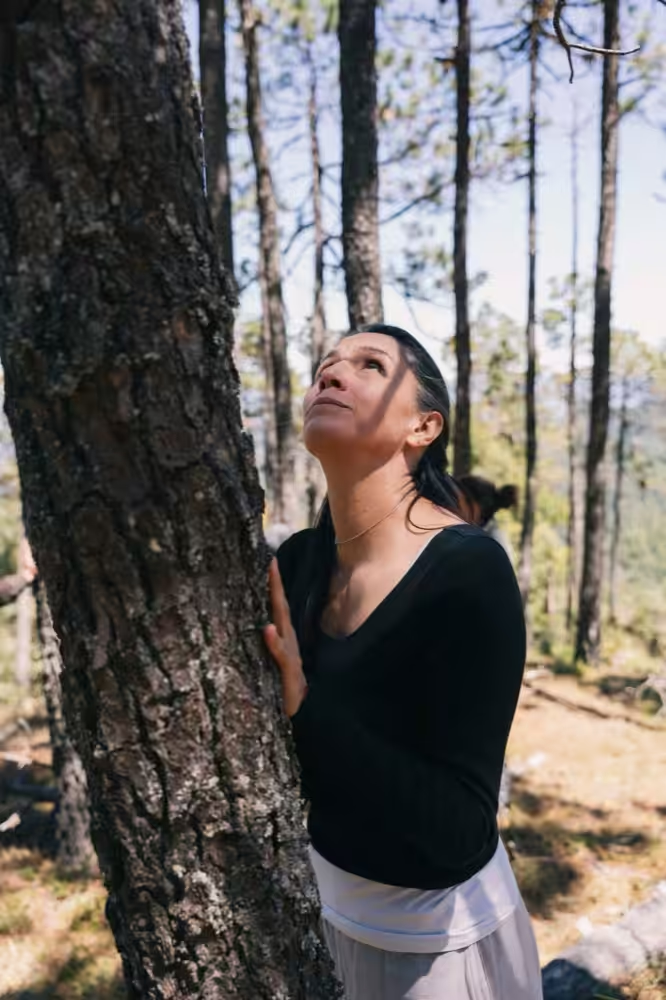
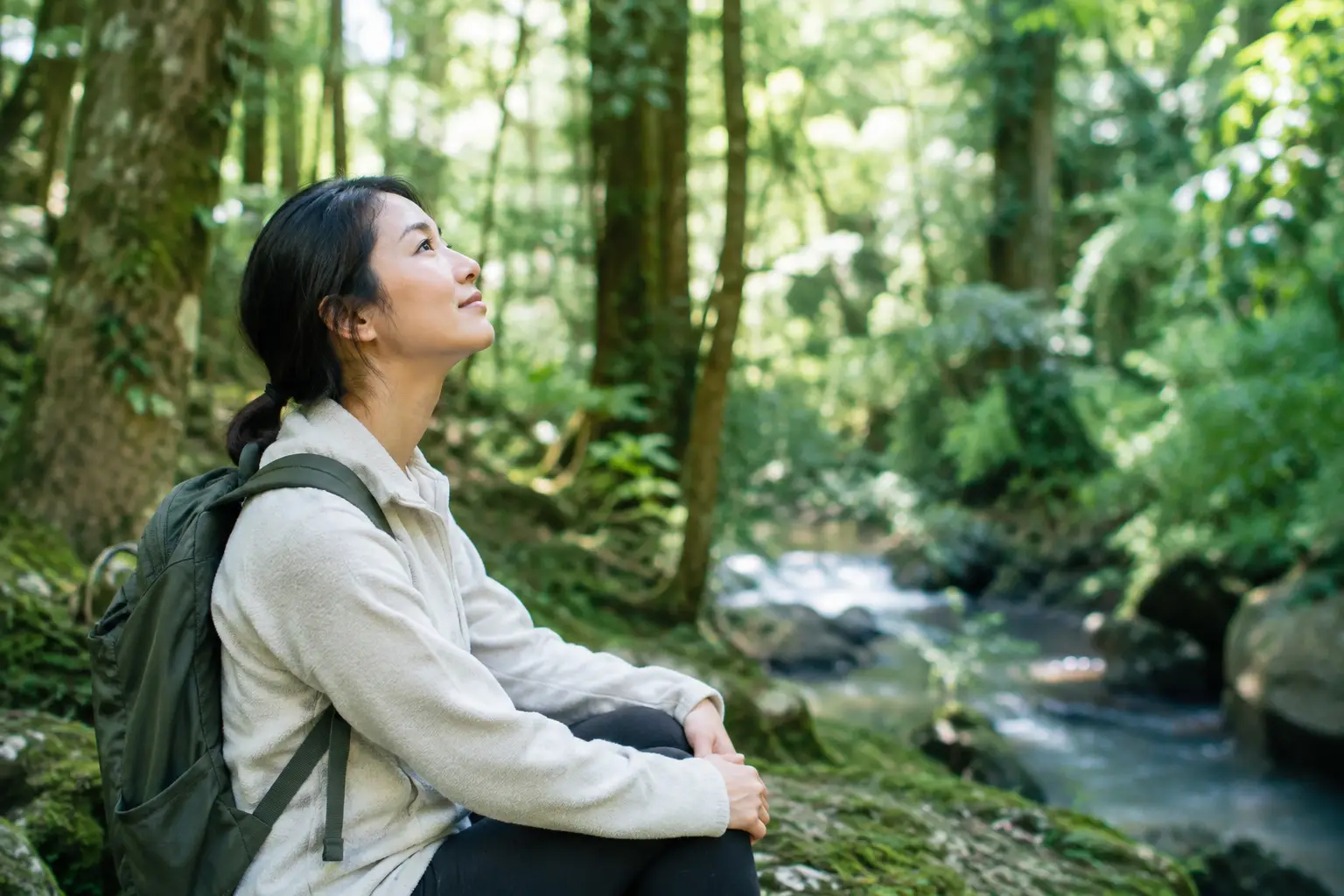
A forest does not ask you to achieve anything. It offers a different invitation: slow down enough to notice what is already here. Learning how to practice shinrin yoku is less about hiking farther or knowing the names of trees and more about restoring your relationship with the living world through unhurried, sensory attention.
Shinrin-yoku, often translated as forest bathing, began in Japan as a public health practice centered on mindful time among trees. It is not exercise, wilderness survival, or a photo opportunity. It is a deliberate way of being in nature that can support stress reduction, mental clarity, and a steadier sense of connection. You do not need a remote forest to begin. A quiet park, wooded trail, botanical garden, or tree-lined neighborhood path can become a meaningful place to practice.
What Shinrin-Yoku Is Designed to Do
Modern life keeps attention moving outward: toward notifications, responsibilities, screens, and the next task. Forest bathing creates a protected interval in which attention can soften. Instead of evaluating nature or trying to get somewhere, you let natural sights, textures, sounds, and scents meet you where you are.
Research into time in natural settings suggests that it may support lower perceived stress, improved mood, and restoration from mental fatigue. Those benefits vary by person, location, health status, and consistency. Shinrin-yoku is not a replacement for medical or mental health care, but it can be a grounded complementary practice for people seeking more calm and presence.
The difference is intention. A brisk walk may be excellent for cardiovascular health. Forest bathing may involve walking very slowly, stopping often, sitting quietly, or following your curiosity toward a patch of moss or the sound of wind moving through leaves. Both have value, but they ask different things of your nervous system.
How to Practice Shinrin Yoku Step by Step
Choose a place that feels safe and alive
Start with a location where you can relax your guard enough to be present. A dense forest can be beautiful, but it is not required. Look for a place with trees, plants, birdsong, water, or other natural elements that hold your attention. For beginners, choose a familiar area with clear paths, adequate daylight, and reliable cell service if needed.
Leave enough time to settle. Twenty minutes can shift the pace of an ordinary afternoon, while 60 to 90 minutes allows for a deeper experience. If a long session feels unrealistic, begin with a consistent 15-minute practice near a single tree or small green space. Regularity matters more than finding a perfect landscape.
Arrive before you begin walking
When you reach your chosen place, pause. Feel both feet meet the ground. Notice whether your shoulders are lifted, your jaw is tight, or your thoughts are rushing ahead. There is no need to force relaxation. Simply recognize your starting point.
Take three slower breaths, allowing the exhale to lengthen naturally. Then look around without searching for anything special. Notice light and shadow, the shape of branches, and the distance between sounds. This brief transition tells your body that you are entering a different kind of time.
Slow your pace below your usual walking speed
Walk without a destination for a while. Let your pace become slow enough that you can register details you would normally miss: damp earth beneath your shoes, the temperature against your hands, a pattern in bark, or the changing volume of birdsong.
If you notice the urge to check your phone, plan the week, or judge whether you are doing it correctly, return to one immediate sensation. You might feel the coolness of air entering your nose or listen for the farthest sound you can hear. Thoughts are not a failure of the practice. They are simply a cue to come back to your senses.
Follow one sense at a time
Forest bathing becomes more vivid when you give each sense room. Spend a few minutes listening without identifying every sound. Then let your eyes rest on colors, movement, and texture. You may place a hand on the rough surface of a tree, a fallen leaf, or a smooth stone, provided you do so respectfully and safely.
Scent can be especially grounding. Notice rain, pine, dry grass, soil, or seasonal change. If you choose to taste anything, do so only when you can identify it with certainty and know it is safe. In most cases, there is no need to consume anything at all. The goal is receptive attention, not collecting experiences.
Sit, stand, or lean into stillness
At some point, choose a comfortable place to become still. Sit on a bench, stand beside a tree, or rest on a clean ground cover. Let your gaze be soft rather than fixed. Notice what changes when you stop moving: a bird appears, wind shifts, or your breathing becomes easier to feel.
Stillness can be uncomfortable at first, particularly for people accustomed to constant productivity. Give yourself permission to be unproductive here. You are not trying to meditate perfectly. You are allowing nature to set a slower rhythm and observing how your body responds.
Close with gratitude and a gentle transition
Before leaving, take a moment to recognize one detail you want to remember. It might be the scent of cedar, the sound of a creek, or the surprising color of a leaf. This is not forced positivity. It is a way of helping your attention register that the time mattered.
As you return to your day, resist filling the transition immediately with calls, messages, or music. Walk the first few minutes in quiet if you can. The calmer state you cultivated may be subtle, and a little space helps carry it beyond the trail.
Make the Practice Work in Real Life
A powerful shinrin-yoku practice does not depend on ideal weather or a dramatic forest. In fact, seasonal variation can become part of the experience. Rain can heighten scent and sound. Winter reveals branch structures hidden by summer leaves. A hot day may call for shade, water, and a shorter session. The practice adapts to the conditions rather than demanding that nature perform for you.
Practical preparation matters. Wear comfortable layers, choose stable footwear, bring water, and let someone know where you are if you will be in a secluded area. Put your phone on silent or airplane mode, while keeping it available for safety. If you use your phone for photos, consider taking one image at the end rather than interrupting the experience repeatedly.
Accessibility also deserves attention. A sensory practice can happen from a wheelchair-accessible path, a garden seat, a balcony filled with plants, or an open window facing trees. The core question is not, “Am I far enough from civilization?” It is, “Can I give my senses a few undistracted minutes with the natural world?”
Common Missteps That Make Forest Bathing Feel Hard
Many people approach forest bathing with the same achievement mindset they bring to fitness or work. They set a distance goal, track every metric, or worry about whether they feel calm enough. Those habits are understandable, but they can pull you away from the practice.
Another common misstep is treating silence as mandatory. Some people settle best in quiet; others may benefit from a brief guided prompt at the beginning. It depends on your experience and surroundings. The aim is not silence for its own sake, but enough mental space to notice nature directly.
Finally, do not expect every session to feel profound. Some days you may remain distracted, restless, sad, or tired. Forest bathing does not erase difficult emotions. It offers a compassionate container in which those feelings can be noticed without needing to solve them immediately.
From Personal Ritual to Professional Practice
For wellness professionals, regular personal practice is the foundation for ethical, confident facilitation. Before guiding others, learn how different invitations affect your own attention. Notice what helps you feel safe, what feels overly directive, and how weather, group energy, and site conditions influence the experience.
Professional forest bathing guidance also requires more than a love of nature. It calls for training in session design, participant care, consent, accessibility, risk awareness, and the science supporting nature-based wellness. For those ready to bring this work into coaching, retreats, education, or mindfulness services, an accredited program such as Treeming.org’s Forest Bathing Guide Certification can provide structured, self-paced preparation for professional practice.
The next time you pass beneath a canopy of trees, do not ask the forest to fix your whole life. Ask only for ten unhurried minutes. Listen, breathe, and let one small living detail bring you back to yourself.