A quiet trail can lower the volume of a demanding week. But leading another person into that experience takes more than a love of trees. The best forest guide programs teach you how to create a calm, safe, and meaningful nature-based practice while honoring both the people in your care and the land beneath your feet.
For some learners, this training is a personal commitment to slowing down, noticing more, and making time outdoors a steady part of life. For others, it is the foundation for offering guided forest bathing sessions through a wellness practice, retreat business, coaching service, or community program. In either case, quality training brings structure to an experience that can otherwise feel difficult to explain or repeat.
What Forest Guide Programs Are Designed to Teach
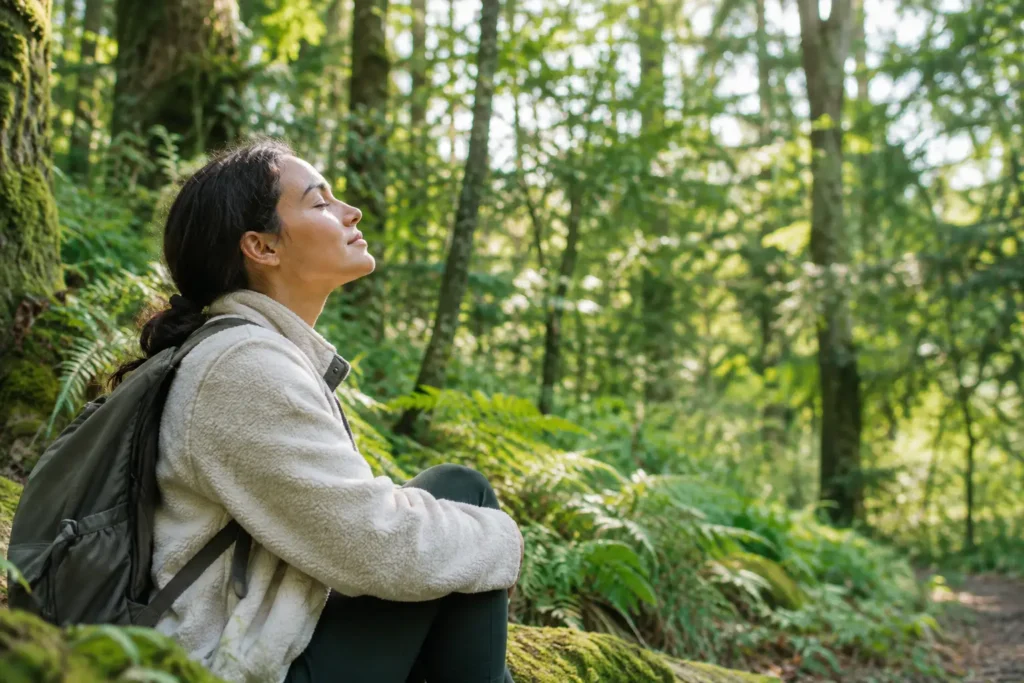
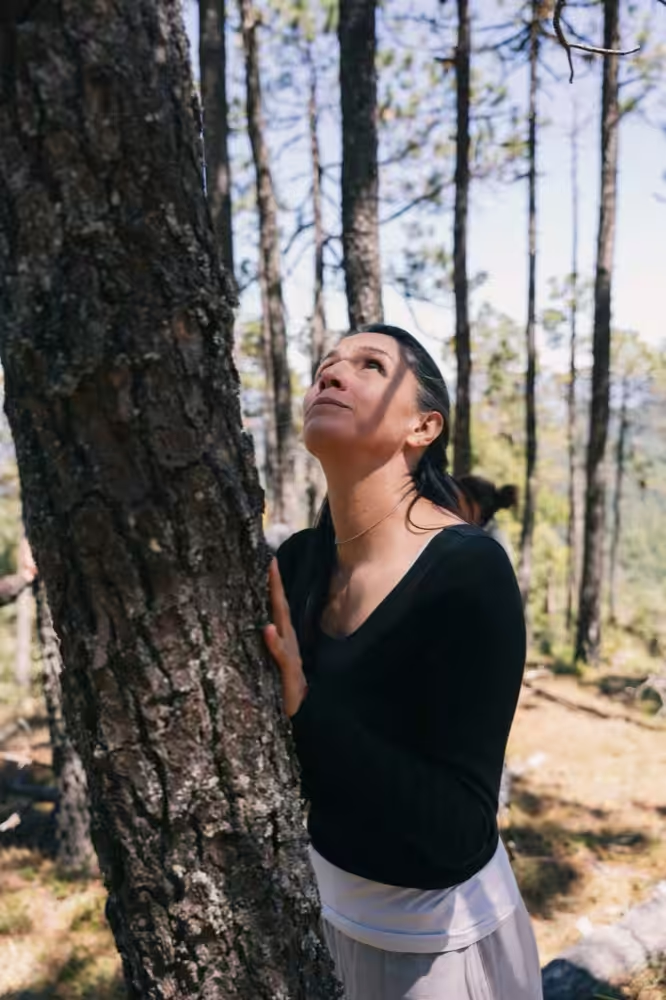
Forest guide training is often connected to forest bathing, also known as Shinrin-Yoku. This is not hiking for distance, wilderness survival, or an outdoor fitness class. Forest bathing is a mindful, sensory practice of spending unhurried time in a natural setting. A guide helps participants shift from doing to noticing: the texture of bark, moving light, birdsong, the scent of rain in soil, and the rhythm of their own breath.
A thoughtful program turns those simple moments into a clear facilitation method. Learners explore the origins and principles of forest bathing, the research surrounding nature connection and stress reduction, and practical ways to guide groups with presence. The goal is not to perform as an expert on every plant, animal, or ecosystem. It is to create the conditions for participants to form their own relationship with nature.
That distinction matters. A naturalist may focus on ecological identification. A hiking guide may focus on route planning and physical safety. A forest bathing guide centers attention, sensory awareness, gentle invitation, and emotional spaciousness. These roles can overlap, but they require different skills.
The Science Gives the Practice Professional Grounding
Many people feel better after time outdoors without needing a study to tell them why. Still, scientific framing is valuable, especially for wellness professionals who want to communicate responsibly with clients. Research on nature exposure has associated time in green spaces with reduced perceived stress, improved mood, restored attention, and support for overall well-being.
A credible course should present this research with care. Nature-based wellness practices can complement healthy routines and supportive care, but they are not a substitute for medical treatment, mental health care, or crisis support. A trained guide knows how to speak about potential benefits without making promises that exceed the evidence.
This balanced approach builds trust. It helps a yoga teacher explain why a slow, sensory walk belongs alongside breathwork. It gives a coach language for introducing a restorative practice to overwhelmed clients. It also helps participants understand that forest bathing does not need to be mystical to be meaningful. It can be deeply personal while remaining grounded in observable, science-informed principles.
What Quality Forest Guide Programs Include
Not every course offers the same depth. A short introductory workshop can be an excellent way to experience forest bathing for yourself. Certification-level training should go further, particularly if you plan to guide others professionally.
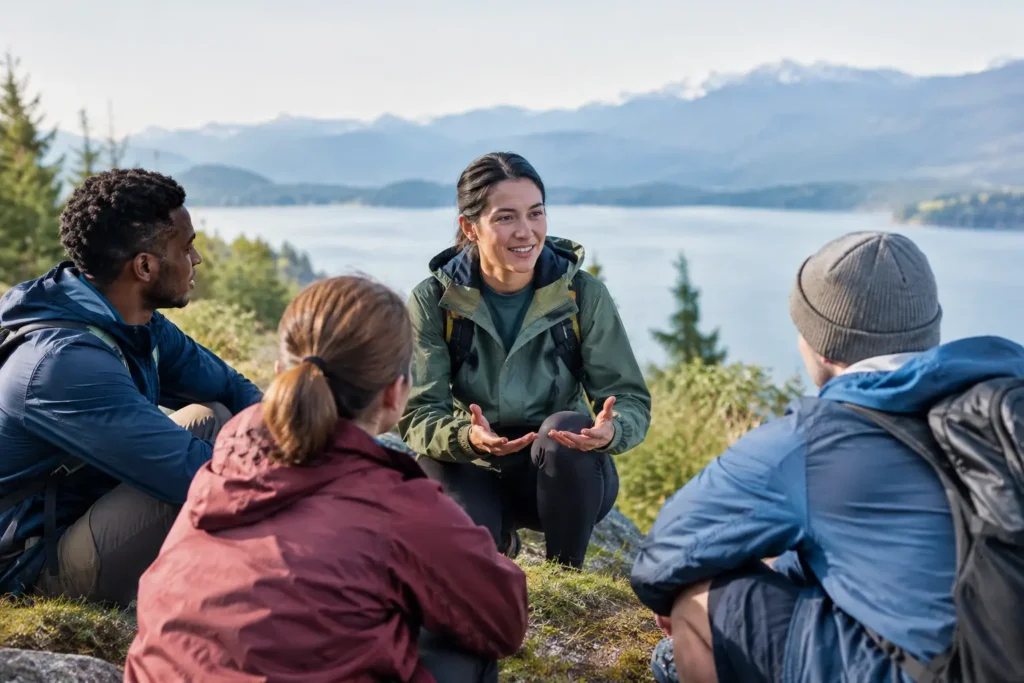
Look for instruction that addresses the full experience of facilitation. This includes how to select an appropriate location, assess trail conditions, set expectations, welcome a group, offer invitations without pressure, and close a session in a way that helps participants carry the experience forward. You should also learn how to adapt activities for different ages, mobility levels, comfort levels, and group sizes.
Ethics and safety deserve equal attention. Nature-based wellness is not simply a beautiful setting plus a script. Guides need to consider weather, terrain, allergies, accessibility, local regulations, emergency planning, and participant boundaries. They also need the confidence to recognize when a person may need support beyond the scope of a guided wellness experience.
A strong curriculum should include these core areas:
- Forest bathing principles, history, and evidence-informed benefits
- Sensory invitations and mindful facilitation techniques
- Group dynamics, communication, consent, and professional boundaries
- Site selection, risk awareness, accessibility, and emergency preparation
- Environmental ethics and low-impact practices
- Practical guidance for shaping and presenting a professional offering
Accreditation can be another useful signal. It does not replace good teaching or personal practice, but recognized accreditation shows that a provider has met defined standards for educational quality. For professionals who want to add a credential to their services, it can strengthen confidence when speaking with clients, retreat partners, and employers.
Online Training Can Be a Meaningful Starting Point
Forest bathing is experienced outdoors, so some people assume guide training must happen in a classroom or on a distant retreat. In-person practice has real value, particularly for observing other guides and connecting with peers. Yet online learning can be a highly practical option for adults balancing careers, family responsibilities, and existing wellness work.
A self-paced program allows you to learn the theory, reflect on your own sensory practice, and apply lessons in the green spaces available to you. Your setting does not need to be a dramatic old-growth forest. A neighborhood park, botanical garden, quiet shoreline, or tree-lined path can support meaningful practice when approached with care.
The trade-off is that online learners need to create their own rhythm. Reading a module is not the same as standing still long enough to notice the air change before rain. The most valuable online programs encourage regular field practice, journaling, reflection, and real-world facilitation planning. They make the training flexible without making it passive.
Treeming.org approaches this balance through self-paced, accredited forest bathing guide education that brings together mindfulness traditions, research-informed learning, and professional application.
Choosing the Right Path for Your Goals
Before enrolling, consider what you hope the training will make possible. If your primary goal is personal well-being, you may want a program that emphasizes sustainable habits, guided exercises, and a gentler relationship with your time outdoors. There is no need to turn every meaningful practice into a business.
If you hope to work with clients, look more closely at curriculum depth and professional relevance. Ask whether the training teaches facilitation rather than only personal reflection. Consider whether the credential is recognized, whether the instruction addresses safety and ethics, and whether you will leave with a clear understanding of how to structure a session.
Your intended audience matters, too. A guide serving corporate teams may need to explain stress reduction in accessible, secular language. A retreat facilitator may focus on ritual, rest, and group cohesion. A therapist or health professional must remain especially clear about scope of practice. The core method may be similar, but the way you present it should fit your training, audience, and setting.
Stewardship Is Part of the Work
Guiding people into nature carries a responsibility to protect it. The popularity of outdoor wellness can create pressure on sensitive places when programs treat forests as backdrops rather than living communities. Responsible training teaches guides to choose appropriate locations, follow local rules, minimize disturbance, and avoid practices that damage habitats.
This can be as simple as staying on durable surfaces where required, keeping groups small, leaving natural materials where they are, and choosing invitations that do not disrupt wildlife. It also means being honest about access. Not everyone can travel to a remote forest, and not every natural area is suitable for a group session. Respecting limits is part of ethical leadership.
Environmental stewardship can deepen the participant experience rather than restrict it. When people are invited to notice the forest as more than a resource for human calm, they often develop a more reciprocal relationship with the natural world. The session becomes not only about what nature gives us, but also how we can move through it with care.
From Learning to Confident Facilitation
Certification is a beginning, not a finish line. Once your training is complete, confidence grows through practice: guiding a friend, testing a session flow, refining your language, learning the character of local sites, and noticing what helps people settle into presence.
You do not need a flawless voice or an elaborate woodland setting. You need preparation, humility, and enough quiet in your own practice to offer others room to breathe. Start where you are, return to the same patch of nature often, and let your relationship with the place teach you what no script can fully provide.