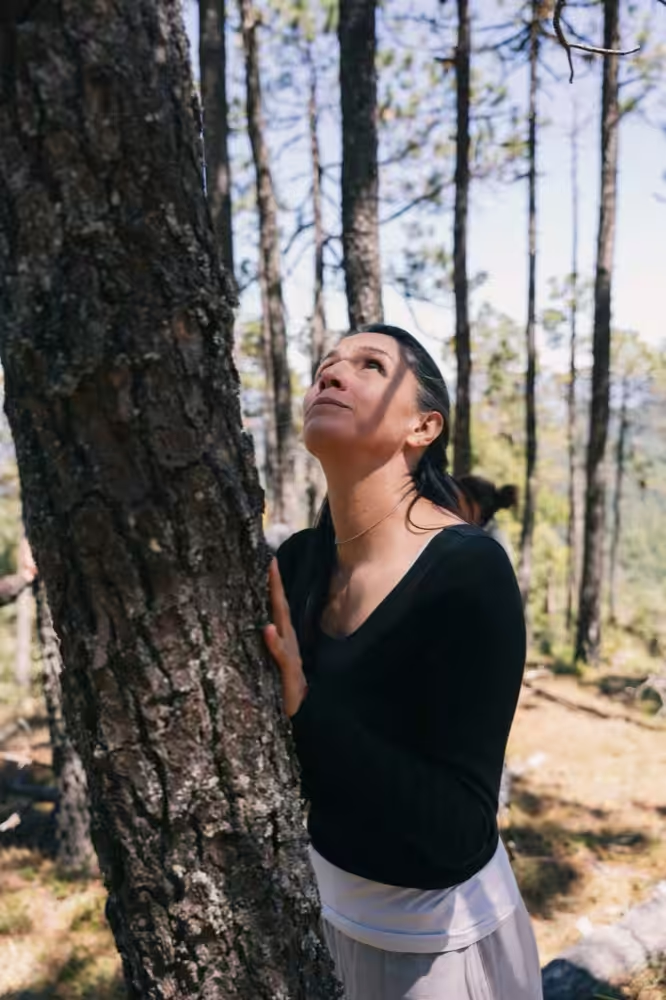
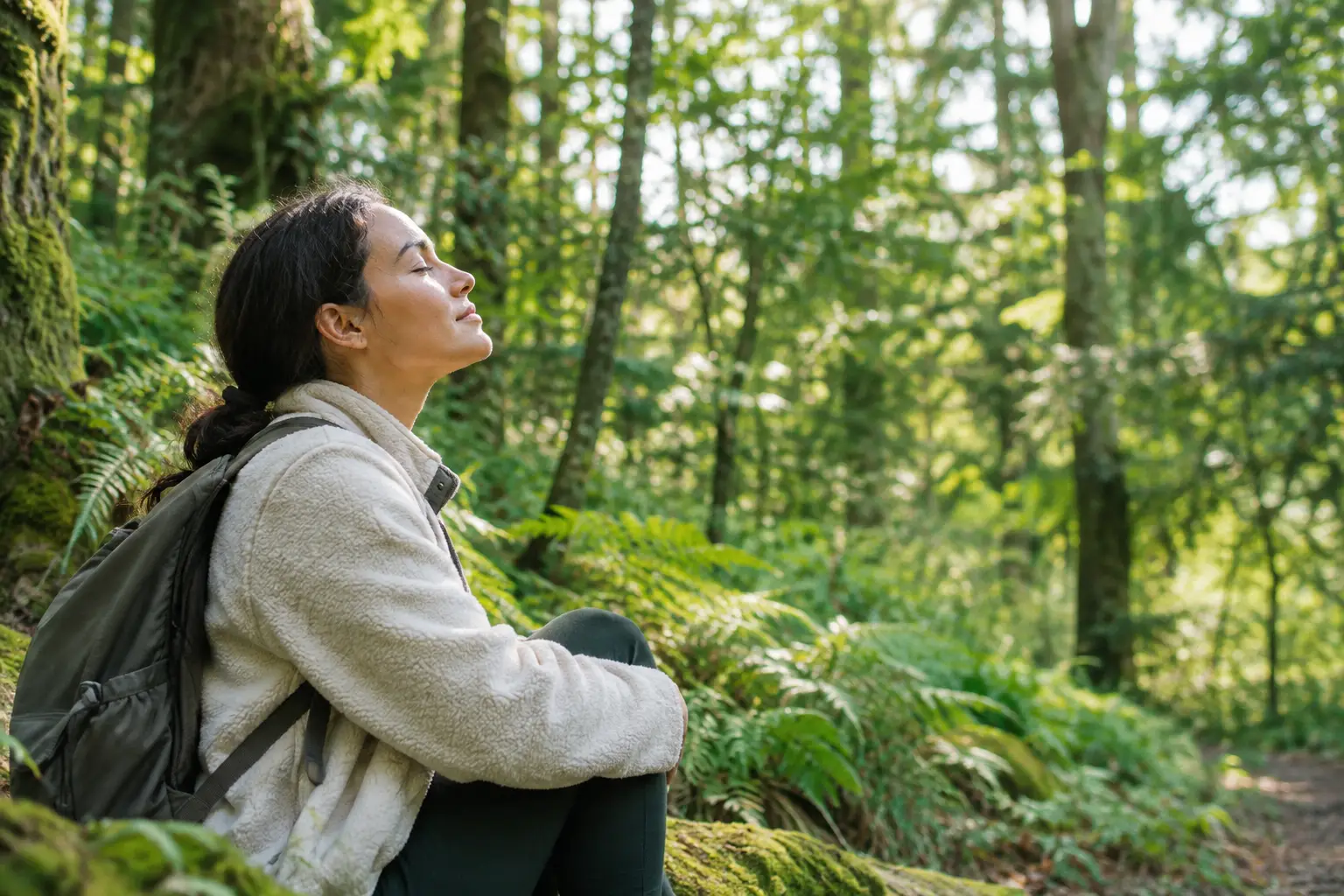
A busy mind rarely responds to being told to slow down. It responds to an experience that makes slowing down possible: birdsong replacing notifications, cool air on the skin, the texture of bark beneath an open hand. If you have wondered, what is forest bathing, the answer begins here. It is a mindful, sensory practice of spending unhurried time in nature, with no goal beyond being present.
Forest bathing is not a hike measured in miles, a workout, or a reason to fill your phone with scenic photos. It is an invitation to notice the living world and your own inner experience within it. For people managing demanding work, caregiving, or constant digital input, that simple shift can create valuable room to breathe.
What Is Forest Bathing, Exactly?
Forest bathing is the English name commonly used for Shinrin-Yoku, a Japanese practice that translates to “forest bathing.” The phrase does not mean bathing in water. It means immersing yourself in the atmosphere of the forest through your senses.
A forest bathing experience is typically slow, gentle, and guided by curiosity rather than achievement. You might pause to watch light move through leaves, listen for the most distant sound you can hear, or notice the scent released by damp soil after rain. The practice asks you to move from doing to receiving.
Although forests offer an especially rich setting, the core practice is accessible in many natural places. A wooded neighborhood trail, botanical garden, quiet park, or green space with mature trees can support meaningful practice. The setting matters, but so does your willingness to arrive without rushing.
Why Forest Bathing Feels Different From a Walk
Walking outdoors can certainly be restorative, but forest bathing has a different intention. On a typical walk, you may be focused on reaching a destination, improving fitness, talking with a companion, or clearing your head. During forest bathing, the pace becomes slower and attention becomes wider.
Rather than asking, “How far did I go?” the practice asks, “What did I notice?” That might include the temperature difference between sun and shade, a shifting birdsong, the color variations in one fallen leaf, or the sensation of your breath settling naturally.
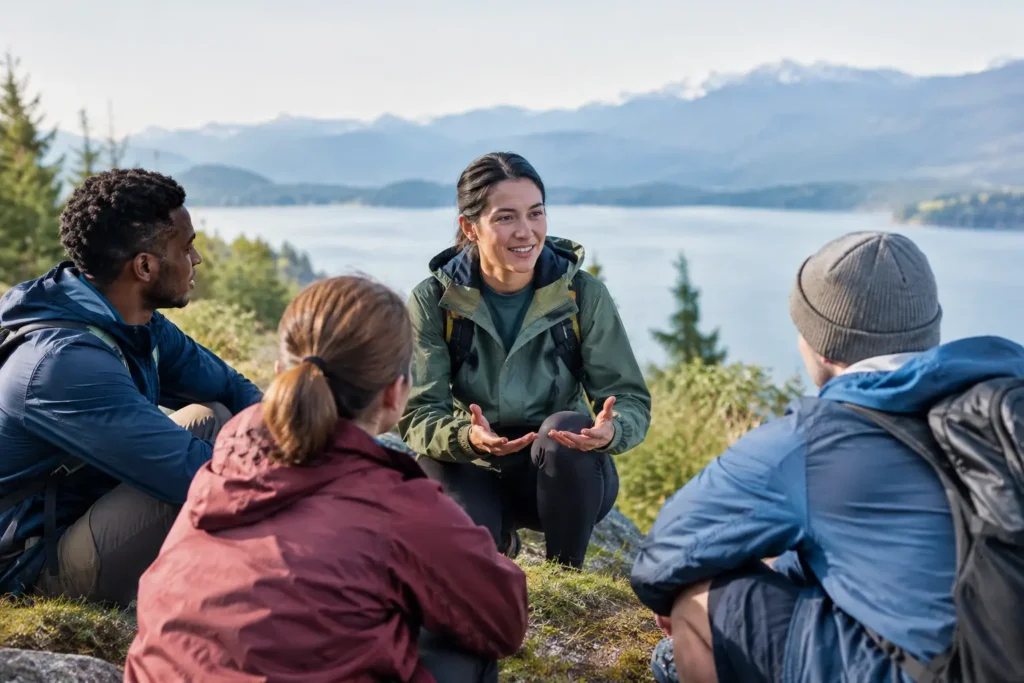
This does not mean forest bathing must be silent or serious. A skilled guide may offer gentle invitations that help participants engage each sense, reflect quietly, or share a brief observation with the group. The structure is light on purpose. It leaves room for each person’s experience to unfold.
The Science Behind Time in Nature
Forest bathing is rooted in a cultural mindfulness tradition, and it is also supported by a growing body of research on nature exposure. Studies have associated time in natural environments with reduced perceived stress, improved mood, restored attention, and physiological changes such as lower heart rate or blood pressure in some participants.
The mechanisms are still being studied, and results vary based on the person, environment, duration, and study design. Nature is not a replacement for medical care, mental health treatment, movement, sleep, or other foundations of health. Still, it can be a practical, low-cost complement to a well-rounded wellness routine.
One reason may be that natural settings offer what researchers call soft fascination. A stream, a canopy moving in the wind, or patterns in a stone can hold attention without demanding effort. This gives the mind a break from the directed focus required by work, screens, traffic, and daily decisions.
Forests may offer additional sensory qualities, including quieter soundscapes, varied visual patterns, and airborne compounds released by trees. But the benefit is not dependent on finding a remote wilderness area. A regular practice in a nearby green space may be more sustainable than an occasional trip that requires hours of travel.
How to Practice Forest Bathing on Your Own
You do not need special gear, prior meditation experience, or a pristine forest. Begin by choosing a natural place where you can move slowly and feel reasonably safe. Give yourself 30 to 60 minutes if possible, though even 10 intentional minutes can change the quality of an afternoon.
Before you begin, place your phone on silent and set it aside. Walk more slowly than usual. Let your eyes soften rather than scanning ahead for the next turn. Notice three things you can see, then three sounds, then three textures or sensations on your skin. There is no need to force calm. Simply return to what is present when your mind wanders.
You might pause beside a tree or sit on a bench for several minutes. Ask yourself what is alive and changing around you. Notice whether the air has a scent, whether the ground is dry or springy, and whether your body feels different after a few unhurried breaths.
At the end, take a moment to reflect on one detail you want to carry back into your day. The value of the practice often lies in this transition. Forest bathing is not about escaping life. It is about returning to it with a little more steadiness, perspective, and presence.
When a Guided Forest Bathing Session Helps
A personal practice can be powerful, especially when repeated over time. Yet many people find that a guided session helps them move beyond familiar habits of rushing, analyzing, or treating nature as a backdrop. A trained guide creates a supportive container, offers sensory invitations, manages pacing, and helps participants feel comfortable with quiet.
Guided forest bathing can be especially useful for wellness retreats, workplace well-being programs, community groups, and individuals who want a more intentional entry point. It is not therapy unless delivered by an appropriately licensed clinician within that scope of practice. Professional guides should be clear about their training, safety protocols, accessibility considerations, and the limits of the service they provide.
For wellness professionals, adding forest bathing to an existing practice can create a meaningful way to serve clients who want evidence-informed, nature-based support. Formal education matters here. Training should cover the history and principles of Shinrin-Yoku, facilitation skills, participant care, ethics, risk awareness, and the research behind nature-based wellness. Treeming.org offers accredited online education designed for both personal practice and professional development in this field.
A Practice That Can Grow With You
Forest bathing does not demand that you become an outdoors expert or redesign your entire schedule. It asks for attention, openness, and enough time to let the nervous system recognize that it does not have to stay on high alert.
Some days, that may look like an hour beneath tall trees. Other days, it may be five minutes standing beside a flowering shrub before work. Consistency matters more than perfection. Pay attention to which places help you feel settled, which sensory invitations feel natural, and what changes when you give yourself permission to be unproductive for a while.
The next time you step outside, resist the urge to make the moment useful. Let the forest, park, or small patch of green meet you where you are. A slower pace may be the first gentle step toward finding your way back to yourself.