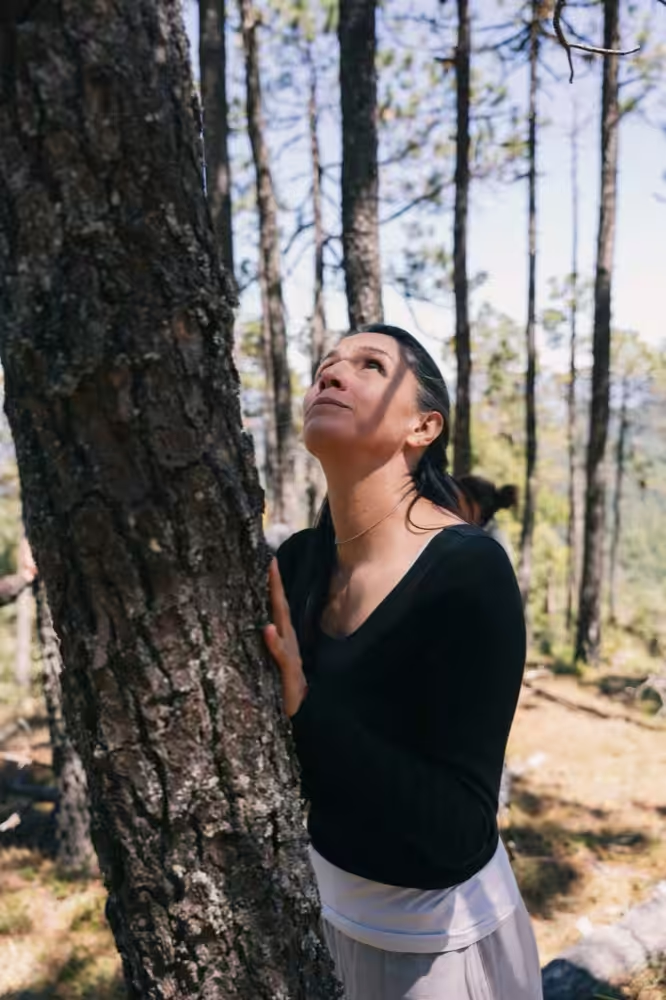
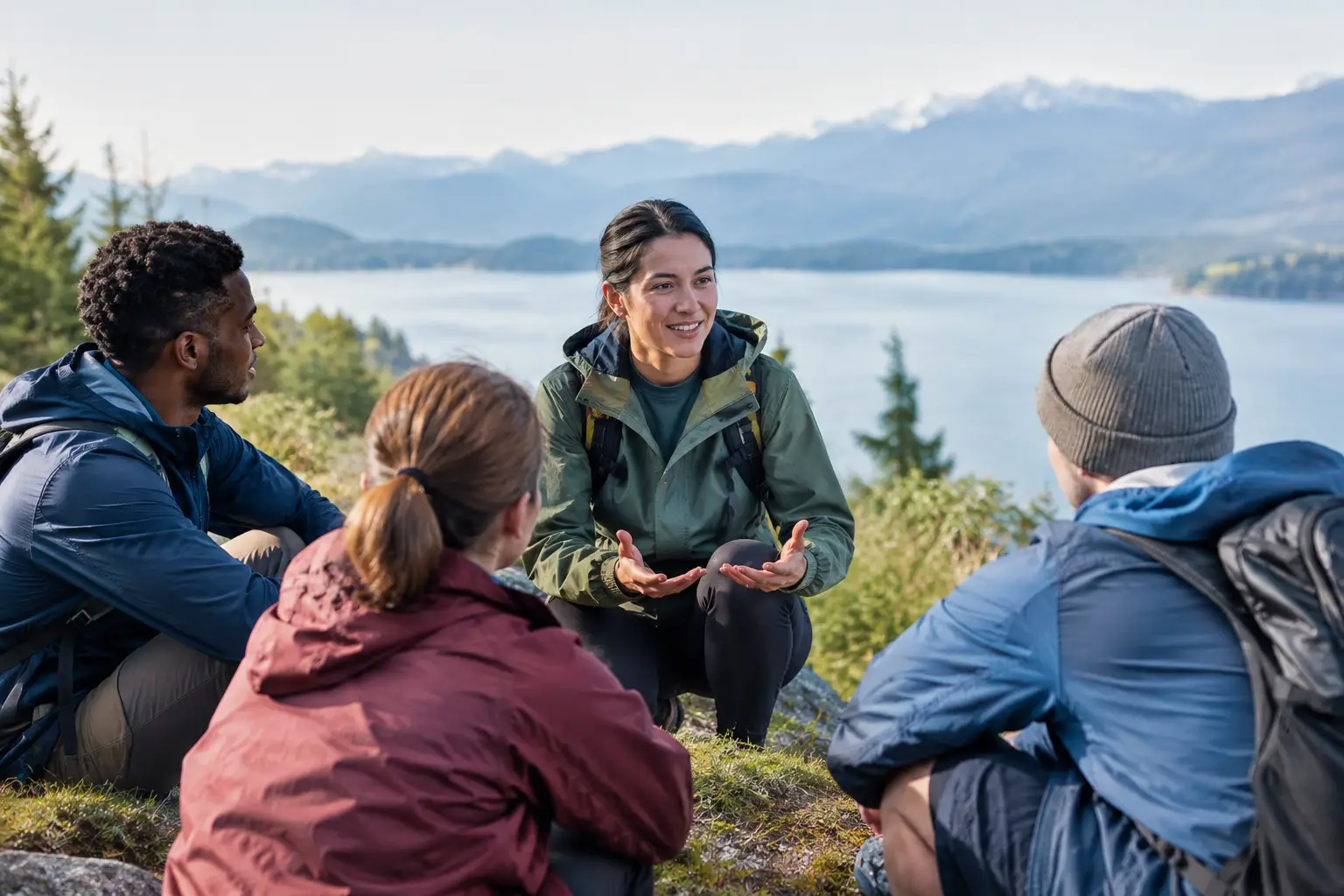
A quiet trail can feel like a refuge, but it is never an empty room waiting for a program. It is a living habitat, a shared public space, and sometimes a place with cultural significance that deserves care. This guide to ethical outdoor facilitation is for wellness professionals and aspiring forest bathing guides who want to lead restorative experiences without placing pressure on participants, ecosystems, or communities.
Ethical facilitation is not a set of perfect phrases or a checklist completed before arrival. It is the ongoing practice of making thoughtful choices: selecting an appropriate site, setting honest expectations, protecting participant autonomy, and reducing your group’s impact. Done well, it creates the conditions for people to slow down, notice nature, and feel supported without asking the land to carry more than it can.
Start With a Clear Duty of Care
When people join an outdoor wellness session, they may arrive with stress, grief, chronic pain, anxiety, mobility limitations, or simply a need for quiet. Your role is not to diagnose, treat, or promise a health outcome. Your role is to facilitate a carefully held experience that invites sensory awareness and personal reflection.
That distinction protects both participants and guides. Forest bathing and mindful time in nature are supported by a growing body of research related to stress reduction, attention, and well-being, yet individual responses vary. Use language that is encouraging and accurate. Rather than saying a practice will heal anxiety, you might invite participants to notice whether a slower pace, fresh air, and sensory attention support a greater sense of ease.
Before every session, communicate the practical reality of the experience. Share the route length, terrain, expected weather, restroom access, cell service, meeting point, and likely duration. Let people know what to bring and whether they may opt out of any invitation. Informed choice begins long before the group reaches the trailhead.
Set boundaries without making the experience rigid
A calming session still needs a container. Explain how participants can ask for help, what to do if they need to leave early, and how the group will handle silence, photography, or personal sharing. If you invite reflection, make it clear that sharing is always optional.
Confidentiality also deserves direct attention. A simple agreement that personal stories stay within the group can help people feel safer. At the same time, avoid presenting yourself as a therapist unless you are qualified and operating within that professional scope. If a participant expresses acute distress or a safety concern, follow your emergency plan and refer them to appropriate local support when needed.
Choose Places That Can Welcome Your Group
A beautiful location is not automatically an ethical location for facilitation. Popular trails may already be under strain. Sensitive habitats may be unsuitable for groups, even if they seem quiet. Private land, protected areas, and municipal parks may each have different permissions, commercial-use rules, and group-size limits.
Research the site before promoting it. Learn who manages the land, whether a permit is required, and whether group activities are restricted during nesting seasons, restoration work, or high-fire-risk periods. Pay attention to the practical impact of your group: repeated use of the same gathering circle, frequent off-trail invitations, or large numbers can compact soil and disturb wildlife.
An ethical outdoor facilitator adapts the session to the place rather than forcing the place to fit a planned script. A broad, durable path may support a slow sensory walk. A fragile meadow may call for observation from its edge. Sometimes the most responsible choice is to select a different site or reduce the group size.
Practice low-impact presence
Leave No Trace principles offer a useful foundation, but ethical facilitation asks for more than asking participants not to litter. Consider how your invitations affect the landscape. Avoid collecting natural objects, creating art from found materials, feeding animals, or encouraging people to touch every plant they encounter. These activities can appear harmless in one moment but become damaging when repeated by many visitors.
Encourage participants to stay on durable surfaces where appropriate, keep voices low, and give wildlife generous space. If a practice involves sitting or lying down, choose a resilient area and offer alternatives for those who prefer to remain standing or use a portable seat. Care for the land and accessibility can work together when you plan thoughtfully.
Make Inclusion Part of the Design
Outdoor wellness should not be reserved for people who are highly mobile, financially comfortable, or already confident in natural settings. Inclusion begins with recognizing that people have different relationships with the outdoors. For some, a forest feels familiar and restorative. For others, it may feel inaccessible, unsafe, or linked to exclusionary experiences.
Use accurate access information instead of vague descriptions such as “easy walk.” Describe grade, surface, roots, stairs, distance, seating opportunities, shade, noise, and potential sensory challenges. Ask participants privately about access needs, then do your best to offer realistic accommodations. This may mean choosing a paved greenway, shortening the route, creating a stationary sensory practice, or offering an online preparation session.
Financial accessibility matters too. If your business model allows it, consider sliding-scale spaces, community partnerships, or occasional low-cost offerings. Ethical work is not necessarily free work. Guides deserve fair compensation for preparation, training, insurance, travel, and skilled facilitation. The question is whether your pricing, policies, and communication reflect the communities you hope to serve.
Use invitations, not commands
Language shapes the emotional safety of a session. “Close your eyes” may feel relaxing to one person and unsettling to another. “Walk barefoot” may be impractical or unsafe. “Find a place that feels safe” can unintentionally exclude someone who does not experience the environment that way.
Offer choice-based wording instead: “If it feels comfortable, soften your gaze or look toward the ground.” “You might notice the texture beneath your feet through your shoes.” “Choose a place where you can stand or sit with as much comfort as possible.” These small adjustments preserve agency while keeping the invitation open and gentle.
Respect Cultural Context and Local Knowledge
Nature-based wellness traditions draw from many lineages. Shinrin-yoku, often translated as forest bathing, originated in Japan as a public health practice centered on mindful time among trees. When sharing this practice, acknowledge its roots without turning culture into decoration or claiming traditions you have not been trained to represent.
The same care applies to the land beneath your group. Learn whose ancestral homelands you are visiting, but do not treat a land acknowledgment as a substitute for relationship or responsibility. Avoid borrowing Indigenous ceremonies, songs, prayers, or teachings without explicit permission and guidance from the relevant community.
Humility is more useful than performance. You can name what you know, be transparent about what you do not know, and continue learning from credible local sources. Ethical practice requires a willingness to revise language and habits as understanding grows.
Prepare for Safety Before You Need It
A restorative pace does not eliminate outdoor risk. Weather shifts, insect bites, slips, heat stress, allergic reactions, and getting separated from the group are all possible. Your preparation should match the environment, group size, and level of remoteness.
Carry an appropriate first-aid kit, maintain current first-aid and CPR training, and know your emergency communication options. Check forecasts and local alerts on the day of the session. Establish a clear turnaround time and a plan for lightning, extreme heat, poor air quality, or other changing conditions.
For professional guides, suitable liability coverage, permissions, and participant waivers are part of responsible practice, not administrative afterthoughts. A recognized training pathway can help you build the skills to design sessions with sound boundaries, ecological awareness, and participant-centered care. Treeming’s accredited Forest Bathing Guide Certification is designed to support that professional foundation through flexible, science-backed online learning.
Continue the Ethical Practice After the Walk
Your responsibilities do not end when the group says goodbye. Take a few minutes to reflect after each session. Did the route work for the group? Did anyone seem excluded by the pace, language, or setting? Were there signs that the site experienced more impact than expected? Feedback can be informal, but it should be welcomed and considered.
Keep notes that help you improve: seasonal closures, accessible parking details, areas to avoid after rain, moments when an invitation landed well, and situations that called for clearer boundaries. Over time, this reflective habit strengthens your judgment more than any fixed script can.
Ethical outdoor facilitation is a form of reciprocity. When you help people encounter nature with attention and humility, you are also teaching a quieter lesson: well-being is not something we take from the natural world. It is a relationship we can enter with care.