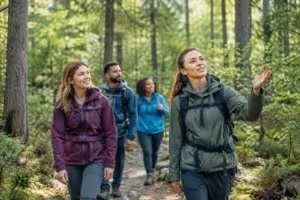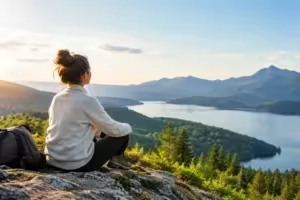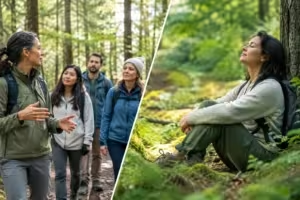
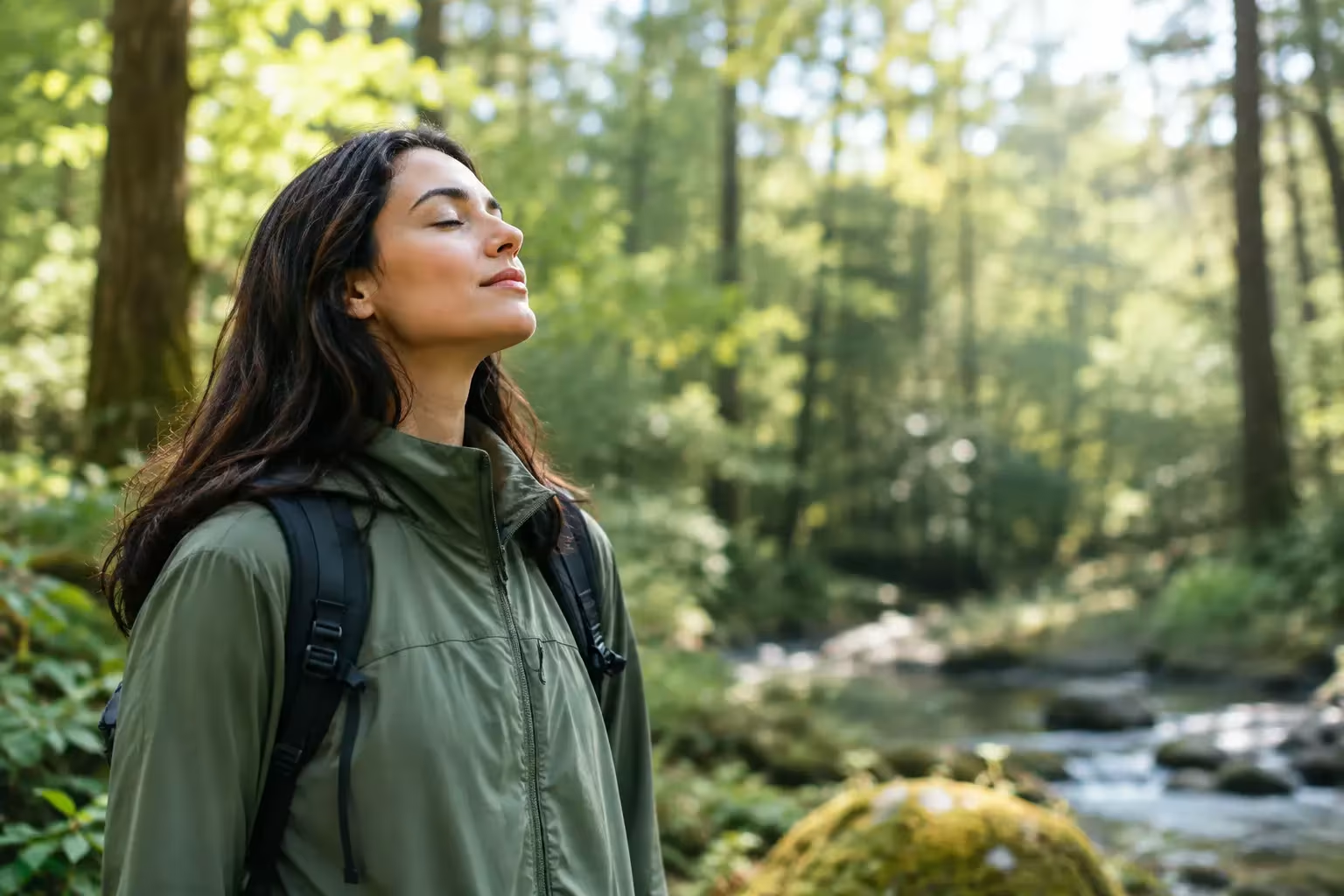
A calendar full of meetings can leave the mind running long after the laptop closes. Forest bathing offers a quieter response: step into a natural setting, slow down, and let your attention settle on what is actually around you. The forest bathing benefits people notice most often – a calmer nervous system, clearer thinking, and a renewed sense of connection – come not from covering miles, but from being present.
Known in Japan as Shinrin-Yoku, forest bathing is the mindful practice of spending unhurried time in nature. It can happen in a woodland, a local park, a tree-lined trail, or any green space that invites you to pause. For wellness-minded individuals and professionals alike, it is a simple practice with meaningful potential when approached with care, consistency, and respect for the natural world.
What Forest Bathing Is, and What It Is Not
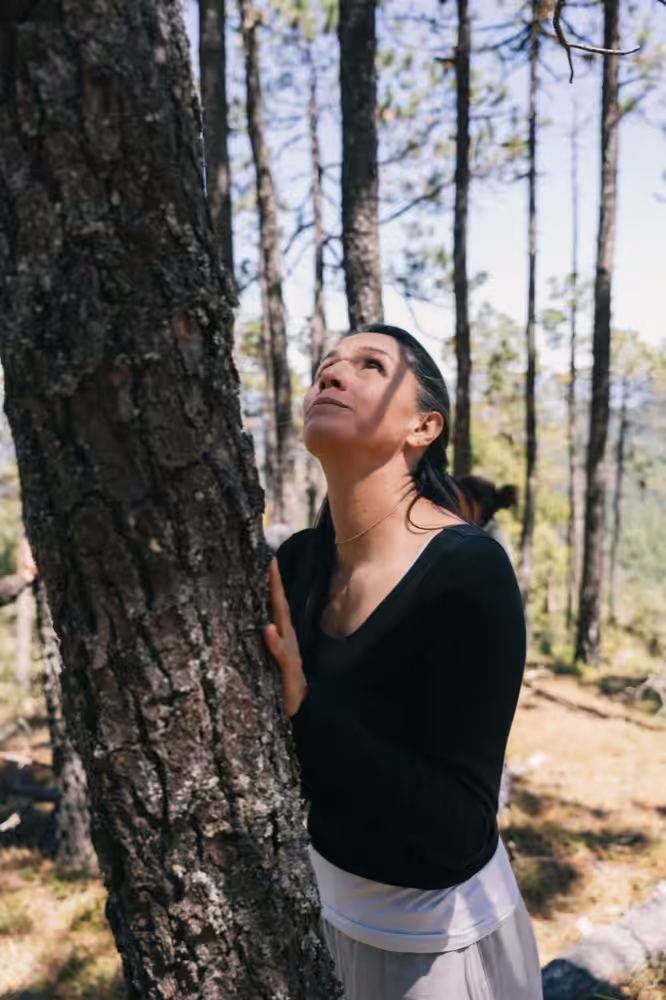
Forest bathing is not a fitness challenge, a guided hike with more scenery, or a reason to leave your phone on while answering messages outdoors. Movement may be part of the experience, but the purpose is sensory awareness. You may notice the texture of bark, the movement of light through leaves, birdsong changing with the wind, or the scent of damp soil after rain.
A forest bathing session is often slow enough to feel unfamiliar at first. That is intentional. Modern life rewards speed, output, and constant problem-solving. Shinrin-Yoku creates room for a different state of attention, one where you do not need to achieve anything before you can rest.
This distinction matters for professionals offering nature-based wellbeing experiences. A thoughtful session needs more than beautiful scenery. It needs a clear invitation, appropriate pacing, participant safety, and the skill to hold a calm, inclusive space without forcing an outcome.
Forest Bathing Benefits Supported by Nature Research
Research on time spent in natural environments has linked it with outcomes such as lower perceived stress, improved mood, mental restoration, and better attention. Studies of forest settings in particular have explored changes in stress-related physiological measures, including heart rate, blood pressure, and cortisol. Individual responses differ, and forest bathing is not a replacement for medical or mental health care. Still, the evidence gives substance to what many people feel after an attentive hour among trees: the body can begin to soften its guard.
A gentler response to stress
Stress is not always loud. It can show up as shallow breathing, tense shoulders, irritability, racing thoughts, or the sense that even small decisions require too much effort. Natural settings may help interrupt that cycle by offering what attention researchers call soft fascination. A fern unfurling, a drifting cloud, or the rhythm of branches in a breeze can hold awareness without demanding analysis.
Unlike a scrolling feed or a packed schedule, nature does not continually ask for a response. That can create space for the nervous system to shift from vigilance toward restoration. The effect is not guaranteed after one visit, particularly during a difficult period, but regular exposure can become a supportive part of a wider stress-care practice.
Clearer attention and creative thinking
Many professionals know the feeling of staring at a task while their concentration becomes increasingly narrow and unproductive. Time in green space can give directed attention a chance to recover. Rather than pushing harder, forest bathing encourages a deliberate release of mental strain.
The benefit is not necessarily a dramatic burst of inspiration at the trailhead. It may be subtler: a conversation feels easier to navigate, a decision becomes less tangled, or a creative problem seems more approachable when you return. For people in caregiving, leadership, education, and client-facing roles, that renewed spaciousness can be especially valuable.
Support for mood and emotional balance
Nature does not erase grief, anxiety, burnout, or depression. Promising that would be neither accurate nor compassionate. What it can offer is a setting where emotions have more room to move. The sensory richness of a forest can gently anchor you in the present when the mind is pulled toward regret, worry, or self-criticism.
For some, the most meaningful moment is not joy but relief: a few minutes without needing to explain how they feel. Over time, a familiar nature practice can become a dependable place to check in with yourself, notice what needs care, and reconnect with the parts of life that feel meaningful.
More restful evenings and healthier rhythms
Morning light, gentle movement, and time away from screens can all support the routines that make sleep more attainable. Forest bathing is not a treatment for insomnia, but an afternoon walk or quiet sit outdoors may help create a clearer transition out of work mode.
Timing matters. If a late-evening outing feels unsafe or impractical, choose daylight. If a vigorous hike leaves you energized rather than settled, make the practice slower and shorter. The aim is to notice what helps your own system downshift.
Connection beyond the self
One of the less measurable forest bathing benefits is perspective. When you observe an ecosystem at work – fallen leaves becoming soil, insects moving beneath a log, trees sharing a canopy – personal concerns may not disappear, but they can take on a different scale.
This connection can also deepen environmental care. A person who regularly sits beside a creek or learns the seasonal changes of one neighborhood tree may be more inclined to protect the places that support their wellbeing. Personal restoration and stewardship can reinforce each other.
How to Begin a Forest Bathing Practice
You do not need wilderness access, expensive equipment, or a full free day. Begin with 20 to 40 minutes in a nearby green space. Choose a route or spot where you can move slowly and feel reasonably comfortable. Let someone know where you are if you are heading somewhere remote, and follow local trail guidance.
Start by placing your phone on silent and putting it away. Before walking, take a few natural breaths and notice the points where your feet meet the ground. There is no need to force deep breathing or empty your mind. Simply arrive.
Walk at a pace that allows you to notice detail. Pause when something catches your attention. You might touch a stone, listen for the farthest sound you can hear, or look closely at the range of colors in a patch of moss. If thoughts about work appear, acknowledge them without a fight and return to one sensory experience.
After 10 or 15 minutes, find a safe place to stand or sit quietly. Ask yourself a simple question: What is the natural world offering my senses right now? Let the answer be direct. Cool air. Pine scent. A bird call. Sun on your hands. This is not a test of mindfulness. It is an opportunity to practice receiving the moment.
Before leaving, take a final slow look around. Consider one small way to carry the experience into the rest of your day, such as taking three breaths before the next meeting or stepping outside before checking email.
When a Guided Experience Can Help
Self-guided forest bathing is accessible and deeply worthwhile. Yet guidance can be helpful when you are new to mindfulness, find it hard to slow down, or want a more intentional group experience. A trained guide uses invitations rather than instructions, balances quiet with shared reflection, and adapts the session to the setting and participants.
For wellness professionals, formal training can provide the structure behind the experience: ethical facilitation, risk awareness, accessible session design, and a grounded understanding of the research. An accredited Forest Bathing Guide Certification can also help coaches, yoga teachers, retreat facilitators, and outdoor educators offer this work with greater confidence and professional clarity.
The setting matters, but perfection is not required. A city park may be more sustainable for a weekly practice than a distant forest visited twice a year. A wheelchair-accessible botanical garden may offer more ease than an uneven trail. In hot weather, cold weather, or periods of poor air quality, a shorter visit or a view of trees from a sheltered space may be the wiser choice.
Choose one nearby place where you can return without making it another item to optimize. Learn how its light changes, where the birds gather, and what the ground smells like after rain. The real value of forest bathing often begins there: not in escaping your life, but in meeting it with a steadier, more spacious mind.