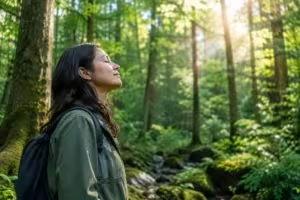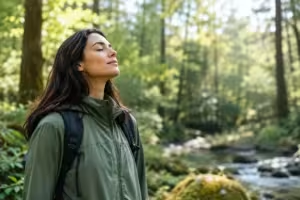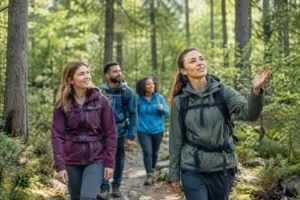
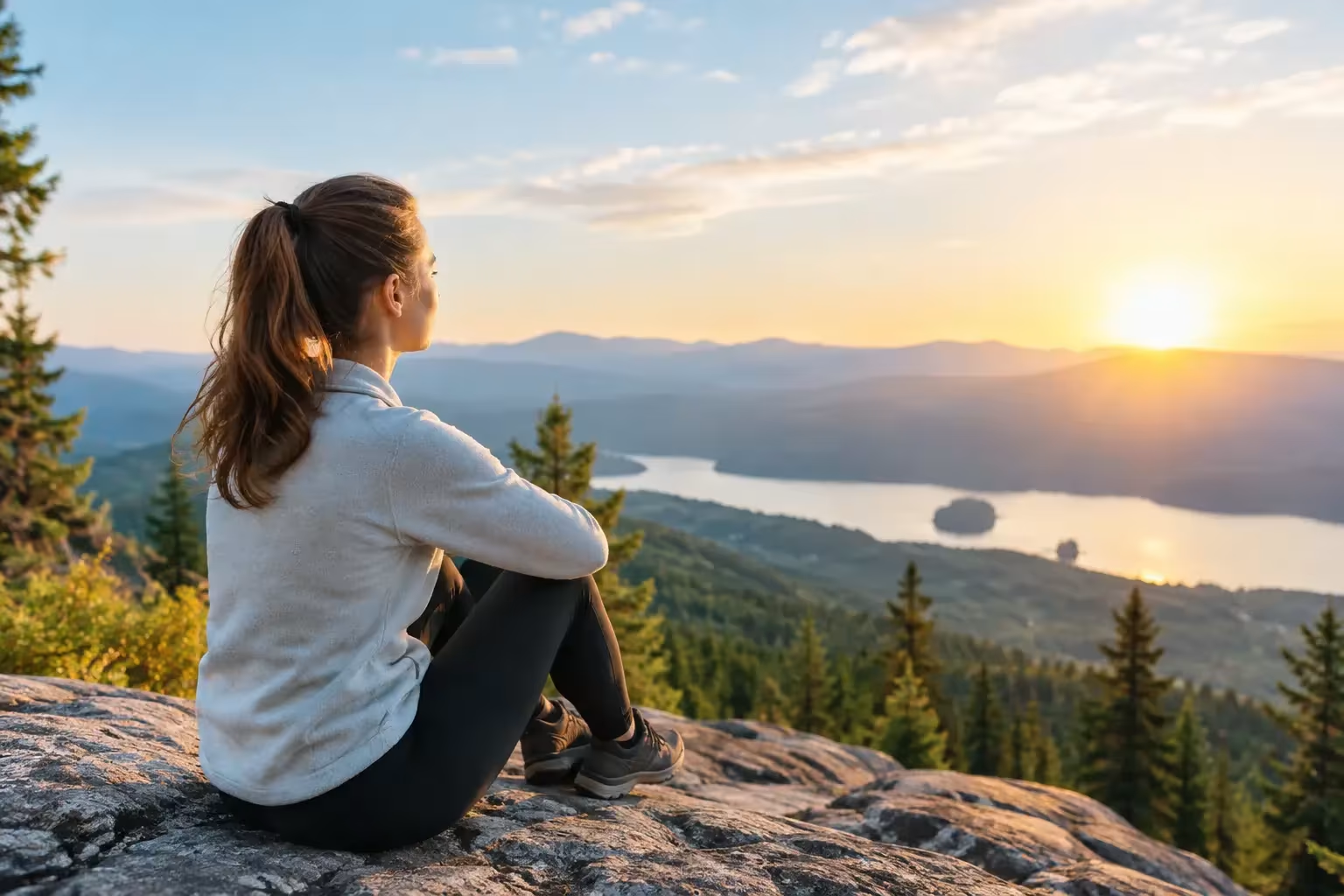
The next time your thoughts begin racing between meetings, errands, or notifications, do not ask your mind to become perfectly quiet. Step outside and give it something real to notice: the temperature on your hands, the sound of a bird beyond the traffic, the uneven ground beneath your feet. Outdoor mindfulness begins there – not with performance, but with attention.
For many people, time outside is already restorative. A walk through a neighborhood park, a pause beneath a mature tree, or an afternoon on a woodland trail can create welcome distance from screens and schedules. Mindful time outdoors adds intention to that experience. It helps you shift from simply passing through nature to actively receiving what it offers.
What Is Outdoor Mindfulness?
Outdoor mindfulness is the practice of bringing open, nonjudgmental awareness to your experience in natural settings. You may notice sights, sounds, scents, physical sensations, and thoughts as they arise, without needing to analyze or change them. The setting can be a forest, beach, garden, urban greenway, or a quiet corner of your backyard.
It is closely related to mindfulness meditation, but the living environment becomes part of the practice. Wind moving through leaves gives your attention somewhere to rest. Birdsong interrupts habitual thinking. A tree’s texture, a patch of moss, or the scent of rain can invite you back into your senses when your mind has drifted toward planning or worry.
Forest bathing, also known as Shinrin-Yoku, is one structured nature-based wellness practice that shares this foundation. It is not hiking for distance, exercise for performance, or a scavenger hunt for a perfect view. The pace is generally slow, and the purpose is connection: with the natural world, with the body, and with the present moment.
Why Nature Can Make Mindfulness More Accessible
Sitting quietly indoors can be valuable, but it is not always easy. For someone carrying stress, fatigue, or a full mental load, an empty room may leave too much space for rumination. Outdoors, gentle sensory information gives the mind a softer focus.
Research on nature exposure has linked time in green environments with lower stress, improved mood, and restored attention. The details matter, however. A rushed walk while checking messages may not have the same effect as a slower, device-free practice. The goal is not to force a particular outcome. It is to create conditions where the nervous system has more room to settle.
This is one reason outdoor mindfulness can be especially useful for busy professionals and caregivers. It does not require a silent retreat, expensive equipment, or an hour of uninterrupted meditation. A consistent 10-minute practice near home can become a meaningful reset between the demands of daily life.
At the same time, nature is not a cure-all. If you are living with persistent anxiety, depression, trauma, or another mental health concern, outdoor practice can complement professional care but should not replace it. A qualified healthcare provider can help you determine what support is appropriate for your needs.
A Simple Outdoor Mindfulness Practice
Choose a location where you can feel reasonably safe and unhurried. It does not need to be remote. A local park, botanical garden, shaded street, or your own patio can work well. Leave enough time to arrive without rushing, even if you have only 15 minutes.
Begin by arriving in your body
Before walking, stand or sit for a moment. Feel the contact between your feet and the ground, or between your body and the bench beneath you. Notice your breathing without trying to deepen it. Ask yourself one quiet question: What is here right now?
You may notice tension in your jaw, warmth in your chest, or a strong urge to move on quickly. None of this is a problem. Mindfulness is not the absence of distraction. It is the repeated, kind return to what is actually happening.
Let your senses lead
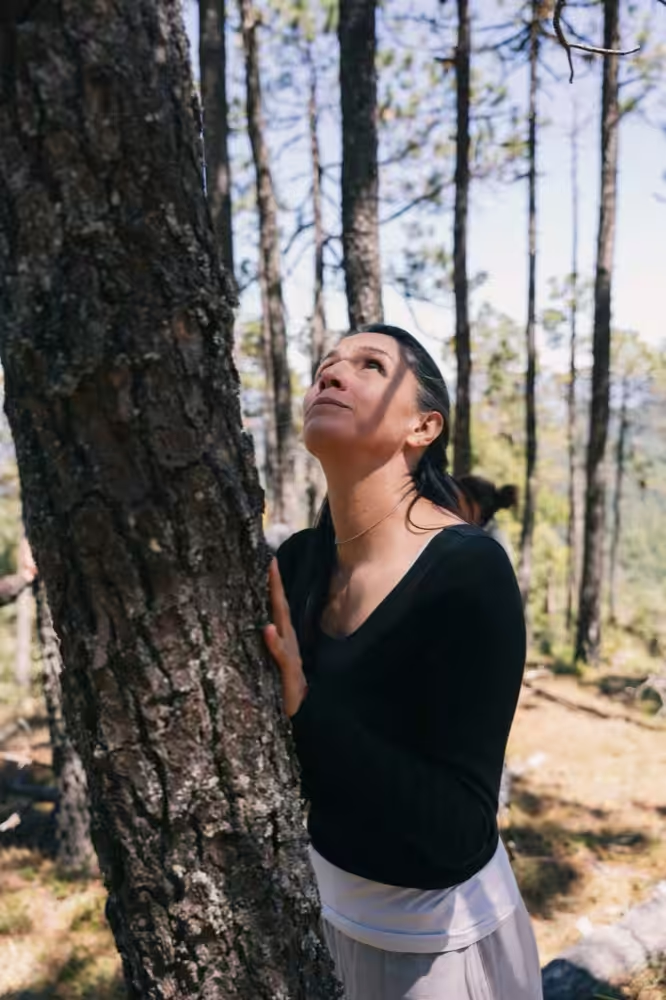
Walk slowly, allowing your senses to guide your attention one at a time. Spend a minute listening for the closest sound, then the farthest one. Notice color and movement without naming every object. If it feels comfortable, touch the bark of a tree, a smooth stone, or a fallen leaf, while respecting the place and leaving living plants undisturbed.
Try to receive the environment before interpreting it. Rather than deciding that a breeze is pleasant or unpleasant, simply notice coolness against your skin and the movement of fabric at your arms. This small shift from judgment to observation can interrupt the habit of mentally sorting every experience into good, bad, productive, or wasted.
Make room for the wandering mind
Your mind will make lists. It may replay a conversation or rehearse a decision. That is normal. When you notice you have become caught in thought, use a sensory anchor to return: the pressure of each step, the shape of a branch against the sky, or the rhythm of your breath.
There is no need to scold yourself for losing focus. Each return is the practice. Over time, these brief moments of reorientation can strengthen your ability to recognize stress before it carries you away.
Close with one observation
Before you leave, pause and identify one detail you might have missed if you had moved through the space automatically. Perhaps it is the scent of cedar, the layered sounds of rain, or the surprising resilience of a plant growing through pavement. Carry that observation with you, not as a task to preserve the feeling, but as evidence that attention changes what you are able to perceive.
Making the Practice Work in Real Life
The most effective practice is usually the one you can repeat. A dramatic weekend hike may be memorable, but a short visit to the same park three times a week can build a steadier relationship with nature. Consistency gives your body a familiar cue: this is time to slow down and notice.
It also helps to match the practice to the season and your circumstances. In summer, early morning may offer quieter trails and safer temperatures. In winter, a five-minute practice outside a workplace or apartment building may be more realistic than a long excursion. Rain can be a rich sensory experience when you have suitable clothing, but severe weather, poor air quality, and unsafe trail conditions are clear reasons to choose another day or an indoor practice near a window.
Phones deserve an honest decision. For safety and navigation, keep one with you. For attention, silence notifications and resist documenting every moment. Taking a photo can be intentional, but constant photographing places you behind the experience rather than inside it.
If you are a wellness professional, outdoor mindfulness can also become a thoughtful offering for clients or groups. Responsible facilitation requires more than leading people down a trail. It involves understanding consent, accessibility, local conditions, group pacing, risk awareness, and how to offer invitations rather than commands. Formal training can provide the structure and confidence to guide these experiences ethically. Treeming.org offers accredited Forest Bathing Guide Certification for practitioners who want to develop those skills through flexible, science-informed online learning.
The Deeper Practice Is Relationship
Outdoor mindfulness is sometimes presented as a personal wellness tool, and it can certainly support rest, clarity, and emotional regulation. Yet its value can extend beyond individual relief. When people learn to notice a particular tree, the changing light in a local park, or the return of birds in spring, nature becomes less abstract.
That relationship can encourage care. You may begin to choose lower-impact habits, support green spaces, or simply pay closer attention to what your local environment needs. This is not about adding another obligation to your day. It is about recognizing that well-being and stewardship are often connected.
Start small enough that you can begin this week. Stand outside for five unhurried minutes. Feel the ground, listen beyond the nearest noise, and let one living detail hold your attention. The natural world does not demand that you arrive perfectly calm. It only asks that you arrive.