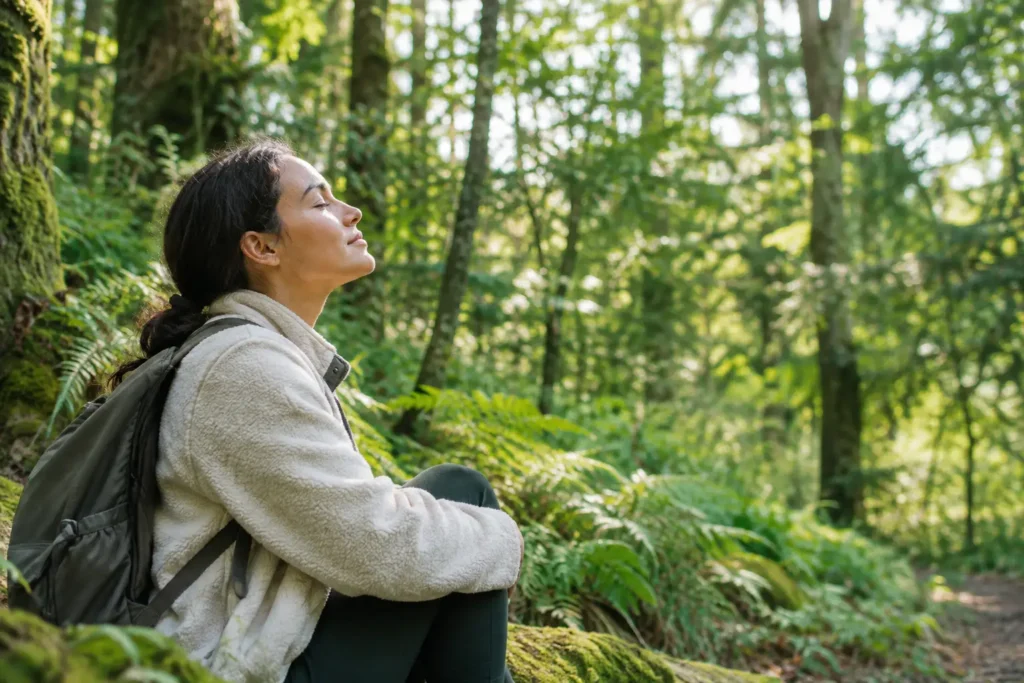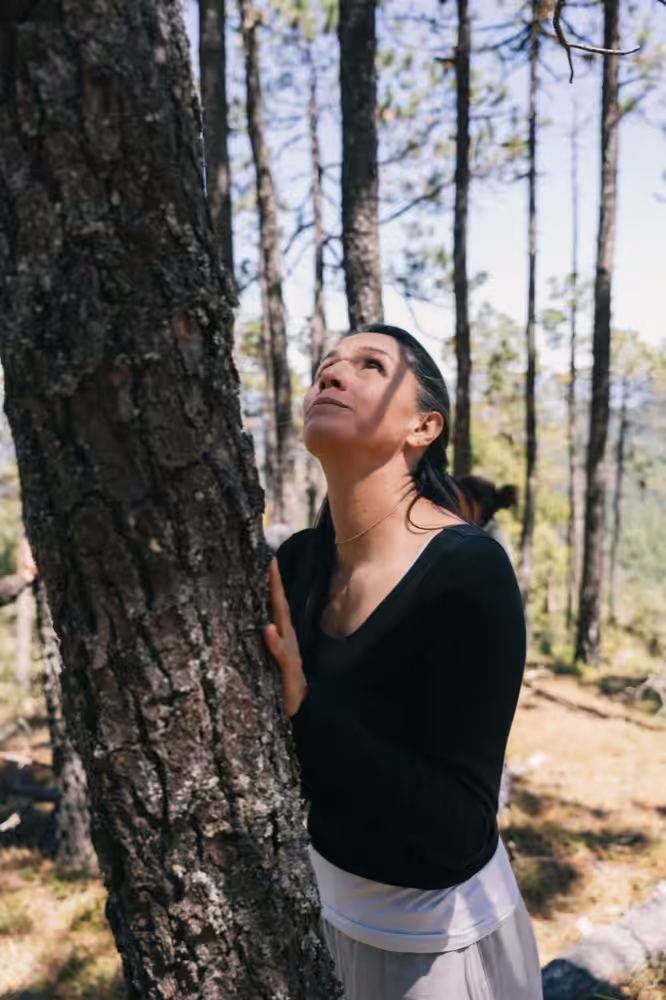

You do not need hiking boots, a retreat schedule, or a spiritual background to understand what is shinrin yoku in simple terms. At its core, it means spending slow, intentional time in nature – usually among trees – and noticing what you see, hear, smell, and feel. It is less about exercise and more about presence.
That distinction matters. Many people already walk outside, jog through parks, or squeeze in a weekend hike. Shinrin-yoku is different because the goal is not distance, fitness, or performance. The practice invites you to be with the forest rather than move through it as quickly as possible.
What is shinrin yoku in simple terms?
In simple terms, shinrin-yoku is often translated as forest bathing. That does not mean taking a bath in the woods. It means immersing yourself in the atmosphere of the forest with your senses.
The phrase comes from Japan, where shinrin means forest and yoku means bath. Put together, it suggests bathing in the experience of nature. You are not trying to achieve anything dramatic. You are allowing the natural environment to influence your nervous system, your attention, and your mental state.
For many adults living with constant notifications, deadlines, and decision fatigue, that can feel surprisingly unfamiliar. Shinrin-yoku creates a structured way to slow down enough for your body and mind to register safety, spaciousness, and calm.
Why people are drawn to forest bathing
Most people arrive at this practice for a practical reason. They feel overstimulated, mentally tired, emotionally flat, or disconnected from themselves. They want a method that feels gentle but grounded.
Forest bathing meets that need because it is simple and scientifically backed. Research has linked time in natural settings with lower stress, improved mood, better attention, and a greater sense of well-being. Not every walk in the woods produces the same result, and no single practice works the same for everyone, but the broader pattern is clear: nature supports human health.
That is one reason shinrin-yoku has grown far beyond a niche wellness trend. It appeals to people who want stress relief without intensity, mindfulness without pressure, and personal restoration that does not depend on another screen, subscription, or productivity tool.
How shinrin-yoku actually works
A helpful way to think about forest bathing is that it shifts your mode of attention. In daily life, your attention is often narrow and task-focused. You scan, sort, respond, and plan. That kind of concentration is useful, but when it never turns off, it can leave you drained.
Natural environments tend to invite softer attention. Instead of locking onto one urgent thing, your mind begins to open. You notice birdsong, changing light, bark texture, cool air, and subtle movement in the leaves. This sensory engagement can help interrupt stress loops and restore mental clarity.
There may also be physiological effects. Forest environments can support lower cortisol levels, steadier heart rate, and a calmer emotional baseline. Some research also explores the role of phytoncides, the natural compounds released by trees, though the experience is not reducible to one biological mechanism. The benefits likely come from several factors working together: slower breathing, sensory grounding, less noise, less digital input, and more contact with living systems.
What a forest bathing practice looks like
A shinrin-yoku session usually looks quieter and slower than people expect. You might begin by pausing at the edge of a wooded area and taking a few deeper breaths. Then you walk slowly, sometimes without a fixed destination.
Rather than counting steps, you pay attention to sensory details. What scents are in the air? What sounds are close and far away? How does the ground feel under your feet? What catches your eye when you stop trying to rush?
Some sessions include invitations such as touching tree bark, sitting in stillness, or observing light patterns for several minutes. Others may include gentle reflection or silent wandering. The point is not to perform the practice correctly. The point is to become more fully present.
A formal guided session often adds more structure. A trained guide may offer a sequence of sensory invitations designed to help participants settle, connect, and reflect. This can be especially helpful for beginners or for wellness professionals who want to facilitate safe, meaningful experiences for others.
What shinrin yoku is not
It helps to clear up a few common misunderstandings.
Shinrin-yoku is not a workout, although it may involve walking. It is not a survival skill, a hiking challenge, or a test of outdoor toughness. It is also not limited to people who identify as highly spiritual.
At the same time, it is not just “being outside” in the most casual sense. A rushed phone call while crossing a park is better than no nature at all, but it is not the same as intentionally slowing down and engaging your senses.
And while many people experience forest bathing as deeply calming, it is not a cure-all. It can support mental and emotional well-being, but it does not replace professional medical or mental health care when that level of support is needed. The most honest answer is that its effects depend on the person, the setting, and the consistency of the practice.
Do you need a forest to practice it?
Not always. A dense woodland can be ideal, but the essence of the practice is sensory immersion in a natural environment. If you live near a park, nature preserve, botanical garden, or tree-lined trail, you can still practice meaningfully.
The richer the natural setting, the easier it may be to settle in. Still, accessibility matters. A small local green space used consistently can be more beneficial than waiting for the perfect forest getaway that never happens.
For urban professionals, this is an important trade-off to understand. A nearby patch of trees may not feel dramatic, but regular contact often matters more than occasional ideal conditions. Shinrin-yoku works best when it becomes a rhythm, not a rare event.
Why the practice feels so different from a normal walk
A normal walk often has an agenda. You are getting somewhere, burning calories, listening to a podcast, or clearing your head by thinking through a problem. Forest bathing asks you to loosen that agenda.
That shift can feel awkward at first. Many adults are highly trained in doing, measuring, and optimizing. Standing still in the woods for three minutes may feel harder than a three-mile walk. But that is also where the practice begins to work on a deeper level.
When you stop trying to use nature as a backdrop and begin relating to it with attention, your experience changes. The forest becomes less like scenery and more like a setting that supports regulation, reflection, and quiet restoration.
Why wellness professionals are paying attention
If you are a coach, therapist, yoga teacher, meditation instructor, retreat leader, or educator, shinrin-yoku offers more than a personal wellness habit. It can also become a meaningful professional modality when approached with proper training.
That is because guided forest bathing is not simply taking clients on a walk. It involves pacing, sensory invitations, trauma-aware facilitation, group presence, and an understanding of the science behind nature-based well-being. Credible education matters, especially if you want to offer this work ethically and confidently.
Organizations such as Treeming have helped make this path more accessible through accredited, self-paced online training that combines mindfulness principles with research-based instruction. For professionals who want a globally recognized framework, that kind of structure can bridge personal passion and professional practice.
A simple way to try shinrin-yoku today
If you want to experience it for yourself, choose a natural place where you can move slowly and safely for 20 to 30 minutes. Silence your phone or put it away. Walk without rushing. Pause often.
Let your attention rest on simple sensory details rather than thoughts about what the experience is supposed to do. Notice the air on your skin, the shapes of branches, the sound layers around you, and the way your body feels after a few unhurried minutes.
If your mind wanders, that is normal. You do not need a perfect state of calm. You only need to return to what is right in front of you.
The most helpful thing to remember is this: shinrin-yoku is not about escaping life. It is about reconnecting with a steadier way of being inside it. Sometimes healing begins with something as quiet as standing beneath trees long enough to remember that your nervous system was never designed for constant noise.