
When your system feels stuck on high alert, the usual advice to just relax can feel almost insulting. A racing mind, shallow breathing, tight shoulders, poor sleep, and that low hum of tension are not simply habits of thought. They are signs that your nervous system may be spending too much time in protection mode. This is where forest bathing for nervous system regulation becomes more than a wellness trend. It becomes a practical, research-informed way to support the body’s return to safety, calm, and balance.
Forest bathing, or Shinrin-Yoku, is the practice of immersing yourself in nature through slow, sensory awareness rather than exercise or performance. You are not hiking for mileage or trying to reach a destination. You are intentionally relating to the natural environment in a way that invites the body to soften its stress response. For many people, that shift is the beginning of deeper restoration.
Why the nervous system responds to nature
Your nervous system is constantly scanning for cues. It reads the environment, other people, and your internal state to decide whether to mobilize, shut down, or settle. In a fast-paced, screen-heavy, noise-saturated world, the system can become overloaded. Even when there is no immediate danger, the body may continue acting as if there is.
Nature offers a different set of cues. Trees move slowly. Light changes gradually. Natural sounds tend to be layered and rhythmic rather than abrupt. The air feels different. The visual field is softer and more complex than a phone screen or office wall. These qualities can support a shift away from chronic sympathetic activation, often called fight-or-flight, and toward parasympathetic states associated with rest, digestion, and recovery.
That does not mean every walk in the woods instantly resets the body. It depends on the person, the setting, and the level of stress they are carrying. Someone who feels unsafe outdoors, has trauma associated with isolation, or is physically uncomfortable may not experience immediate calm. Nervous system regulation is not about forcing a peaceful feeling. It is about offering the body conditions that make regulation more possible.
Forest bathing for nervous system regulation in real terms
The reason forest bathing for nervous system regulation resonates with so many people is that it works on more than one level at once. The body slows down through reduced stimulation. Attention widens and becomes less effortful. Breathing often deepens without being forced. Muscle tension may release as there is no demand to produce, perform, or rush.
Research on time in nature has linked it with reductions in perceived stress, improved mood, lower cortisol in some settings, and beneficial effects on heart rate variability, blood pressure, and mental fatigue. The exact mechanisms are still being studied, and not every study shows the same result. Still, the overall direction is clear enough to matter. Nature exposure appears to support the body’s stress regulation systems in ways that are meaningful for many adults.
Forest bathing adds intention to that exposure. Rather than using nature as background scenery, it turns nature into the practice itself. That distinction matters. A distracted walk while answering messages may be pleasant, but it is different from slowing down enough to let your senses fully orient to place.
What happens during a forest bathing practice
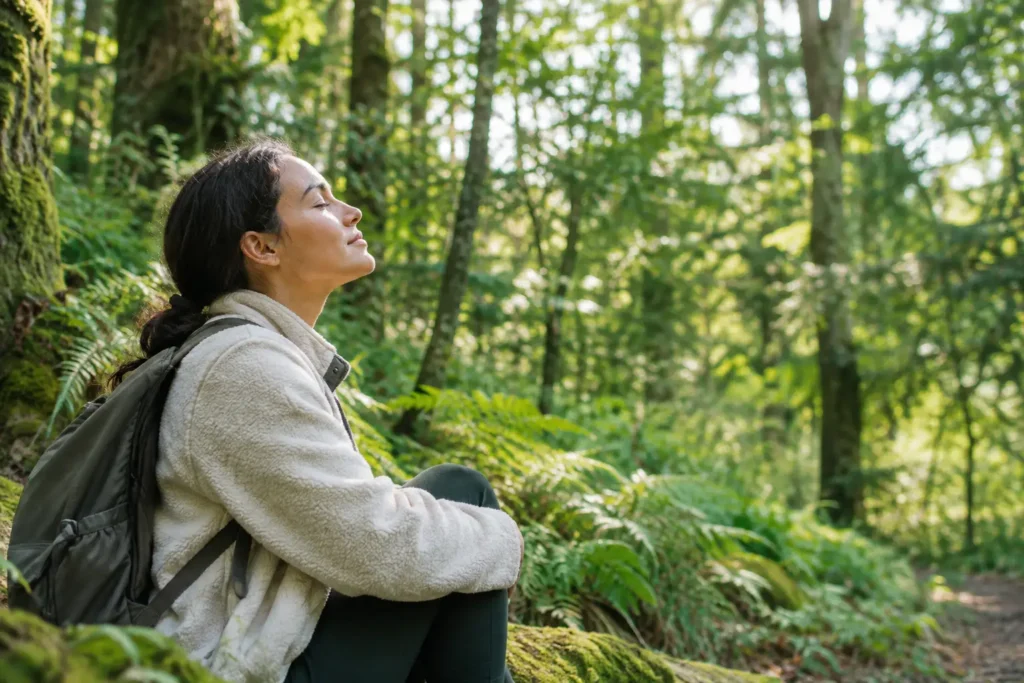
A well-guided forest bathing session is gentle by design. You begin by arriving rather than striving. That may mean pausing at the trailhead, noticing contact between your feet and the ground, or sensing the temperature of the air on your skin. From there, attention is guided through the senses – what you hear, smell, see, or feel.
This sensory orientation helps interrupt loops of rumination and brings awareness back into the body. For an overstimulated nervous system, that can be deeply supportive. The goal is not to empty the mind. The goal is to create enough spaciousness that the body no longer has to stay braced.
As the practice continues, many people notice subtle changes. Their exhale becomes longer. Their jaw unclenches. Thoughts become less sticky. Time feels less compressed. These are small signs, but they matter. Regulation often returns in increments, not dramatic breakthroughs.
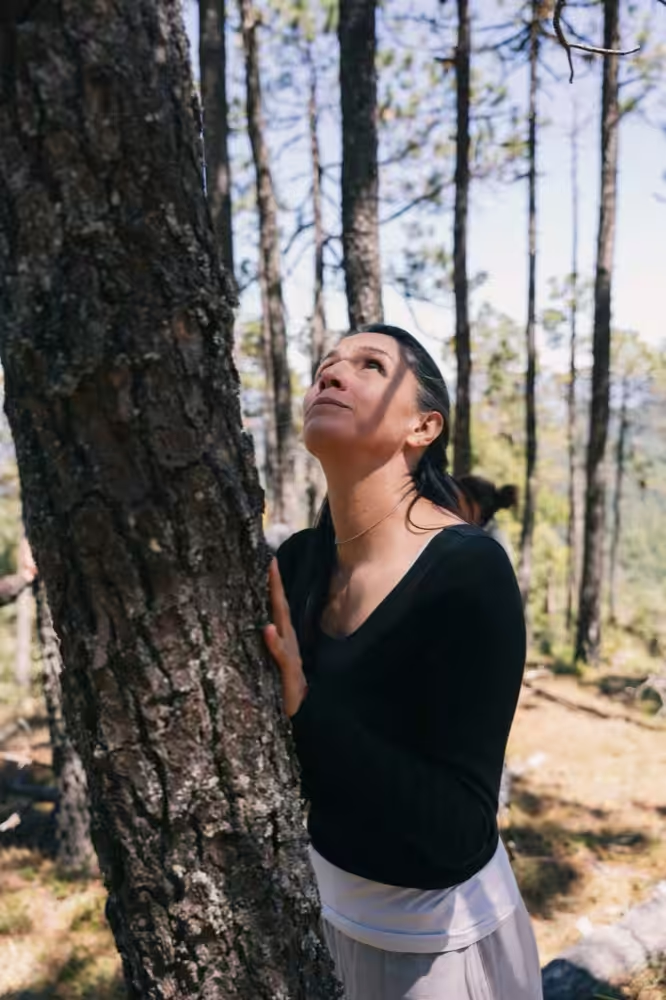
There is also a relational aspect. Forest bathing invites connection with the more-than-human world. For some, this reduces the sense of isolation that often travels with burnout, stress, and emotional overwhelm. Feeling connected does not solve every problem, but it can change the internal conditions from which healing becomes possible.
The science-backed value of slow nature immersion
One reason this practice has gained respect in clinical, coaching, and wellness spaces is that it sits at the intersection of ancient wisdom and modern evidence. We know that chronic stress affects sleep, mood, focus, inflammation, and long-term health. We also know that restorative environments can support cognitive recovery and emotional regulation.
Forest environments may provide specific benefits because they combine sensory softness, natural fractal patterns, cleaner air in many settings, and a slower pace of attention. Some studies also explore the role of phytoncides, the natural compounds released by trees, in supporting immune and stress-related processes. The science is promising, but it is wise not to oversell any single mechanism. Forest bathing is powerful precisely because it is not reducible to one ingredient.
For wellness professionals, this nuance matters. Clients do not need inflated claims. They need credible, grounded guidance. Forest bathing is best framed as a supportive practice for stress reduction and regulation, not a cure-all. That balanced approach builds trust and aligns with the way the nervous system actually works.
How to practice forest bathing for nervous system regulation
You do not need a remote wilderness area or a full-day retreat to begin. A wooded park, quiet trail, botanical garden, or tree-rich green space can be enough. What matters most is your pace and attention.
Start with 20 to 40 minutes if you are new to the practice. Leave your phone on silent and avoid treating the time as exercise. Walk slowly enough that you can notice details – the texture of bark, the movement of leaves, the pattern of light on the ground. Pause often. Let your eyes rest on something natural without analyzing it. Notice sounds at different distances. If it feels supportive, place one hand on your chest or abdomen and allow your breath to settle on its own.
If your mind stays busy, that does not mean you are doing it wrong. A dysregulated nervous system does not always settle quickly. Some people need repeated exposure before the body begins to trust the experience. Consistency tends to matter more than intensity.
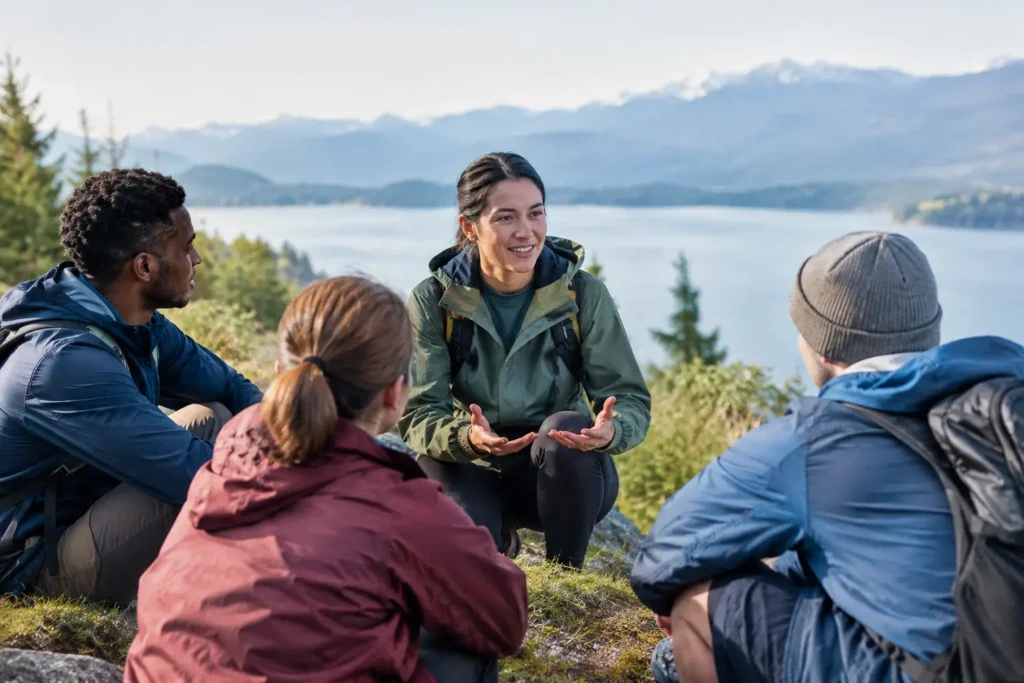
It can also help to practice with structure. Guided invitations create a container that is especially useful for people who are used to achievement-oriented routines. This is one reason formal training has become valuable not only for personal well-being, but also for professional application.
When guidance and training make a difference
For personal practice, a trained guide can help you move beyond the idea of taking a nice walk and into a deeper, more therapeutic quality of presence. For professionals, proper education is even more important. Nervous system language is now common in wellness spaces, but not all instruction is skillful or evidence-based.
A strong training program should cover the foundations of forest bathing, the science of stress and restoration, ethical facilitation, session design, and the difference between supportive practice and clinical treatment. It should also be flexible enough for adults building a meaningful wellness path alongside work and family responsibilities.
That is why accredited online education has become such a compelling option. At Treeming.org, forest bathing training is designed to be both restorative and rigorous, with a science-backed curriculum, globally recognized certification, and a model that also supports reforestation. For aspiring guides, coaches, yoga teachers, therapists, and retreat leaders, that combination of credibility and purpose matters.
Who benefits most from this practice
Forest bathing can be especially supportive for adults navigating chronic stress, professional burnout, digital overload, and emotional fatigue. It also fits naturally for people who want a mindfulness practice that feels less abstract and more embodied.
For practitioners, it offers a way to expand services with an approach that is gentle, structured, and increasingly relevant. Clients are asking for tools that help them feel safer in their bodies, not just more productive in their schedules. Nature-based regulation meets that need in a way that feels both timeless and current.
Still, context matters. Forest bathing is not a replacement for mental health care when someone is dealing with severe trauma, panic, or complex psychiatric symptoms. In those cases, it may be a valuable complement, but not the whole plan. Respect for scope, pacing, and individual difference is part of what makes the practice trustworthy.
The beauty of forest bathing is that it does not ask you to become someone new. It asks you to slow down long enough to remember that your body already knows how to respond to safety, rhythm, and living systems. Sometimes the most meaningful regulation begins there – not by pushing harder, but by letting the forest show your nervous system another way to be.