
You can tell when a walk is just a walk—and when something inside you finally unclenches.
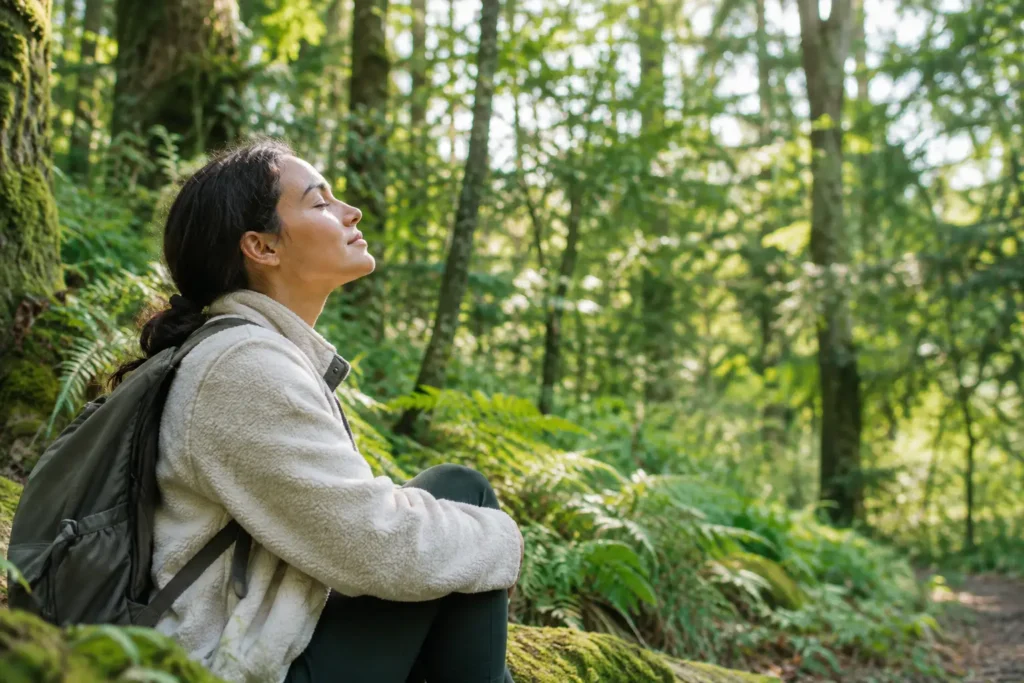
Forest bathing, also known as Shinrin-Yoku, is designed for that second kind of experience: an intentional, slow immersion in a forest or natural setting using your senses to regulate stress, restore attention, and reconnect you to your body and the living world around you.
What is forest bathing Shinrin-Yoku?
If you’re searching “what is forest bathing shinrin yoku,” you’re likely sensing there’s more to it than a trendy outdoor self-care idea. There is.
Shinrin-Yoku (translated as “forest bathing”) originated in Japan in the 1980s as a public health approach to rising stress and burnout. The practice is not about bathing in water. It’s “bathing” in the atmosphere of the forest—taking in the sights, sounds, textures, and scents of nature in a receptive, unhurried way.
The simplest definition is this: forest bathing is a guided or self-guided nature immersion practice that uses mindful attention and sensory engagement to support mental, emotional, and physiological well-being.
It’s different from hiking, trail running, or outdoor workouts because the goal isn’t distance, elevation, or performance. The “destination” is your nervous system settling into a calmer state.
Why forest bathing feels different from a regular nature walk
Many people already spend time outside, yet don’t experience the deeper reset that forest bathing can offer. The difference is intention.
On a regular walk, your mind tends to keep doing what it does all day: planning, reviewing conversations, solving problems, checking the time. In forest bathing, you practice shifting from “doing mode” to “being mode.” You move slowly enough that your senses can lead, and you allow the environment to meet you.
That may sound subtle, but it’s powerful. When you’re oriented to sensory experience—how light filters through leaves, the coolness of shade on your skin, the soft percussion of birdsong—your body receives repeated cues of safety. For many people, that’s the doorway to lowered stress and clearer thinking.
The science-backed benefits—and where the nuance lives
Forest bathing is widely discussed in the context of stress reduction, mood support, and improved mental clarity. Research in nature exposure and forest environments has associated time in forests with shifts in stress physiology (including stress hormones), improvements in self-reported mood, and supportive effects on attention and fatigue.
That said, wellness outcomes are rarely one-size-fits-all. A few important “it depends” factors matter:
Some benefits can be immediate—like feeling calmer after 20 minutes in a quiet grove. Others build over time, especially if your baseline stress is high or you’re recovering from prolonged burnout.
The environment matters. A busy park near traffic can still be supportive, but it may not produce the same depth of nervous system settling as a more enclosed, biodiverse forest. You work with what’s accessible, and you adjust expectations accordingly.
Your internal context matters too. If you’re anxious, grieving, or overstimulated, slowing down in silence may feel uncomfortable at first. That doesn’t mean it isn’t working; it may mean your system is finally feeling enough space to surface what it’s been holding.
Forest bathing is not a replacement for mental health care when it’s needed. It can be a meaningful complement, especially for people building a broader stress resilience toolkit.
How forest bathing works (without making it mystical)
Forest bathing sits at a useful intersection: ancient mindfulness practices, modern psychology, and environmental medicine.
At the body level, a slow pace and sensory focus can support parasympathetic activation—the “rest and digest” branch of the nervous system. When your breathing deepens naturally and your shoulders drop without force, your physiology is responding to cues of safety.
At the mind level, nature offers what researchers often describe as “soft fascination.” A moving canopy, flowing water, shifting clouds—these hold attention gently. Unlike screens or high-stimulation environments, the forest doesn’t demand constant decision-making. That can help restore directed attention, the type you burn through during workdays filled with emails, meetings, and multitasking.
At the emotional level, the forest can function like a quiet mirror. Without the usual noise, you may notice what you actually feel. Many people report a sense of perspective, gratitude, or emotional release—especially when they allow the experience to be simple rather than optimized.
And at the sensory level, there’s the atmosphere itself: the smell of damp earth, resin, and leaves; the negative ions near water; the gentle variability of natural light. You don’t have to explain every mechanism for your body to benefit from the whole experience.
A practical way to try Shinrin-Yoku today
You don’t need special gear, a perfect forest, or a three-hour window. You need a natural place and a willingness to go slower than you think you should.
Start by choosing a location where you can move without pressure—an arboretum, a wooded trail, a botanical garden, or a quiet park with trees. If possible, go at a time when you won’t feel rushed.
As you arrive, pause before you walk. Feel your feet on the ground. Let your eyes take in the broader landscape instead of locking onto a single point. This small shift—toward peripheral vision—often signals safety to the nervous system.
Then begin moving slowly. Not “slow for five seconds,” but genuinely unhurried. If you notice yourself speed-walking, that’s not a failure; it’s information. Gently return to a pace where you can notice details.
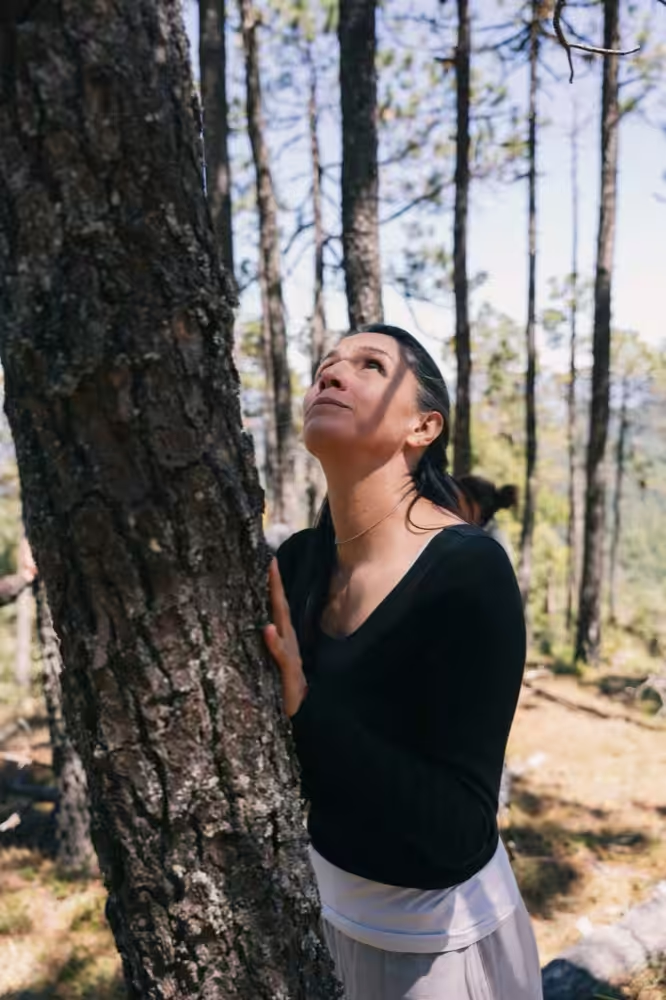
Now let your senses lead. Give yourself a few minutes with each sense: the shapes and colors around you; the layers of sound near and far; the texture of bark or a stone in your hand; the scent of air in shade versus sun. If thoughts arise, you don’t have to push them away. Acknowledge them, then return to what you can directly perceive.
If you want a simple structure, try a short “sit spot.” Choose a place that feels comfortable and safe, and sit for five to fifteen minutes. Watch what moves. Notice what stays still. Often, this is where the deepest settling happens.
When you’re ready to leave, end the practice intentionally. A quiet moment of gratitude—without forcing positivity—can help your brain encode the experience as restorative and worth repeating.
Common misconceptions that keep people from benefiting
Forest bathing isn’t about being “good at mindfulness.” If your mind wanders, you’re normal. The practice is returning, gently, again and again.
It also isn’t a fitness test. You can forest bathe with limited mobility, on a short path, or even from a bench under a tree. The key is immersion, not mileage.
And it isn’t only for people who already love nature. In fact, people who feel disconnected from the outdoors often experience the biggest shift—because the contrast to indoor life is so pronounced.
Safety and accessibility: making the practice truly supportive
A calming practice should not come with hidden stressors. Plan for comfort.
If you’re new to natural areas, choose a well-marked trail or familiar park. Let someone know where you are. Bring water, layers, and sun protection as needed. If bugs are a concern, use appropriate precautions so you’re not spending the whole time bracing.
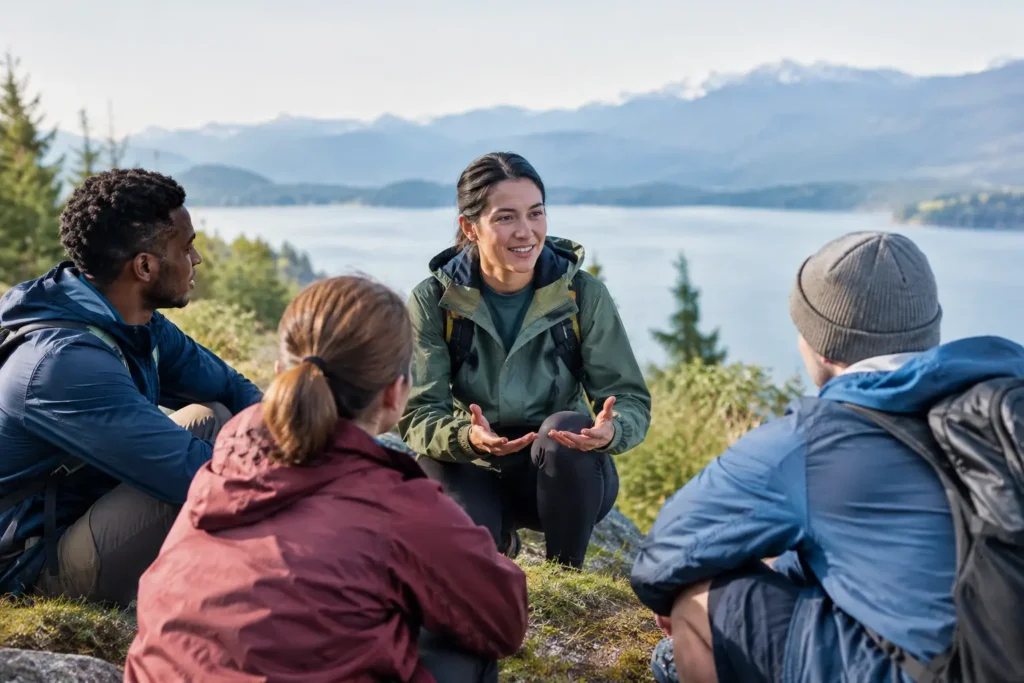
For emotional safety, consider whether solitude is supportive for you right now. Some people settle best alone. Others feel safer starting with a friend or a guided experience.
If you live in an area without forests, adapt the essence of Shinrin-Yoku. A cluster of trees, a river path, a community garden, even a courtyard with plants can offer a meaningful “micro-immersion” when you engage your senses and slow down.
Forest bathing as a personal practice—and a professional skill
Many people begin with forest bathing for personal well-being, then realize it’s also a powerful modality they want to share. For wellness professionals—coaches, yoga and meditation teachers, therapists, retreat leaders, outdoor educators—guiding a forest bathing session is not the same as “taking clients on a walk.”
A well-held session includes trauma-informed pacing, invitation language rather than pressure, and an understanding of how to create conditions for nervous system regulation. It also benefits from literacy in the research so you can speak about outcomes with credibility.
If you’re feeling called to deepen your practice or explore guiding professionally, training matters. One option is Treeming.org, which offers an accredited, science-backed Forest Bathing Guide Certification in a flexible online format—and ties enrollment to reforestation, aligning personal healing with tangible environmental stewardship.
The real point of Shinrin-Yoku
Forest bathing is not another task to perform perfectly. It’s permission to belong to the natural world again—slowly enough that your body can remember what “okay” feels like.
The next time you’re near trees, try this: don’t ask the forest to entertain you. Let it pace you. Let it soften you. Then carry that pace back into the rest of your life, one breath and one ordinary moment at a time.