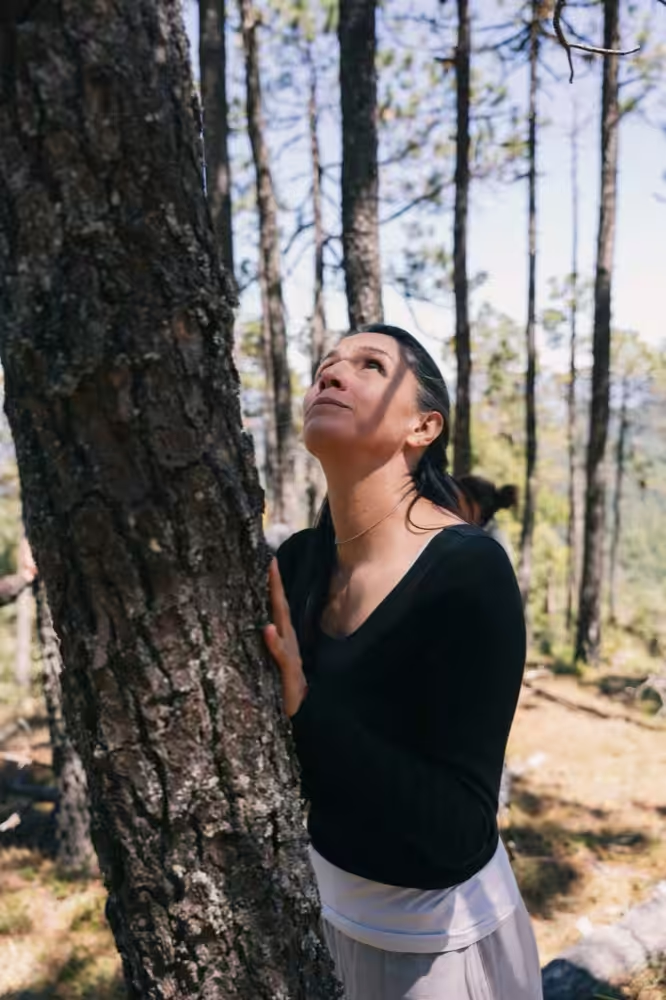

You can feel it the moment you slow down enough to notice it: the way your shoulders drop when you step under a canopy, the quiet recalibration that happens when your phone stays in your pocket. Forest bathing isn’t a hike and it isn’t a workout. It’s a guided, sensory-based practice—simple on the surface, surprisingly technical when you’re responsible for other people’s nervous systems.
That’s why forest bathing guide training matters. It turns a beautiful personal experience into a repeatable, ethical, trauma-aware, and professional offering. It also gives structure to something many people already crave: a reliable way to reduce stress, restore attention, and rebuild a relationship with nature without making it another performance metric.
What “forest bathing guide training” really prepares you for
A good training doesn’t just teach you what to do in the woods. It prepares you to lead people into an experience where “less” is the point—less talking, less striving, less pressure to be fixed.
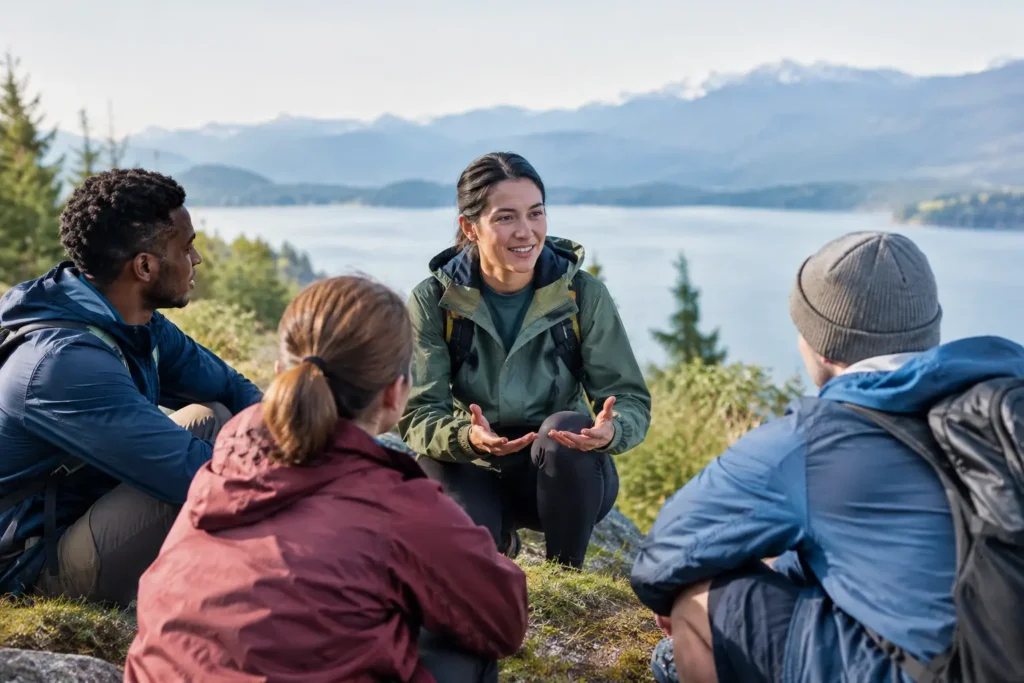
On the practical side, you’re learning how to design an experience arc: arrival, downshifting, sensory invitations, relational practices with the more-than-human world, and a closing that helps participants re-enter daily life gently. On the human side, you’re learning how to read a group, track energy without over-managing it, and hold a calm container when someone is tired, anxious, skeptical, or unexpectedly emotional.
And on the professional side, training should help you communicate what forest bathing is (and isn’t) in a way that’s both accessible and credible. In the US wellness market, “credible” isn’t a buzzword—it’s how you earn trust from clients, collaborators, and venues.
Personal practice vs. professional guiding: the gap training closes
If you’ve used forest bathing to support your own well-being, you already know the practice works in a lived sense. What often surprises new guides is how different it feels to lead it.
When you’re guiding, your nervous system becomes part of the environment. People unconsciously borrow your pace, your presence, and your sense of safety. That means your training should strengthen your self-regulation and your ability to facilitate without performing.
It also teaches boundaries. A guide is not a therapist, and a forest bathing session is not mental health treatment. But real feelings can surface when people slow down. A professional guide knows how to respond with warmth and steadiness while staying in scope—offering grounding, choices, and respectful referrals when needed.
What to look for in a credible forest bathing training program
Not all programs are built for the same outcomes. Some are designed mainly for personal enrichment. Others are designed to help you work professionally with real clients, real expectations, and real responsibility.
Start with accreditation and recognition. If you plan to offer sessions as a paid service, teach within an organization, or partner with wellness centers, credentials matter. They signal accountability and standards—especially in a field where terms can be used loosely.
Next, look at how the curriculum handles science. Forest bathing has strong connections to stress physiology, attention restoration, and mental well-being, but “science-backed” should mean more than inspirational claims. The best trainings translate research into practical decisions: why slower pacing helps, why sensory focus supports regulation, why predictable structure can reduce anxiety, and why nature connection is not the same as outdoor recreation.
Finally, look at whether the training teaches facilitation as a skill set. Invitations are an art: clear language, minimal leading, inclusive options, and enough spaciousness for different bodies and different comfort levels. If a training doesn’t help you practice that, you’ll end up improvising in front of clients.
The core skills forest bathing guide training should build
A strong program will develop your ability to lead sessions that feel safe, restorative, and consistent—without turning them into scripted performances.
A repeatable session structure that still feels alive
Participants relax when they sense they’re being held by a thoughtful process. That doesn’t mean rigidity. It means you understand the purpose of each phase and can adjust based on weather, group size, and energy.
You’ll learn how to open a session so people arrive in their bodies, how to pace invitations so the group downshifts, and how to close in a way that supports integration. The goal is not novelty. The goal is reliability.
Language that invites, not instructs
Forest bathing guidance is different from teaching or coaching. The words are simple, the tone is gentle, and the emphasis is on choice.
Instead of “Do this,” you’re practicing “You might try…” and “If it feels supportive…” That small shift changes everything. It respects autonomy, reduces performance pressure, and makes the practice accessible to people who don’t think of themselves as “outdoorsy.”
Group care, inclusivity, and psychological safety
A guide needs basic competence in working with diverse participants—different ages, mobility levels, sensory sensitivities, and cultural relationships to nature. You also need clear safety protocols for weather, terrain, and emergencies.
Psychological safety is just as important. People should never feel shamed for discomfort, slowness, or emotional responses. Training should help you create a culture where opting out is normal and where silence is not awkward—it’s part of the medicine.
Professional ethics and scope
As forest bathing becomes more popular, professionalism becomes the differentiator.
Training should clarify consent, confidentiality norms, and appropriate touch boundaries. It should also help you avoid over-claiming outcomes. You can speak confidently about stress reduction and well-being benefits while staying honest that individual experiences vary—and that forest bathing is not a substitute for medical or mental health care.
Online training: when it’s a strength (and when it depends)
Many people assume nature-based education must be in-person. In reality, online forest bathing guide training can be a major advantage—if it’s designed well.
Online learning works beautifully for the theory and facilitation foundations: understanding research, learning structure, practicing language, studying safety and ethics, and developing your guide identity with feedback. It also supports busy adults who are already balancing careers, family, and caregiving. Self-paced modules make consistency possible.
What it depends on is how the program bridges into real-world practice. The best online trainings require you to complete your own forest bathing hours, practice guiding in your local green spaces, and integrate reflective assignments that build skill over time. If an online program feels like passive consumption, you’ll graduate with inspiration but not competence.
Turning training into a real offering: how guides actually use their certification
Some people pursue training for personal well-being and end up guiding because they see how hungry their communities are for grounded, screen-free restoration. Others come in already teaching yoga, mindfulness, coaching, or outdoor education and want a credential that fits their existing work.
A certification becomes practical when it helps you do three things: describe what you offer in clear language, deliver a consistent experience, and set up your sessions professionally.
That means knowing how to write simple session descriptions, how to price in a way that respects your time and your audience, and how to choose locations that support accessibility and calm. It also means understanding your local context. A quiet city park on a weekday morning might be more restorative than a famous trail crowded on weekends. “Forest” bathing is about the quality of presence, not the density of trees.
If you’re a wellness professional, training can also help you collaborate more easily with partners who require credentials—retreat centers, therapy practices, corporate wellness teams, and community organizations. In those settings, your ability to explain benefits without exaggeration becomes part of your professionalism.
A note on purpose: why stewardship belongs in the training conversation
Forest bathing is about relationship. If training only focuses on what nature can do for us, it misses the deeper ethic of reciprocity.
More programs are building stewardship into their model—supporting reforestation, education, or conservation alongside personal well-being. That isn’t just branding. It aligns the practice with its values, and it gives participants a way to feel that their healing isn’t separate from the planet’s health.
If that matters to you, look for a training provider that makes environmental impact tangible, not abstract.
Choosing a program that matches your goals
Before you enroll anywhere, get clear on what you want the training to do for you.
If you want personal transformation, choose a program that requires consistent personal practice, reflection, and embodied learning—not just videos. If you want to guide professionally, prioritize accreditation, ethics, safety, and facilitation skill-building, plus a pathway to delivering sessions with confidence.
And if you want both, choose a program that treats inner work and professional competence as connected. The strongest guides aren’t the most charismatic; they’re the most regulated, prepared, and respectful of the practice.
One option designed for both personal and professional outcomes is the accredited, fully online Forest Bathing Guide Certification from Treeming.org, which emphasizes science-backed curriculum, structured guide skills, and a reforestation-support model tied to enrollment.
Let your choice be shaped by the kind of presence you want to bring into the world—steady, credible, and spacious enough for other people to finally exhale.