
Your body gives you away before your calendar does.
If you’ve ever stepped under a canopy of trees and felt your shoulders drop without trying, that’s not just “liking nature.” It’s a measurable shift in physiology—one that researchers have been testing for decades under the umbrella of Shinrin-Yoku, or forest bathing. The phrase can sound poetic, but the research question is concrete: when humans spend time immersed in a forest environment (slowly, attentively, and without performance goals), what changes in the nervous system, hormones, immune function, and mood?
This is where the topic of forest bathing benefits science gets interesting. The evidence isn’t magic, and it isn’t one-size-fits-all. It’s a set of patterns—some well-supported, some still emerging—that can help you build a practice that’s both restorative and credible, whether you’re doing it for yourself or you’re considering guiding others professionally.
What scientists mean by “forest bathing”
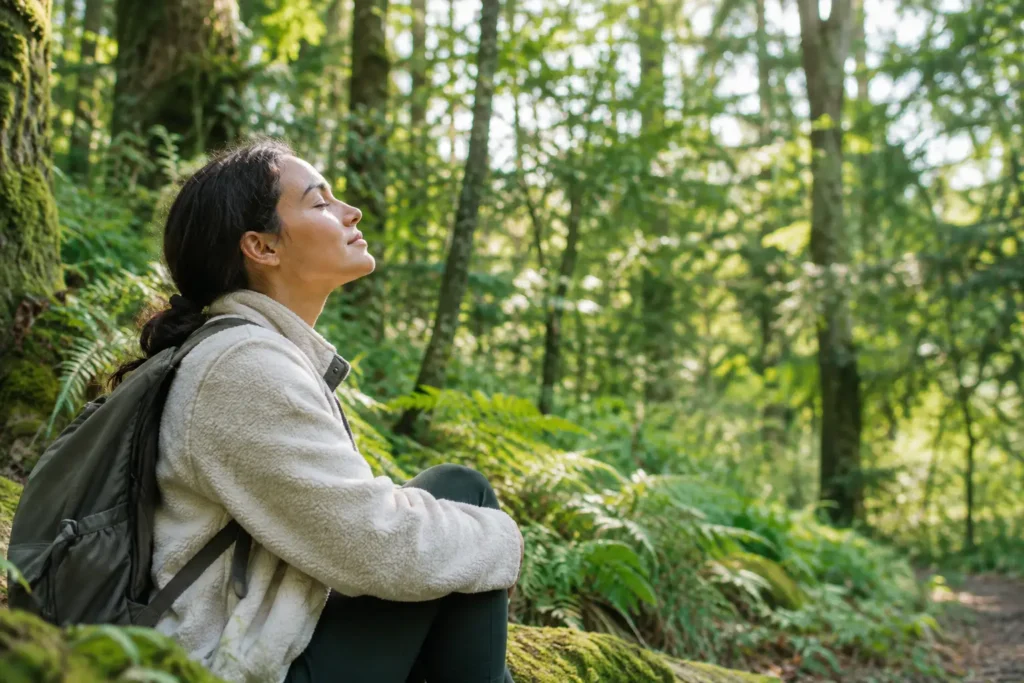
In studies, forest bathing typically isn’t a strenuous hike. It’s closer to a slow walk or seated immersion where participants spend time in a forested setting with minimal phone use, minimal talking, and a focus on sensory attention—sight, sound, smell, and touch. Sessions commonly range from 15 minutes to a few hours, sometimes repeated across multiple days.
That matters because outcomes can depend on the “dose” and the way time is spent. A fast workout in the woods can be wonderful for health, but it tests different variables than a mindful, low-exertion immersion. When you read research, look for what was actually done: duration, setting, level of physical activity, and whether a comparison group walked in an urban environment.
The strongest evidence: stress physiology shifts
Stress reduction is the most consistently reported benefit, and it shows up in both subjective reports (people saying they feel calmer) and objective markers.
Many studies track cortisol (a stress-related hormone) and activity of the autonomic nervous system—specifically, whether the body is leaning toward sympathetic “fight-or-flight” activation or parasympathetic “rest-and-digest” recovery. Across a range of designs, forest exposure is often associated with lower cortisol and increased parasympathetic activity, especially when compared with time in built environments.
The nuance: cortisol naturally fluctuates during the day, and not every study finds the same effect size. Sleep, caffeine, baseline stress, and even anticipation can change results. But the overall direction is remarkably consistent: slow, immersive time in forests tends to support physiological downshifting, which is exactly what many people are seeking when they feel chronically “on.”
Mood, anxiety, and mental clarity: promising and practical
Mental health outcomes are harder to measure cleanly because mood is influenced by so many factors—social context, expectations, and what your week has looked like. Still, forest bathing research commonly reports improvements in self-rated mood, decreases in anxiety, and a sense of restored attention.
One reason this may matter in daily life is cognitive load. Urban environments can demand constant filtering of stimuli—traffic noise, signage, crowds, notifications. Forest environments tend to offer “soft fascination”: sensory interest that doesn’t require effortful control. That’s not a mystical claim. It’s a plausible mechanism for why people often describe greater clarity after time among trees.
The “it depends” factor: if someone feels unsafe outdoors, is dealing with acute trauma triggers, or is highly allergic, a forest setting can increase stress rather than lower it. The goal isn’t to force a certain experience; it’s to create conditions where the nervous system has a fair chance to settle.
Immune function and the phytoncide hypothesis
A compelling line of research links forest exposure with markers of immune activity, including natural killer (NK) cell activity. NK cells are part of the immune system’s first-response team. Some studies have found that time in forests is associated with increased NK cell activity and expression of anti-cancer proteins, with effects that can last for days after a multi-day trip.
Researchers have proposed that phytoncides—volatile organic compounds released by trees and plants—may play a role. You can think of phytoncides as part of a plant’s protective chemistry. When humans inhale forest air, we’re exposed to these compounds at higher levels than in most indoor or urban settings.
Important limits: immune markers can shift for many reasons, including sleep quality, physical activity, and simple relaxation. Some studies involve small sample sizes, and not all are randomized. The most responsible takeaway is not “forests prevent disease,” but rather that forest immersion may support immune regulation, especially when it meaningfully reduces stress and improves recovery.
Blood pressure, heart rate, and the cardiovascular story
Forest bathing is often associated with reductions in blood pressure and heart rate, particularly in participants who start out with higher stress or elevated readings. This aligns with the broader understanding that chronic stress taxes cardiovascular health.
But here’s the honest complexity: if someone’s forest bathing session involves steep terrain, heat, dehydration, or anxiety (fear of getting lost, concern about wildlife), heart rate and blood pressure can go up in the moment. That doesn’t mean forest bathing “doesn’t work.” It means the environment and facilitation matter. A gentle route, a comfortable pace, and permission to pause can be the difference between a stress response and a recovery response.
Why forests may be uniquely effective (not just “any green space”)
A fair question is whether forest bathing is simply a fancy name for going outside. Research comparing forest and urban walks suggests forests often produce stronger calming effects, though parks and other green spaces can also be beneficial.
Several features may contribute:
- Acoustics and rhythm: natural soundscapes tend to be less jagged than traffic noise.
- Air quality: less pollution and more plant-derived compounds.
- Visual complexity: fractal patterns in nature may be easier for the brain to process.
- Social pressure: forests can reduce performance cues that show up in gyms or busy streets.
The practical takeaway is empowering: if a deep forest isn’t accessible, you can still work with nature exposure. But if you have access to a wooded area, it may offer a more potent nervous-system reset.
What the science doesn’t say (and what marketing often implies)
If you’ve seen claims that a single forest bathing session “detoxifies” you, cures anxiety, or replaces therapy, you’re right to be skeptical. The responsible scientific framing is more grounded:
Forest bathing can be a meaningful support for stress management, mood regulation, and healthy routines. It can complement clinical care. It may improve biomarkers associated with stress and immune function. But it isn’t a substitute for medical treatment, and it won’t land the same way for everyone.
This is also why skilled guidance matters when forest bathing is offered professionally. People come with different bodies, histories, and sensitivities. Trauma-informed pacing, accessibility considerations, and clear boundaries aren’t “extras”—they’re part of ethical practice.
How to apply forest bathing benefits science to your own practice
If you want results that resemble what researchers measure, mirror the conditions they tend to use.
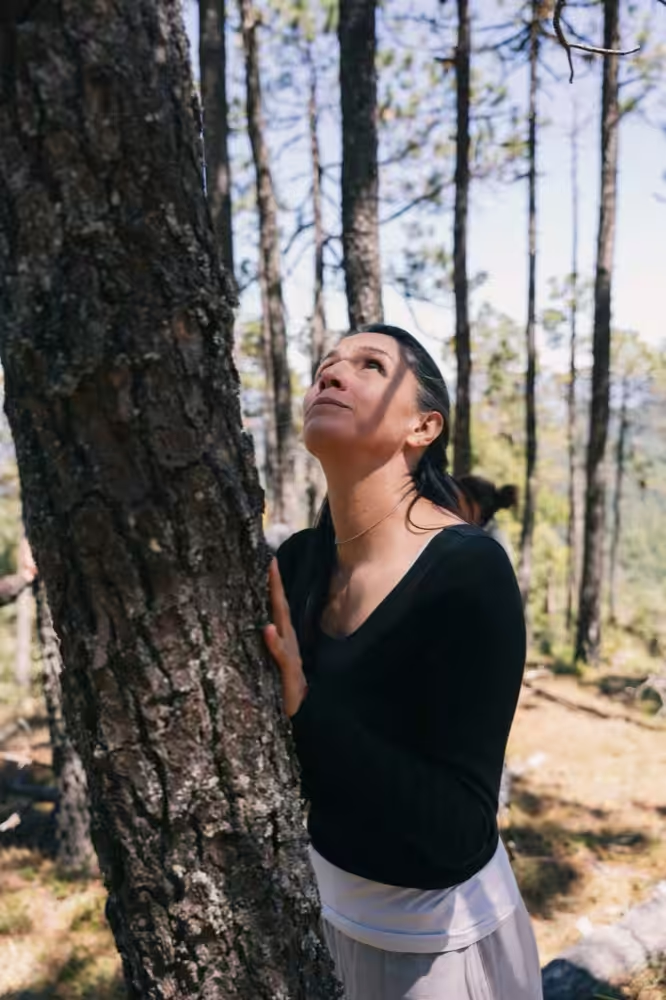
Choose a forested area where you can move slowly without worrying about navigation. Leave your phone on silent (or use it only for safety). Give yourself at least 20–40 minutes, ideally longer, and resist turning it into a workout. Let your attention rotate through the senses: the temperature on your skin, the sound of wind, the texture of bark, the layered greens and browns.
If your mind is busy, that’s not failure—it’s the starting point. The practice is returning to sensory experience without forcing calm. Paradoxically, the body often settles when it stops being ordered to settle.
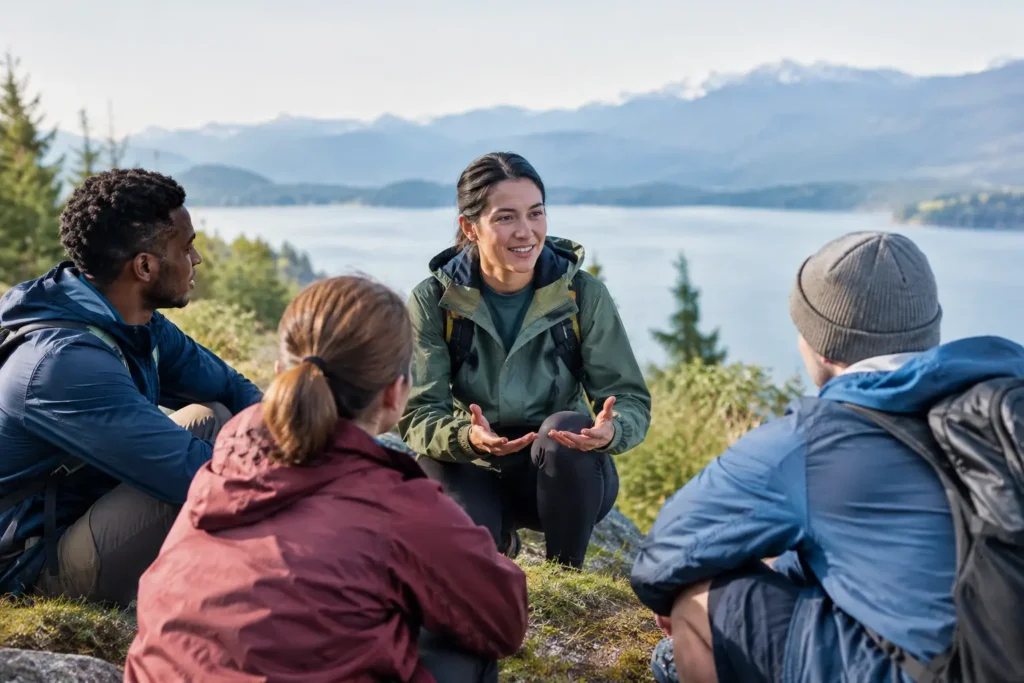
If you’re a wellness professional, the science suggests something else: the “intervention” isn’t the forest alone. It’s the combination of environment plus a structure that invites downshifting—slowness, safety, and attention. That structure is teachable.
For those who want a credentialed pathway with a research-informed lens, Treeming’s online Forest Bathing Guide Certification at https://treeming.org is designed around both the lived practice and the science that supports it, with accreditation and a sustainability model that funds reforestation with enrollment.
Who benefits most—and who should adapt the approach
Forest bathing tends to be especially helpful for people who are experiencing chronic stress, digital overload, or mild-to-moderate anxiety symptoms, and for those who feel mentally “stuck” from constant cognitive demand.
But adaptation is wise in a few scenarios. People with severe pollen allergies may need seasonal timing, medication planning, or alternative environments (coastal trails, desert landscapes, or even indoor nature-based practices). Anyone with mobility limitations can practice through seated immersion, micro-walks, or accessible paths; the evidence supports that “being” in the environment can matter as much as distance covered. And if someone is in acute mental health crisis, forest bathing can be supportive, but it should be coordinated with appropriate professional care.
The deeper point the research keeps circling
The most useful message in forest bathing benefits science isn’t that forests are a miracle cure. It’s that your nervous system is trainable, and nature is a reliable training partner.
When you practice returning to your senses under the trees—without performing, optimizing, or proving anything—you’re rehearsing a state your body already knows how to access. The forest simply makes it easier to remember.
The next time you step into a wooded space, try entering the way you’d enter a quiet room: not to accomplish, but to arrive. That single shift in intention often does more than any technique.