
The hour before bed can feel strangely crowded: unread messages, tomorrow’s obligations, a mind replaying a conversation that should have ended at lunch. Nature based mindfulness for sleep improvement offers a quieter transition. Rather than trying to force sleep, it invites your nervous system to recognize signals of safety, slowness, and natural rhythm.
For many adults, better sleep is not simply about finding the right bedtime. It is about creating enough space between the demands of the day and the moment your head reaches the pillow. A mindful connection with nature can become part of that space – accessible in a forest, a neighborhood park, a backyard, or beside an open window.
Why Nature Can Support Better Sleep
Sleep depends on more than physical tiredness. The body also needs to shift out of a state of vigilance. When stress remains high into the evening, thoughts can race, muscles may stay tense, and ordinary sounds can feel disruptive. Mindful time in natural settings may help interrupt this pattern by directing attention away from mental urgency and toward sensory experience.
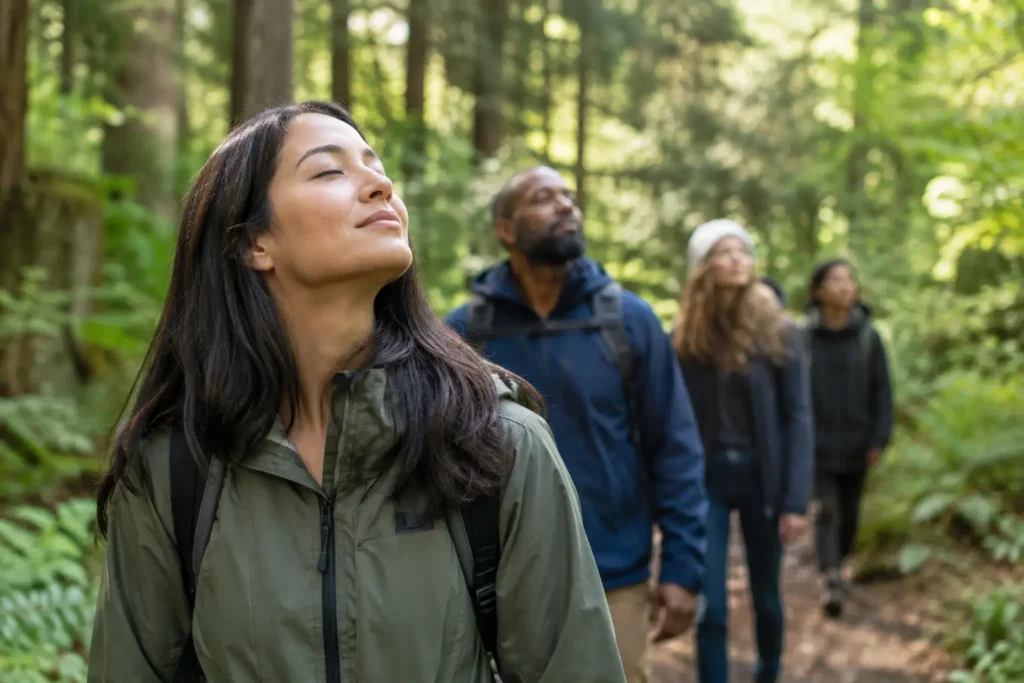
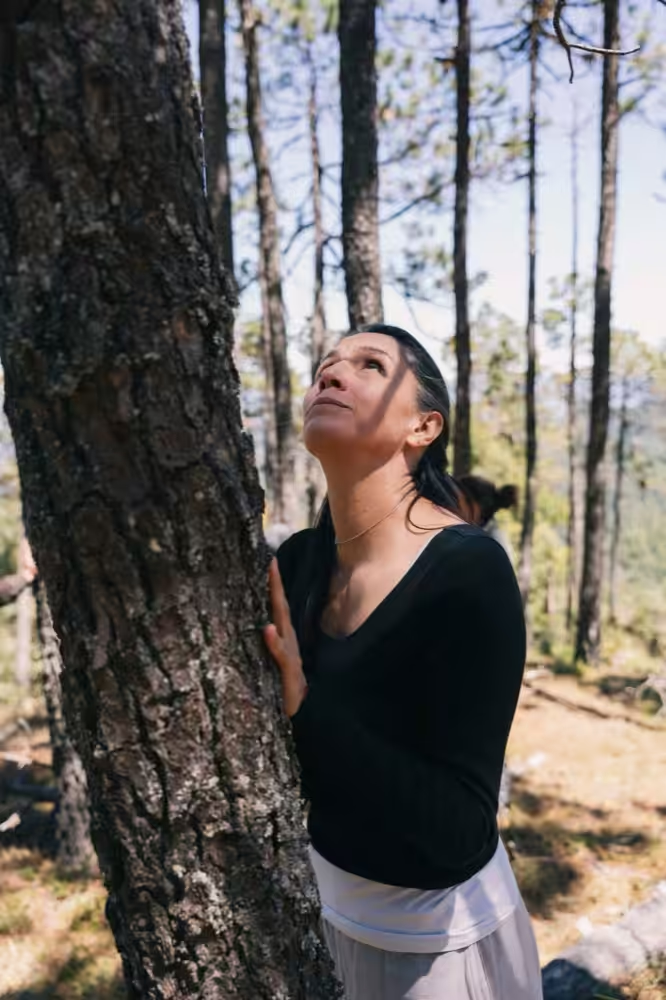
Forest bathing, also known as Shinrin-Yoku, is not a hike to complete or a workout to track. It is a slow, intentional practice of being present in nature. You may notice the texture of bark, the movement of leaves, the coolness of the air, or the changing quality of evening light. These small observations ask very little of you, yet they can offer the mind a more restorative place to rest.
Research on nature exposure and mindfulness points toward meaningful benefits for stress regulation, mood, and attention. Those benefits do not guarantee that a person with insomnia will sleep deeply after one walk. Sleep is influenced by health conditions, medications, caregiving responsibilities, work schedules, and many other factors. Still, a regular nature-based practice can be a supportive part of a broader sleep routine, especially for people whose evenings are shaped by stress and overstimulation.
Nature Based Mindfulness for Sleep Improvement: A Gentle Practice
The most effective evening practice is usually the one that feels realistic enough to repeat. You do not need a remote woodland or an hour of free time. Begin with 10 to 20 unhurried minutes outdoors, ideally in the late afternoon or early evening rather than immediately before bed.
Choose a place where you feel physically safe and can move slowly: a tree-lined block, a garden, a quiet local trail, or a patio with plants. Leave the goal of “getting good sleep” behind for the moment. Performance pressure can keep the mind activated. Instead, let the practice be an opportunity to arrive where you are.
Start by standing still for several breaths. Feel the ground under both feet. Notice whether the air is warm or cool against your face. Then walk at a pace that allows you to see details rather than scan for what comes next. If thoughts about work or family appear, acknowledge them without arguing with them, then return to one direct sensation: birdsong, the shape of a branch, the scent of damp soil, or the rhythm of your steps.
As daylight softens, let your attention widen. Notice what is close, then what is farther away. This simple shift can help counter the narrowed, problem-solving focus that often follows us indoors. Before leaving, pause and ask one quiet question: “What can I set down for the night?” You do not have to solve the answer. Naming the question can be enough.
When you return home, keep the transition gentle. Dim lights if possible, make a caffeine-free tea, or sit for two minutes beside a plant or open window. The outdoor practice matters, but so does protecting the calm you created from an immediate return to emails, headlines, or scrolling.
When You Cannot Get Outside
A nature-based sleep practice should not become another standard you feel you have failed to meet. Rain, unsafe conditions, city living, mobility limitations, and demanding schedules are real considerations. On those evenings, bring your attention to nearby nature instead.
Sit by a window and observe the sky for five minutes. Tend to a houseplant slowly, noticing leaf patterns and soil. Listen to rain, wind, or natural ambient sound while breathing at an easy pace. If you use recorded nature sounds, keep the volume low and choose something that feels spacious rather than dramatic. The purpose is not to simulate a forest perfectly. It is to create a sensory cue that says the day is becoming quieter.
A visual nature cue can also help. Keep a small stone, pinecone, leaf, or photo from a meaningful outdoor place near your bedside. Hold or look at it while recalling specific details from that place: the temperature, colors, sounds, and feeling of being there. This is not a replacement for time outdoors, but it can help maintain a familiar ritual when outdoor access is limited.
Build a Sleep Routine Around Natural Rhythms
Nature-based mindfulness works best when it supports, rather than competes with, the foundations of healthy sleep. Keep your wake-up time reasonably consistent, seek natural daylight earlier in the day when you can, and create a bedroom environment that is dark, comfortable, and calm. If an evening forest walk leaves you energized rather than settled, move it earlier. Some people respond best to a quiet sit outdoors near sunset; others find that a slow morning nature practice improves their mood and makes nighttime unwinding easier.
Pay attention to your personal response for two weeks. Notice not only how quickly you fall asleep, but also whether your evenings feel less reactive, whether you reach for your phone less often, and whether your body feels more settled at bedtime. These are meaningful changes even before sleep becomes noticeably different.
It can help to keep the ritual simple: the same route, the same bench, or the same five minutes beneath a tree. Repetition turns a pleasant experience into a recognizable cue. Over time, your brain may begin to associate that cue with a shift from doing to resting.
A Note for Wellness Professionals
For coaches, yoga teachers, therapists, and retreat facilitators, sleep concerns often surface beneath broader complaints of stress, burnout, and mental fatigue. Nature-based mindfulness can be a valuable, non-clinical practice to include in wellness offerings when it is presented responsibly. Guide clients toward sensory awareness and gentle pacing, not promises of a cure.
Clear scope matters. Persistent insomnia, loud snoring, gasping during sleep, severe daytime fatigue, or worsening anxiety deserve evaluation from a qualified healthcare professional. A skilled forest bathing guide can create restorative experiences and support stress reduction, while recognizing when a participant needs clinical care.
Professional education adds structure to this work. Treeming’s accredited Forest Bathing Guide Certification equips practitioners with science-informed principles, guided invitations, and ethical foundations for offering meaningful nature-based wellness experiences. The goal is not to turn every walk into treatment. It is to help people reconnect with the restorative conditions that modern routines often crowd out.
Tonight, you do not need to earn rest. Step outside if you can, feel the ground beneath you, and give one ordinary moment in nature your full attention. Let that moment be the first gentle signal that the day is complete.