
A walk in the woods can feel restorative even when you never remove your shoes. That distinction matters when comparing forest bathing vs grounding earthing. Both practices invite a slower relationship with the natural world, and both may support a sense of calm. Yet they are built on different methods, make different claims, and ask for different kinds of attention.
For people seeking stress relief, the most useful question is not which practice is “better.” It is which experience fits your needs, setting, comfort level, and wellness goals. For professionals, understanding the difference also helps you communicate responsibly and guide clients with clarity.
What Is Forest Bathing?
Forest bathing, often called Shinrin-Yoku, is a mindful, sensory practice of immersing yourself in a natural setting. It does not involve exercise goals, hiking distance, or identifying plants correctly. Instead, it creates room to pause, notice, and reconnect.
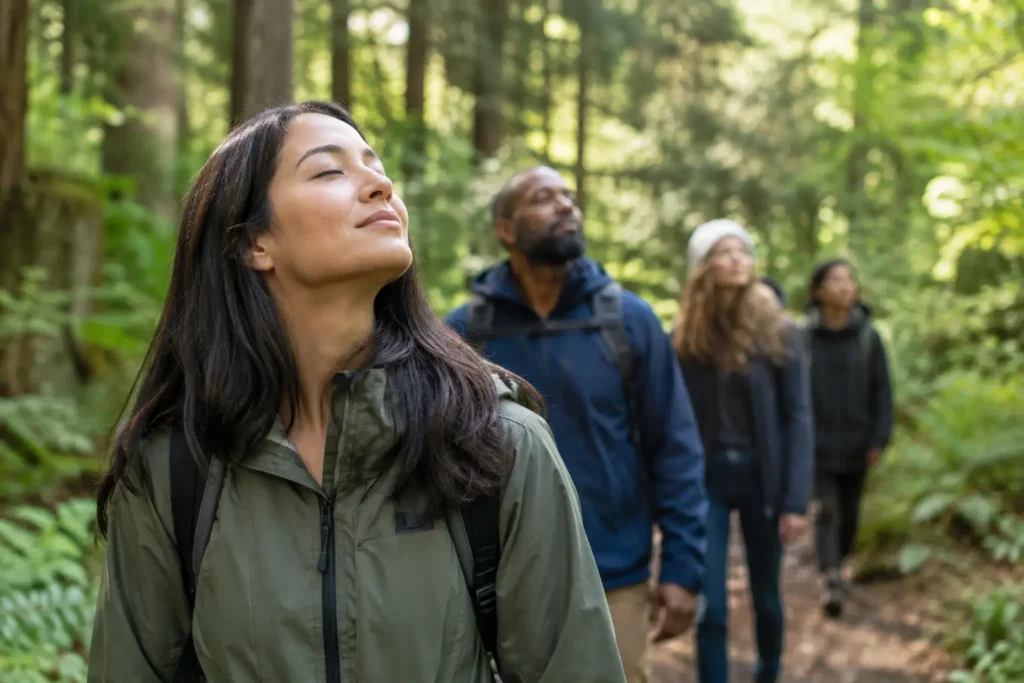
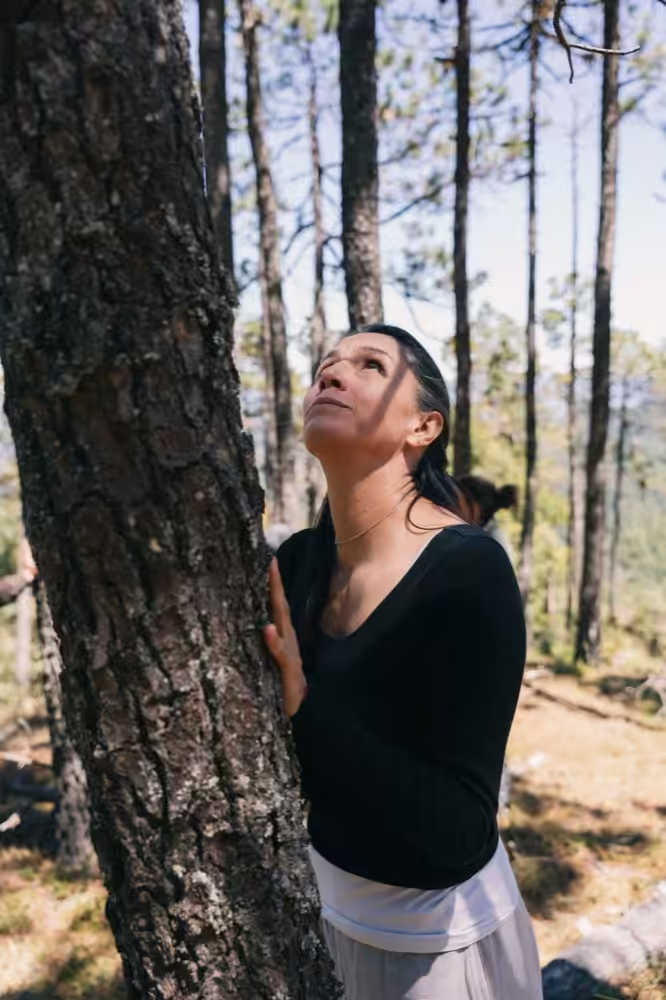
A forest bathing session may include walking slowly, observing light through leaves, listening to birdsong, feeling the texture of bark, or resting quietly beside a tree. The practice is less about doing more outdoors and more about allowing the nervous system to settle through unhurried attention.
While forests are a natural fit, forest bathing can also be adapted for parks, gardens, coastal areas, and other green spaces. The quality of presence matters more than reaching a remote wilderness area. A trained guide may use gentle invitations to help participants engage their senses, reflect on their experience, and move at a pace that feels supportive rather than demanding.
Research on time in natural environments has associated it with lower perceived stress, improved mood, and restored attention. Forest bathing is best understood as a structured, mindful way to access those potential benefits. It is not a replacement for medical or mental health care, but it can be a meaningful complement to a well-rounded wellness routine.
What Is Grounding or Earthing?
Grounding, also known as earthing, centers on direct physical contact between the body and the Earth’s surface. Common examples include standing barefoot on grass, sand, or soil, sitting on the ground, or walking along a beach without shoes.
The theory behind earthing is that contact with the Earth may allow an exchange of electrons that affects the body’s electrical state. Supporters often connect the practice with claims about sleep, inflammation, pain, and stress. Some people do report feeling calmer and more present after spending time barefoot outdoors.
However, the scientific evidence for earthing’s specific physiological claims remains limited. Existing studies are often small, and more rigorous, independent research is needed before broad health conclusions can be made. That does not mean a barefoot moment on safe, clean grass has no value. It means the experience should be presented honestly: as a simple personal practice that may feel soothing, not as a proven treatment.
Forest Bathing vs Grounding Earthing: The Core Difference
The clearest difference is that forest bathing is an attention-based nature practice, while grounding is a body-to-Earth contact practice. Forest bathing can happen fully clothed, in walking shoes, on a bench, or with a blanket beneath you. Grounding generally requires bare skin to touch a natural surface.
Forest bathing also has a broader sensory and relational focus. It invites you to notice the whole living environment: fragrance, temperature, movement, sound, color, and the feeling of being part of a place. Grounding may be one quiet element within that experience, but it is not required.
Their evidence bases differ as well. Nature exposure, mindful attention, and slow outdoor movement have a substantial and growing body of research behind them. Earthing-specific mechanisms and health claims need further study. If evidence-based practice is a priority, forest bathing offers a more established framework for supporting relaxation and connection with nature.
That said, people do not always practice these methods in isolation. You might begin a forest bathing walk in comfortable shoes, then choose to stand barefoot on a safe patch of grass for a few minutes as a personal sensory invitation. The barefoot contact is optional. The attentive relationship with nature remains central.
Choosing the Practice That Serves You
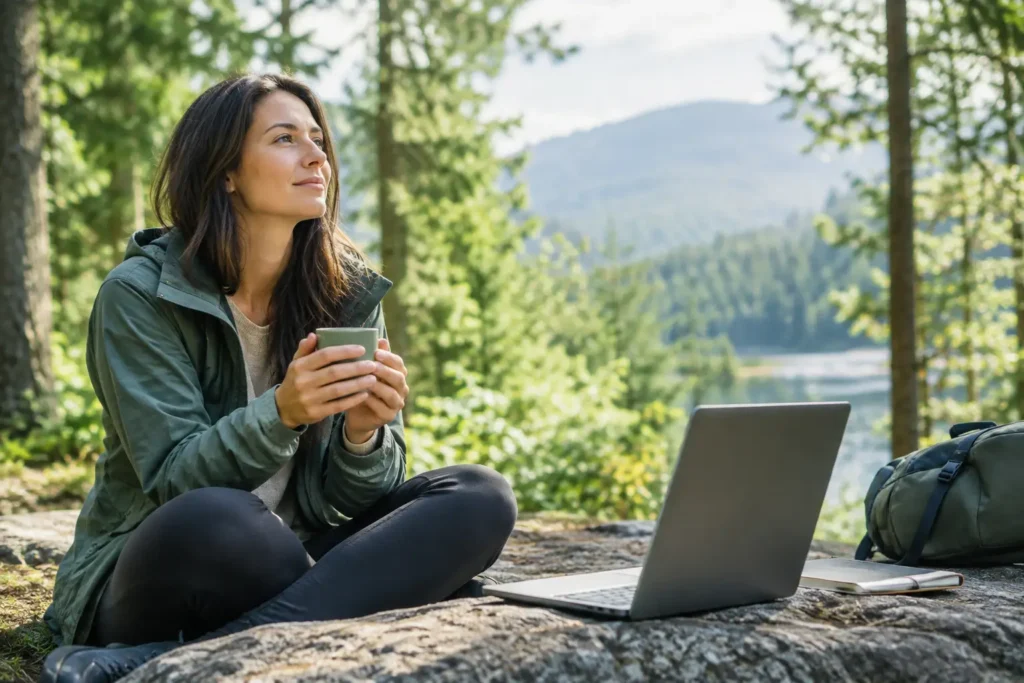
Choose forest bathing when you want a fuller reset from mental overload. It is especially well suited to people who spend long hours on screens, feel pulled by constant productivity, or want a gentle mindfulness practice that does not require sitting still indoors. You do not need a perfect forest, specialized gear, or a dramatic emotional experience. A nearby park and 30 unrushed minutes can be enough.
Grounding may appeal when you are drawn to the immediate sensation of bare feet on natural terrain. For some people, that contact feels playful, calming, or nostalgic. It can be an accessible ritual at the beginning or end of the day, particularly in a familiar yard or at the beach.
Comfort and access matter. If you have mobility concerns, sensitive feet, diabetes, reduced sensation in your feet, open wounds, or a condition that affects balance, barefoot outdoor practice may not be appropriate without guidance from a qualified healthcare professional. Uneven ground, sharp objects, contaminated soil, extreme temperatures, ticks, and poison ivy also deserve practical consideration.
Forest bathing is usually easier to adapt. A participant can sit, stand, use mobility aids, stay on accessible paths, or practice from the edge of a green space. The invitation is never to push through discomfort. It is to meet nature with curiosity and care.
A Simple Way to Combine Them Mindfully
If you would like to explore both practices, begin with forest bathing rather than turning the experience into a checklist. Leave your phone on silent, choose a safe natural setting, and walk slowly for several minutes. Notice three sounds, three textures, and three forms of movement around you.
Then, only if the area is safe and your body feels comfortable, try standing barefoot on grass or sand. Feel the temperature and pressure beneath your feet. Rather than searching for a dramatic result, simply observe what changes in your breath, posture, or attention. Put your shoes back on when you are ready and continue your walk.
This approach keeps the practice grounded in direct experience, not exaggerated promises. Nature does not need to perform on demand to be beneficial.
What Wellness Professionals Should Communicate
For coaches, yoga teachers, therapists, retreat facilitators, and outdoor educators, language matters. Forest bathing can be offered as a guided, sensory nature-based wellness experience. It can support relaxation, reflection, and a felt sense of connection, while avoiding guarantees about outcomes.
Grounding can be offered as an optional sensory practice when conditions are suitable. Avoid presenting it as a cure for chronic illness, inflammation, anxiety, or sleep disorders. Clients deserve both inspiration and accuracy, especially when they are seeking relief from real health concerns.
Professional forest bathing training provides a valuable foundation because it develops skills beyond taking people outdoors. Guides learn how to shape invitations, read group energy, create emotional safety, adapt to different environments, and hold space without forcing an outcome. An accredited program also helps professionals build a practice that feels credible, ethical, and aligned with the growing demand for nature-based wellness.
At Treeming.org, forest bathing education is designed for both personal wellbeing and professional practice, pairing mindful traditions with science-backed learning and a commitment to environmental stewardship. That combination helps emerging guides serve people and the living places that support them.
Let Nature Set the Pace
The choice between forest bathing and grounding does not have to be a contest. One is a comprehensive practice of mindful nature immersion; the other is a specific form of physical contact with the Earth. You may enjoy either, or let grounding become a small moment within a wider forest bathing experience.
The more lasting invitation is to step outside without asking nature to fix everything at once. Pause under a canopy, feel the air on your skin, and allow a few unclaimed minutes to belong to the trees, the birds, and your own returning attention.