
Burnout rarely arrives all at once. More often, it shows up as a shorter fuse, a heavy feeling before the workday starts, trouble concentrating, and the sense that even rest is not really restoring you. A forest bathing practice for burnout recovery can help interrupt that pattern – not as a quick fix, but as a steady, science-backed way to regulate stress, soften mental fatigue, and reconnect you with your own capacity to recover.
Forest bathing, or Shinrin-Yoku, is not a hike, workout, or productivity tool dressed up in wellness language. It is a guided or personal practice of slowing down in a natural setting and engaging the senses with deliberate attention. That distinction matters for burnout, because the nervous system that has been pushed too hard does not usually respond well to more striving. It responds to safety, spaciousness, and simple sensory contact.
Why a forest bathing practice for burnout recovery works
Burnout affects more than mood. It can narrow attention, disrupt sleep, increase irritability, and create a persistent feeling of depletion that does not lift with a single weekend off. When stress becomes chronic, the body and mind can remain stuck in a state of overactivation. Nature-based practices help because they create conditions that are fundamentally different from the environments where burnout often intensifies.
Research on time in natural environments consistently points to reduced stress markers, improved mood, better attention, and a greater sense of calm. Forest bathing adds a structured mindfulness element to that experience. Instead of passing through nature while checking messages or replaying your to-do list, you intentionally notice texture, temperature, scent, sound, movement, and breath. That sensory orientation can help shift the brain out of constant cognitive effort.
There is also a practical reason this matters. Burnout often makes formal meditation feel frustrating. Sitting still with an exhausted, overworked mind can feel like one more task you are failing at. Forest bathing offers a gentler entry point. Attention has somewhere to rest. You do not need to empty your mind. You only need to notice what is already here.
What burnout recovery actually requires
Many people try to solve burnout by adding better habits on top of an unsustainable load. The problem is not always a lack of discipline. Often, the real issue is an overloaded system that needs fewer inputs, more regulation, and a deeper form of rest.
A useful forest bathing practice for burnout recovery supports three things at once. It lowers stimulation, restores directed attention, and rebuilds a felt sense of connection. That connection may be to your body, to place, or simply to a slower rhythm than the one burnout has trained you to accept.
That said, nature practice is not a substitute for medical care, therapy, workplace change, or boundaries when those are needed. If burnout is severe, recovery usually depends on more than one intervention. Forest bathing works best as part of a broader healing process, especially when paired with real adjustments to workload, sleep, and support.
How to begin without turning it into another task
The most effective practice is the one your nervous system can actually receive. For that reason, start smaller than you think you need. Twenty minutes in a quiet park can be more restorative than planning an elaborate day in the woods that leaves you drained before you begin.
Choose a place with some natural elements and as little pressure as possible. A forest trail is wonderful, but a botanical garden, neighborhood greenway, lakeside path, or tree-filled park can also work. The quality of attention matters more than the drama of the setting.
Leave room around the practice if you can. If you rush in with three errands on either side, the body may never fully downshift. Even ten unhurried minutes before and after can change the experience.
A simple rhythm for your session
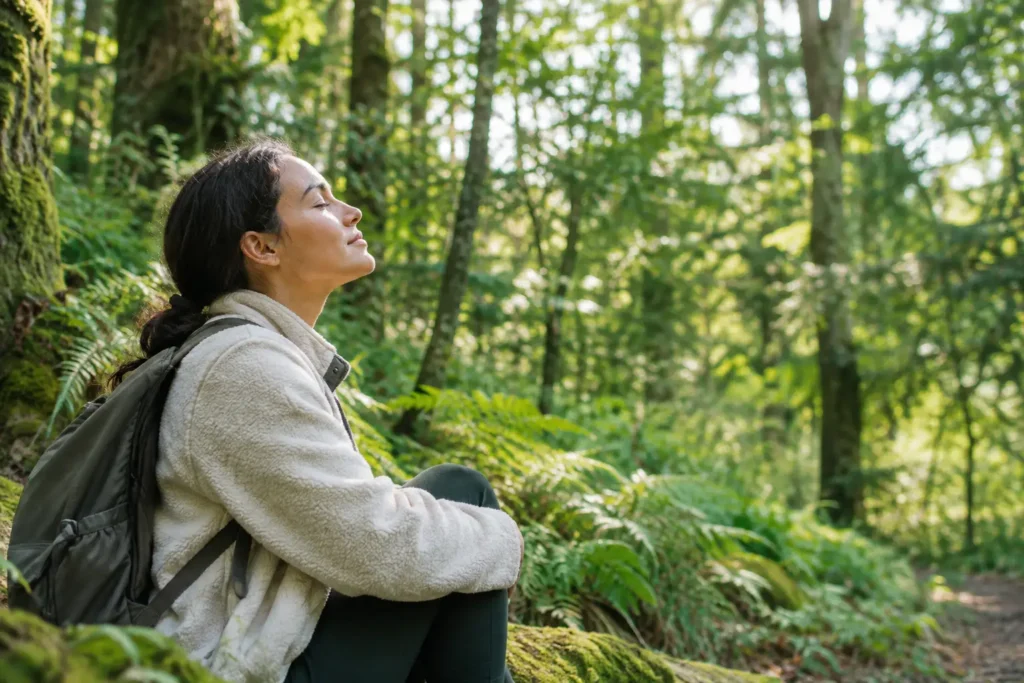
Begin by pausing at the entrance to the space. Feel your feet on the ground. Let your exhale lengthen without forcing it. This small transition helps your body register that you are moving out of performance mode.
Then walk slowly, slower than feels normal. Let your eyes wander rather than search. Notice one sound that is far away, then one that is close. Notice the temperature on your skin. If your thoughts race, give them less importance than your senses.
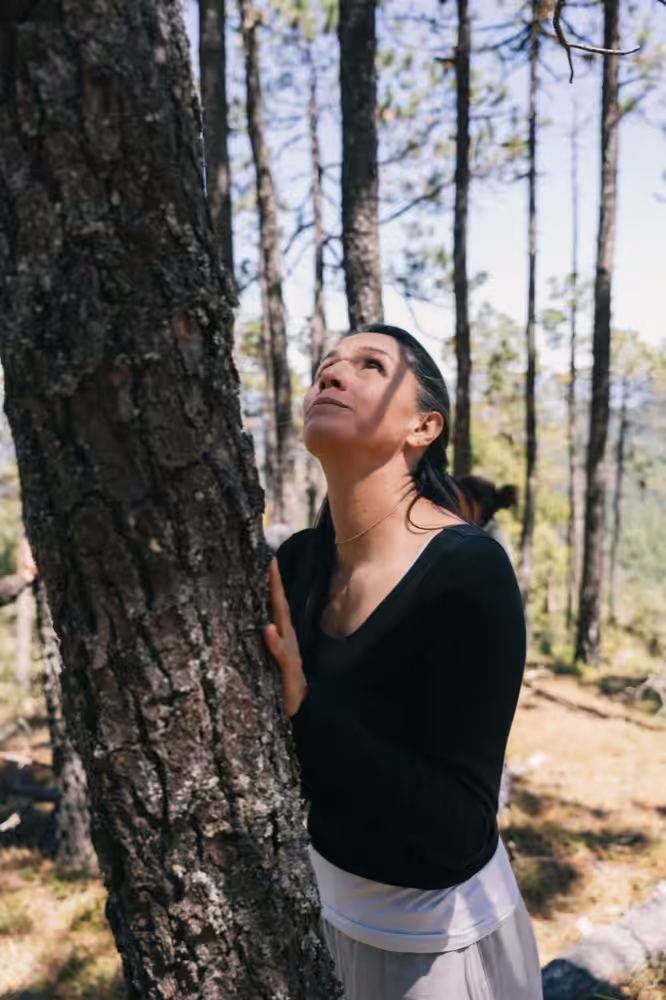
After a few minutes, stop somewhere that feels comfortable. You might sit on a bench, stand beside a tree, or simply remain still on the path. Pay attention to small details: the pattern of bark, the movement of leaves, the scent of soil, the shape of light. Burnout narrows perception. This kind of noticing gently opens it again.
If emotion surfaces, that is not a sign the practice is going wrong. Many people discover that once they slow down, fatigue, grief, or frustration becomes easier to feel. Meet that honestly and without analysis. The aim is not to produce a perfect calm state. The aim is to create enough safety for your system to soften.
Common mistakes in a forest bathing practice for burnout recovery
One common mistake is treating the practice like a wellness assignment. If you are measuring whether you felt transformed in thirty minutes, you are still in performance mode. Burnout recovery usually responds better to consistency than intensity.
Another mistake is choosing stimulation over restoration. A crowded trail, loud podcast, fitness watch alerts, or pressure to take photos can keep the brain in consumption mode. For this practice, less is usually better.
It also helps to release the idea that every session must happen in a deep forest. For some people, access is limited by schedule, mobility, geography, or caregiving responsibilities. A small stand of trees visited regularly can become a powerful place of regulation. Repetition builds familiarity, and familiarity helps the nervous system settle.
Finally, be careful with duration. If you are already exhausted, a two-hour outing may be too much. Start with fifteen to thirty minutes and notice how you feel later that day, not just during the session.
When the practice becomes part of healing
The benefits of forest bathing often become clearer after several sessions. You may notice that your shoulders drop sooner, your breathing deepens more naturally, or your mind becomes less sticky around work stress. Some people sleep better. Others find they can think more clearly, or that they no longer feel as emotionally flattened.
These shifts may seem modest, but they are meaningful. Burnout recovery is often built through repeated experiences of regulation rather than one dramatic breakthrough. A calm afternoon in nature will not solve a misaligned job or erase chronic stress overnight. What it can do is help you hear yourself again. From that place, better decisions become easier to make.
For wellness professionals, this is also where personal experience matters. If you hope to bring forest bathing into your work as a coach, yoga teacher, therapist, retreat leader, or educator, your own grounded relationship with the practice is the foundation. Clients can feel the difference between a method that is being performed and one that is genuinely embodied.
A strong training can help you deepen that foundation with structure, safety, and science-backed context. For those who want both personal restoration and professional application, Treeming.org offers accredited online forest bathing education designed to be flexible, credible, and rooted in both mindfulness tradition and modern research.
Building a sustainable rhythm
If burnout has taught you anything, it is probably that intensity is not the same as healing. A sustainable rhythm might look like one longer session each week and two brief nature pauses during the workweek. It might mean eating lunch under trees instead of at your desk, or spending ten phone-free minutes outdoors before opening your laptop.
Let the practice be ordinary enough that you can keep returning to it. Recovery tends to grow in what is repeatable. Over time, the forest stops feeling like an escape and starts feeling like a relationship – one that reminds you, quietly and consistently, that your worth is not measured by how much strain you can endure.
If you are burned out, you do not need a more impressive routine. You need moments that help your body believe it is safe to rest, and a place where your attention can soften without asking anything from you.