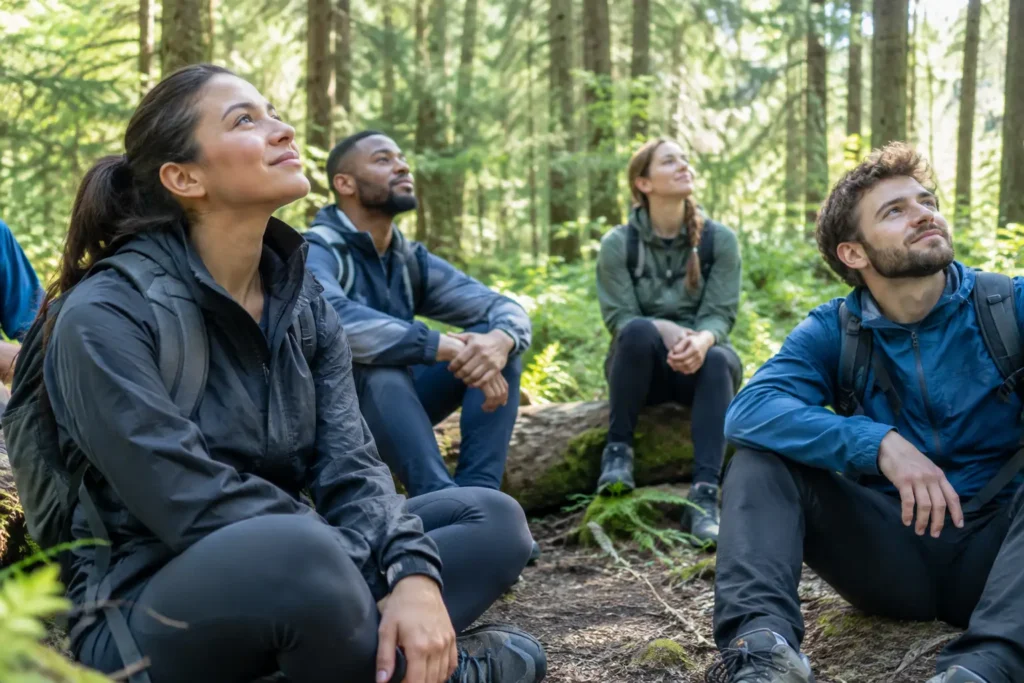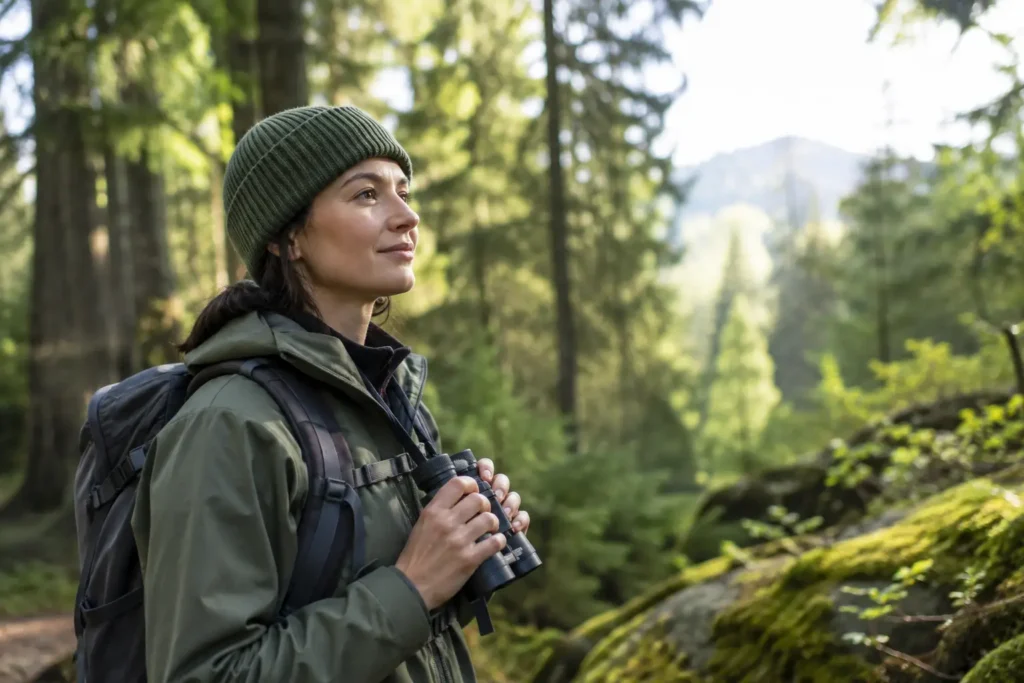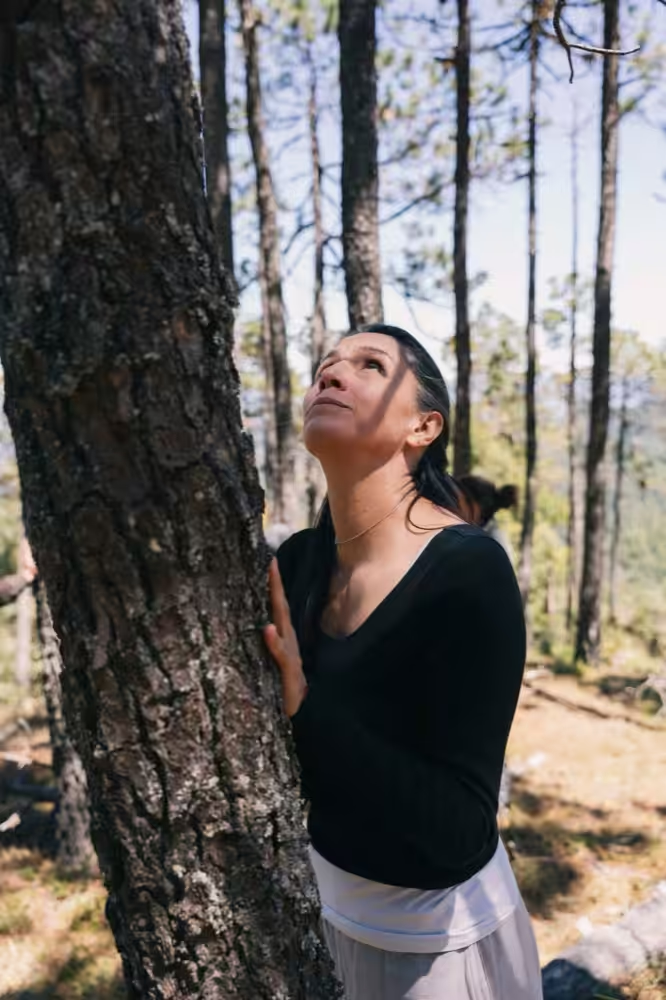
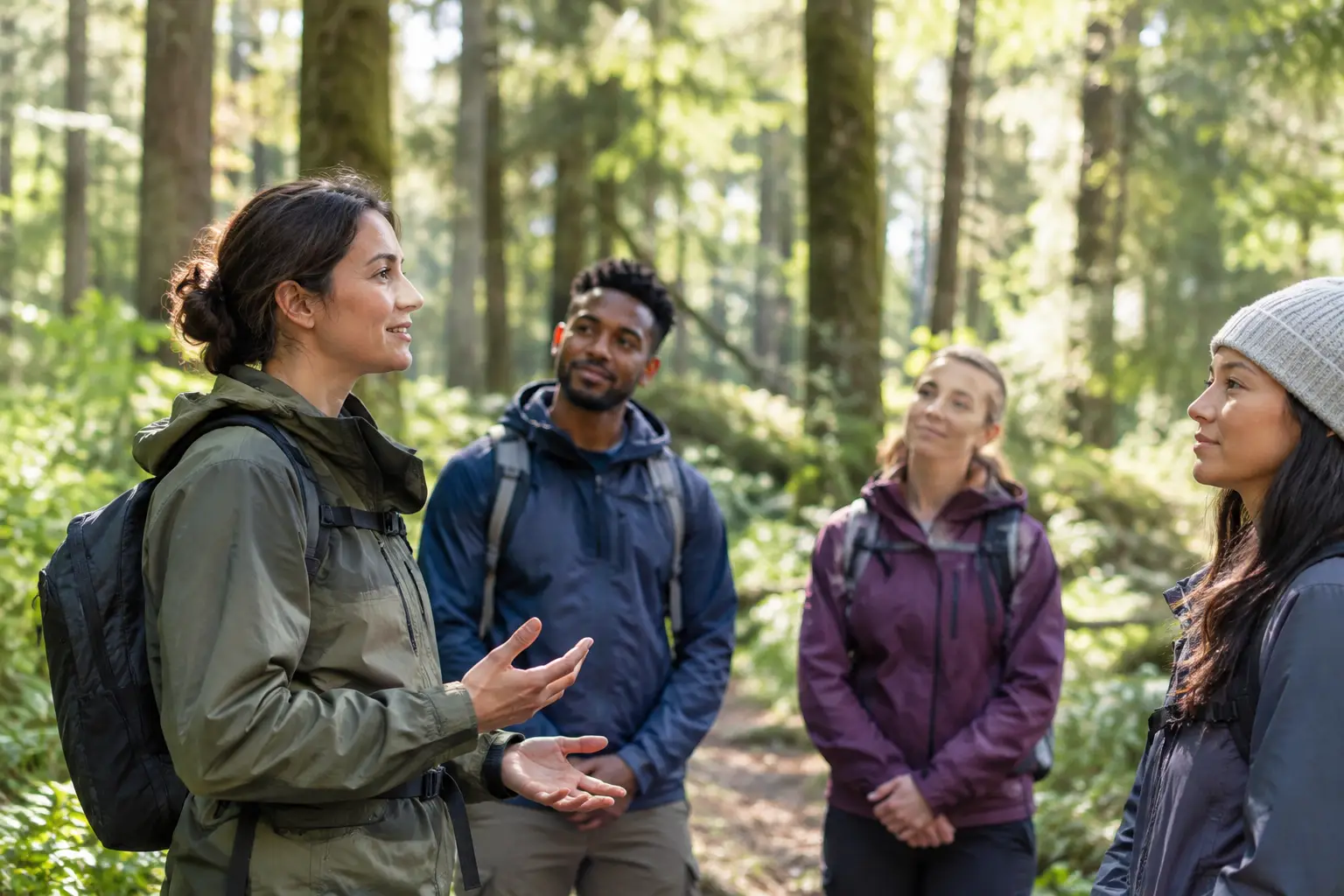
A forest bathing session can look beautifully simple: people slow down, notice texture and sound, and reconnect with the living world. Yet the ease participants feel is often made possible by careful professional judgment. Forest bathing facilitation ethics guidelines give guides a practical foundation for holding experiences that are emotionally safe, environmentally responsible, and clear about what a guide can and cannot offer.
For aspiring and practicing guides, ethics are not a scripted disclaimer delivered at the trailhead. They shape every choice, from the location you select to the language you use, the promises you make, and the way you respond when someone becomes distressed. A grounded ethical practice protects participants, honors the cultural roots of the work, and helps nature-based wellness remain worthy of trust.
Why ethics belong at the center of forest bathing
Forest bathing, often associated with the Japanese practice of Shinrin-Yoku, invites people to engage with nature through their senses and attention. Research on time in natural settings continues to support its potential role in stress reduction, mood support, and restoration. But a calming setting does not remove a facilitator’s duty of care.
Participants may arrive carrying grief, burnout, trauma, chronic illness, mobility limitations, or profound disconnection. Nature can feel supportive, but it can also bring up emotion, uncertainty, allergies, fear of insects, or physical discomfort. Ethical facilitation does not try to control every outcome. It creates conditions in which people have meaningful choice and know where the boundaries are.
This matters especially when forest bathing is offered as a paid professional service. Clear ethics distinguish an informed wellness experience from vague promises or unqualified therapeutic claims. They also strengthen the confidence of clients, partners, and referral professionals who need to know that a guide works with care.
Forest bathing facilitation ethics guidelines in practice
The best guidelines are specific enough to guide decisions in the field, yet flexible enough to respect the place, group, and conditions of a given session. The following principles offer a strong professional baseline.
Begin with informed, ongoing consent
Consent starts before the session. Give participants an honest description of the route, terrain, expected duration, weather considerations, group size, physical demands, and what participation may involve. Let them know whether invitations include quiet reflection, optional sharing, sitting on the ground, closing the eyes, or moving away from the group for a short period.
Just as importantly, consent continues throughout the experience. Use invitational language such as, “If it feels comfortable, you might notice the temperature of the air on your hands.” Avoid language that pressures people to follow an instruction, disclose feelings, or interact with natural materials in a certain way.
A participant should be able to opt out, modify an activity, remain quiet, or leave early without being made to feel difficult or disconnected from the group. Choice is not a small courtesy. It is central to emotional safety.
Stay within your professional scope
Forest bathing can complement well-being practices, but it is not a replacement for medical care or mental health treatment. Guides should avoid diagnosing participants, interpreting trauma responses, or suggesting that nature immersion will cure anxiety, depression, chronic pain, or other health conditions.
A warm, attentive presence is appropriate. Therapy without appropriate training and licensure is not. If a participant is experiencing a mental health crisis, serious physical symptoms, or an unsafe level of distress, follow your emergency plan and encourage suitable professional support.
This boundary can feel challenging for compassionate guides. You may want to help deeply, especially when someone shares something personal. Ethical care means recognizing that being supportive does not require taking on a role you are not qualified to hold.
Protect privacy and group trust
What participants share during a session should not become material for marketing, social media, or conversation outside the group. Establish a confidentiality agreement at the beginning: participants can share their own experience, but not another person’s story or identity without permission.
Photography deserves special attention. A forest bathing experience can be visually compelling, but not everyone wants their image connected to a wellness event. Request explicit consent before taking photos, explain how images may be used, and make declining easy. For group photos, a simple verbal assumption is not enough.
Guides should also be thoughtful about records. Collect only the information needed for registration, safety, and communication. Store it securely and avoid asking for sensitive health details unless they are genuinely necessary to accommodate participation.
Make access a design principle, not an afterthought
Not every forest bathing session needs to take place on a remote trail. In fact, the most ethical site is often the one that allows the intended participants to engage safely and comfortably. A neighborhood park, accessible garden, urban tree canopy, or botanical setting may be more appropriate than uneven backcountry terrain.
Describe access conditions accurately. Include information about distance, elevation, seating, restroom availability, cell reception, heat exposure, and potential sensory factors. Offer alternatives where possible, such as a shorter route, standing or seated invitations, a slower pace, or sensory options that do not require touching plants or walking on uneven ground.
Accessibility does not mean every session will fit every need. It means guides communicate honestly, listen without defensiveness, and make reasonable adjustments rather than treating one type of body or sensory experience as the default.
Honor culture without borrowing carelessly
Shinrin-Yoku emerged in Japan within a particular cultural and public-health context. Ethical guides can acknowledge that lineage while avoiding claims of teaching a traditional Japanese practice in an authoritative way if they have not trained within that tradition.
The same care applies to Indigenous lands, teachings, and ceremonies. Do not borrow sacred practices, medicines, stories, or symbols to make an experience seem more profound. A land acknowledgment has value when it is accurate, specific, and connected to ongoing respect, learning, and action. It should never be used as a substitute for relationship or responsibility.
Participants often appreciate a guide who can name these distinctions plainly. Forest bathing does not need appropriation to be meaningful. Attention, humility, and reciprocity are more than enough.
Practice ecological stewardship
A forest is not a backdrop for human restoration. It is a living community with its own limits. Ethical guides choose locations and activities that minimize disturbance, follow local rules and permit requirements, and adapt when conditions place pressure on the ecosystem.
That may mean keeping groups small, staying on established paths, avoiding fragile habitat, and asking participants not to pick plants, move rocks, feed wildlife, or leave offerings. It may also mean canceling or relocating a session during wildfire risk, flooding, nesting periods, or other sensitive conditions.
Stewardship includes the less visible details: carrying out waste, discouraging single-use materials, and considering how repeated programs affect a site over time. A guide’s reverence for nature should be visible in operational choices, not only in poetic language.
Ethical leadership before, during, and after the session
Preparation is where much of a guide’s ethics become real. Visit the site in advance, check conditions, know the local emergency procedures, and create a plan for weather changes, injury, separation from the group, and unexpected wildlife encounters. Carry appropriate communication tools and first-aid supplies based on the setting and your training.
During the session, maintain clear boundaries. Avoid favoritism, coercive intimacy, or language that positions you as spiritually superior. Be alert to group dynamics, especially when participants are invited to share. One person’s need for space should not be overridden by another person’s desire to advise, comfort, or analyze.
Afterward, invite feedback. A brief check-in can reveal whether instructions were clear, whether the setting felt accessible, and what could be improved. Feedback is not merely a customer-service tool. It is part of accountable practice.
Build credibility through training and reflection
Ethical facilitation is not achieved by memorizing a code of conduct once. It develops through quality education, supervised practice where available, ongoing study, and a willingness to examine your own assumptions. A recognized forest bathing guide certification can provide valuable structure around safety, group holding, scientific framing, and professional standards.
Training matters, but credentials should never become a reason to stop learning. Seek feedback from participants and peers. Review your policies regularly. Consider where your pricing, locations, imagery, language, and business partnerships either widen or narrow access to nature-based wellness.
Treeming.org’s approach to forest bathing education pairs professional training with a commitment to environmental stewardship, reflecting a principle every guide can carry forward: personal restoration and care for the natural world belong together.
A well-held session leaves participants with more than a peaceful hour outdoors. It gives them the quiet confidence that they were welcomed without pressure, guided without manipulation, and invited into relationship with nature without asking the land to give more than it can sustain.