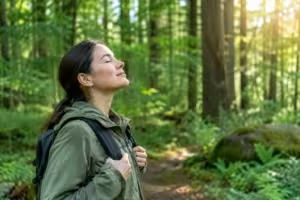
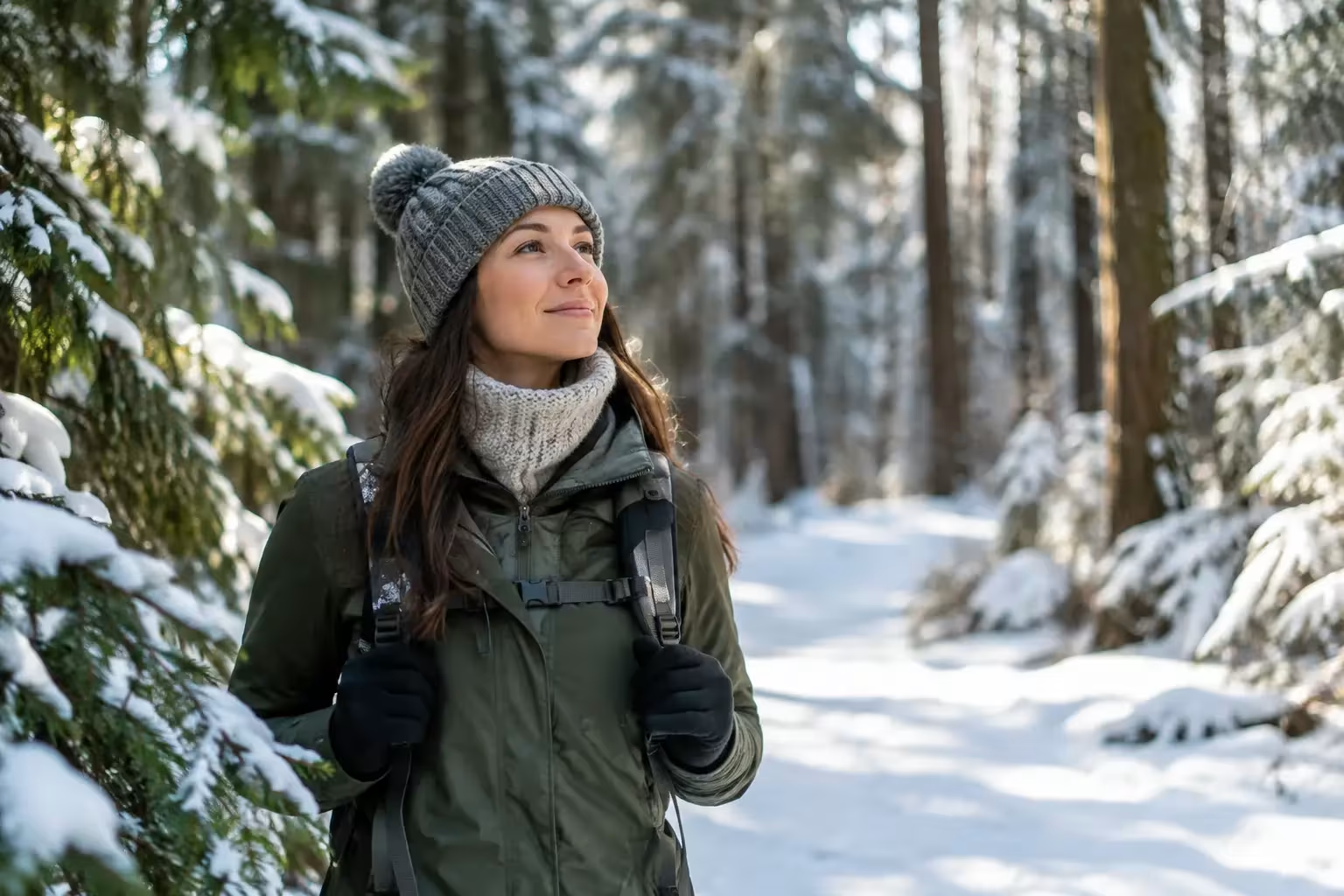
A quiet winter forest can feel unusually spacious. Bare branches reveal more sky, snow softens the ground beneath your feet, and familiar trails invite a slower kind of attention. Yet forest bathing in winter safety tips matter because restorative presence only works when your body feels protected enough to settle. Cold hands, wet socks, fading light, or an uncertain trail can quickly pull attention away from the sensory experience.
Shinrin-Yoku, often called forest bathing, is not about reaching a destination or covering miles. It is a mindful, unhurried practice of relating to the natural world through the senses. Winter can deepen that practice, but it asks for more preparation than a mild-weather walk. The goal is not to prove your resilience. It is to create conditions in which you can breathe, notice, and return home feeling restored.
Start With Conditions, Not Intention
Before setting an intention for your walk, assess the conditions outside. Check the forecast for temperature, wind chill, precipitation, sunset time, and sudden weather changes. Wind is especially significant in winter because it can make a manageable temperature feel far colder, particularly in exposed clearings or along ridgelines.
Choose a location that matches the day. A nearby wooded park with familiar paths may be wiser than a remote trail after fresh snow or freezing rain. If footing is uncertain, let your practice happen near a trailhead, in a neighborhood grove, or even beneath a stand of trees at a local green space. Forest bathing does not require wilderness. It requires receptive attention.
Be honest about your current energy, health, and experience. A person recovering from illness, managing circulation concerns, or feeling depleted may need a shorter visit and a warmer setting. If you have a health condition affected by cold exposure, consult a qualified health professional about appropriate precautions. Nature-based wellness supports well-being, but it is not a substitute for medical care or emergency planning.
Forest Bathing in Winter Safety Tips Begin With Warmth
The most useful winter practice is simple: dress for stillness, not just movement. Hiking can generate heat, while forest bathing often includes standing, sitting, and moving slowly. Clothing that feels sufficient during the first five minutes may not feel sufficient after twenty minutes of quiet observation.
Use layers you can adjust without frustration. A moisture-wicking base layer helps move perspiration away from the skin, an insulating middle layer holds warmth, and an outer layer protects against wind or wet snow. Avoid relying on cotton close to the body when conditions are cold or damp, since it can retain moisture and leave you chilled.
Protect the areas that lose heat quickly: head, ears, hands, feet, and neck. Warm socks and insulated, waterproof footwear make a meaningful difference when trails are wet, snowy, or muddy. Bring an extra pair of dry socks if your route has deep snow or stream crossings. Gloves that allow you to use your hands comfortably are also valuable, since winter forest bathing often includes touching bark, holding a warm drink, or journaling after the walk.
A small sit pad, folded blanket, or waterproof ground cover can transform the experience. Sitting directly on cold, wet ground may be uncomfortable enough to cut short an otherwise nourishing pause. Choosing comfort is not indulgent. It supports the nervous system’s ability to shift from vigilance toward calm.
Make the Route Shorter Than You Think You Need
Winter days offer less room for detours. Plan a route that is easy to shorten, retrace, and navigate before darkness arrives. For a personal forest bathing practice, twenty to forty minutes can be deeply meaningful. A brief, intentional visit is often more beneficial than a long outing that leaves you rushed or overextended.
Let someone know where you are going and when you expect to return, especially if you are visiting a less populated area. Carry a fully charged phone, but do not assume service will be reliable beneath a forest canopy or in remote terrain. A map, downloaded route information, and a simple backup plan provide confidence without taking you out of the moment.
Trail conditions can change quickly. Packed snow may conceal ice, while fallen leaves can hide uneven roots and rocks. Slow your pace, shorten your stride, and use traction aids when the surface calls for them. If a section feels questionable, turn around. There is no missed opportunity in choosing safety over completing a planned loop.
Let the Senses Guide a Safer Pace
Winter naturally invites a quieter form of attention. Instead of trying to recreate a summer forest experience, notice what the season offers: the clean scent of cold air, the pattern of lichen on a branch, the sound of a woodpecker carrying through bare trees, or the texture of snow underfoot.
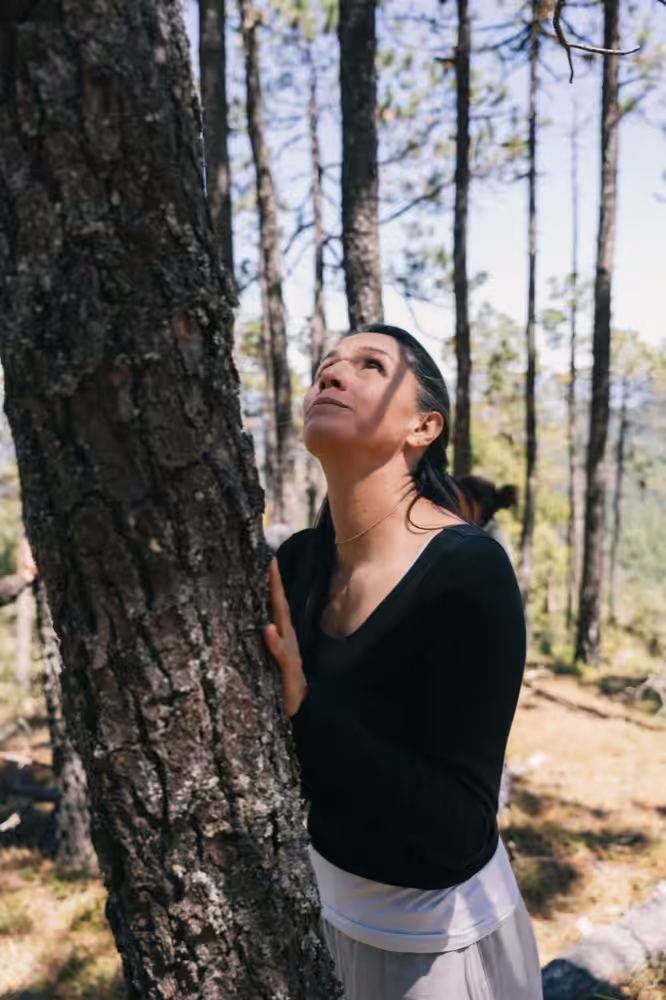
Use sensory invitations that keep you connected to your surroundings. Pause beside a tree and observe its shape against the sky. Notice three distinct sounds, including the quieter ones beneath traffic or wind. Place a gloved hand on bark and feel its ridges. Breathe normally rather than taking exaggerated deep breaths in very cold air, which can feel uncomfortable for some people.
Mindfulness should never mean ignoring physical signals. Shivering that persists, numbness, confusion, clumsiness, excessive fatigue, or pain are cues to seek warmth promptly. Return to shelter, add dry layers, and warm up gradually. A forest bathing session can end at any time. In fact, ending before discomfort sets in helps build a sustainable relationship with the practice.
Carry a Small Winter Care Kit
A few practical items reduce unnecessary risk without turning a slow walk into an expedition. For most accessible, local outings, consider carrying:
- Water, because hydration still matters in cold weather
- A warm drink in an insulated container for longer visits
- A charged phone and a portable battery pack
- A headlamp in case daylight changes faster than expected
- Basic first-aid supplies and an emergency blanket
- A snack with enough energy to support your return walk
The specific kit depends on your location, weather, route, and group size. A short visit to a maintained urban woodland requires less gear than a remote trail in deep snow. Preparation is not fear-based. It is a practical way to protect the spaciousness you came outside to experience.
If You Guide Others, Safety Becomes Part of the Invitation
For wellness professionals and aspiring forest bathing guides, winter sessions require thoughtful design. Conduct a site check when possible, select accessible terrain, and clearly communicate clothing expectations before participants arrive. A participant who arrives in thin sneakers or without gloves may be unable to receive the experience you carefully planned.
Build in options. Offer standing invitations as well as seated ones, choose a route with a nearby warming location, and make it clear that participants can opt out of any activity without explanation. Group sizes, mobility needs, weather tolerance, and local conditions all affect what is appropriate. A credentialed guide does not simply lead people outdoors. They create a container that balances sensory connection with informed care.
It also helps to shorten invitations and transitions during colder conditions. Rather than a lengthy stillness practice in one place, invite a few minutes of noticing followed by gentle movement. Keep language calm and spacious, while remaining direct about boundaries: stay with the group, watch footing, and speak up if warmth or comfort becomes a concern.
Formal education can help guides develop these decisions with confidence. Treeming’s forest bathing training emphasizes the mindful and science-informed foundations of the practice while supporting responsible facilitation across real-world settings.
Honor the Season You Actually Have
Not every winter day is suited to a forest visit. Ice storms, dangerous wind chills, poor visibility, and severe weather advisories are clear reasons to postpone. Choosing an indoor nature practice on those days, such as sitting near a window, tending a houseplant, or reflecting on photographs from a favorite trail, keeps your relationship with nature intact without taking unnecessary risks.
When conditions are supportive, winter offers a rare invitation: fewer distractions, fewer crowds, and more space to notice what remains alive beneath apparent stillness. Dress with care, keep your route modest, and allow your time among the trees to be shaped by respect for both the landscape and your body. The safest winter forest bathing practice is often the one that leaves you warm enough to want to return.