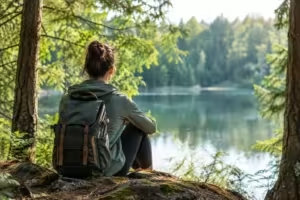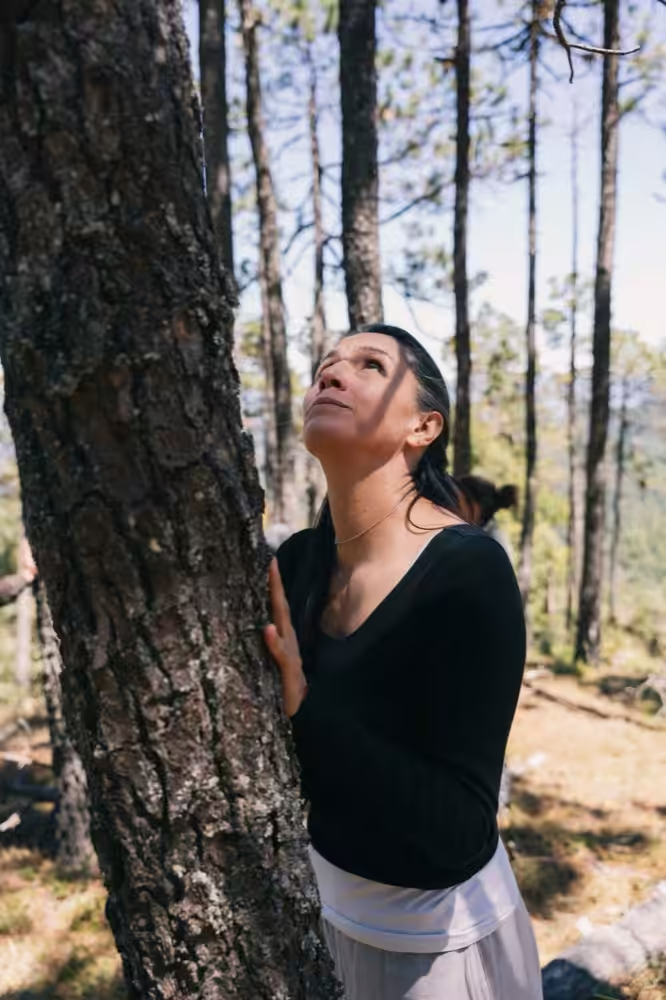
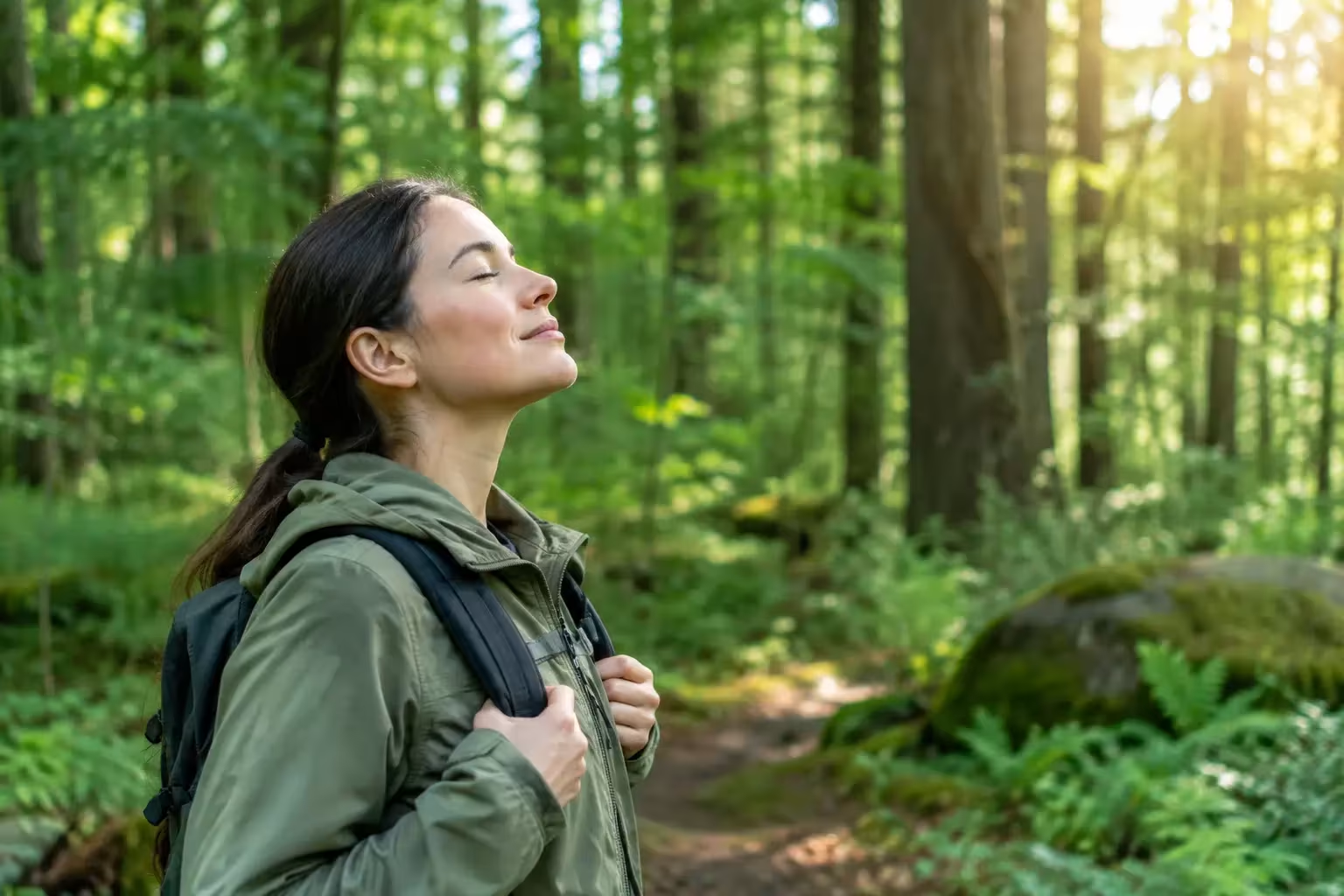
A forest does not ask you to achieve anything. It offers a rare setting where your attention can soften, your breathing can slow, and the constant demand to respond can briefly fall away. The top benefits of forest bathing begin with that shift: less striving, more sensory presence, and a more settled relationship with the natural world.
Forest bathing, also known as Shinrin-Yoku, is not a hike measured in miles or a workout measured by heart rate. It is a mindful practice of spending unhurried time among trees and engaging the senses with intention. Research into nature exposure and forest environments suggests meaningful effects on stress, mood, attention, and physiological restoration. The experience is simple, but its value is not superficial.
What Makes Forest Bathing Different From a Walk?
A regular walk in the woods can certainly be restorative. Forest bathing adds a deliberate pace and a receptive frame. Rather than moving toward a destination, you pause to notice the texture of bark, the movement of light, the scent of damp soil, or the changing chorus of birds.
This distinction matters because attention is part of the practice. When the mind is allowed to rest from screens, schedules, and problem-solving, the nervous system has more opportunity to shift out of a heightened state of alert. You do not need wilderness, expensive gear, or a perfect forest. A local wooded park, arboretum, or tree-lined trail can be enough, provided it feels safe and allows you to slow down.
8 Top Benefits of Forest Bathing
1. It can lower perceived stress
Stress reduction is one of the most widely recognized benefits of time in forest settings. Studies have associated forest bathing with lower self-reported stress and favorable changes in stress-related measures such as cortisol, blood pressure, and heart rate. Results vary by person, environment, and study design, but the broader pattern is encouraging.
The practical value is immediate. A quiet hour beneath a tree canopy can create space between a stressful moment and your response to it. Forest bathing is not a replacement for medical or mental health care, but it can become a grounding part of a broader well-being plan.
2. It supports a calmer nervous system
Many adults spend long stretches in sympathetic nervous system activation: rushing, anticipating, multitasking, and reacting. Forest environments may help support the parasympathetic response, often described as the body’s rest-and-digest state.
This does not mean every visit will create instant calm. If you arrive anxious or distracted, the first few minutes may feel restless. Staying with simple sensory observations, rather than trying to force relaxation, often gives the body time to settle naturally.
3. It can restore mental clarity and attention
Focused attention is a limited resource. Hours of messages, meetings, notifications, and decision-making can leave the mind feeling scattered. Natural environments offer what researchers often call soft fascination: enough interest to hold attention gently, without demanding intense concentration.
Watching leaves move in the wind or following the path of a beetle across a fallen branch gives the analytical mind a pause. Many people leave a forest bathing session with greater clarity, not because the forest solved every problem, but because their attention had room to reset.
4. It may lift mood and ease mental fatigue
Feeling emotionally flat after a demanding week is common, especially for people whose work keeps them indoors and digitally connected. Time in nature has been linked in research with improved mood and reduced feelings of tension, anger, and fatigue.
Forest bathing invites an alternative to passive recovery. Instead of scrolling for relief, you are participating in your own restoration through breath, movement, and sensory awareness. On difficult days, keep the practice small. Ten attentive minutes near trees can be more realistic than waiting for an ideal afternoon.
5. It strengthens sensory awareness and mindfulness
Mindfulness does not have to happen on a meditation cushion. Forest bathing gives the senses a living focal point: cool air against the skin, the scent of cedar, birdsong in the distance, or the rough surface of a stone.
Sensory attention can interrupt habitual rumination without requiring you to argue with your thoughts. When the mind wanders, simply return to what you can see, hear, smell, and feel. Over time, this practice can build a more accessible form of presence, one you can carry into daily life.
6. It encourages gentle, sustainable movement
Forest bathing usually involves slow walking, standing, sitting, and occasionally stretching. It is inclusive by design because the goal is connection, not athletic performance. That makes it especially valuable for people who find high-intensity exercise intimidating, inaccessible, or emotionally draining.
The trade-off is that forest bathing should not be viewed as a substitute for all forms of physical activity. Its strength lies in its gentleness. It can complement other movement practices by making time outdoors feel nourishing rather than another item on a wellness checklist.
7. It deepens connection and reduces isolation
A solo forest bathing practice can feel deeply personal, but guided experiences can also foster meaningful connection. Sharing silence, sensory invitations, and unhurried time outdoors often creates a different quality of community than conventional social settings.
For wellness professionals, this is one reason forest bathing can be a thoughtful addition to retreats, coaching offerings, mindfulness programs, and workplace well-being experiences. A skilled guide creates an inclusive container without telling participants what they should feel. The forest does not produce identical outcomes, and that openness is part of the practice’s integrity.
8. It can nurture care for the natural world
It is easier to value what you have learned to notice. When people return to the same grove, trail, or neighborhood trees, they often become more aware of seasonal change, habitat, and the conditions that allow an ecosystem to thrive.
That connection can lead to stewardship: choosing lower-impact habits, supporting local green spaces, or helping restore tree cover in a community. Personal well-being and environmental care do not have to be separate goals. Forest bathing makes their relationship tangible.
How to Receive More From a Forest Bathing Session
The best session is not necessarily the longest one. For some people, 20 to 40 minutes is enough to feel a meaningful shift. For others, a half-day retreat offers the slower rhythm they need. Weather, mobility, location, safety, and personal preference all matter.
Begin by leaving your phone on silent or in a bag. Walk more slowly than usual, then pause when something draws your attention. Let your senses lead rather than following a rigid sequence. If sitting feels right, find a comfortable and safe place to rest. A final moment of reflection can help you recognize what changed, even if the change is subtle.
If you are guiding others, avoid framing the experience as a guaranteed cure or a performance. Offer invitations rather than commands. Use accessible language, plan for weather and mobility needs, and prioritize consent, boundaries, and local land ethics. Professional training helps guides create sessions that are both restorative and responsibly facilitated.
For people ready to bring this work into their personal practice or professional services, Treeming.org offers accredited, self-paced Forest Bathing Guide Certification grounded in mindfulness, research, and environmental stewardship.
A Practice That Meets You Where You Are
Forest bathing is most powerful when it becomes a relationship rather than a one-time escape. You may feel peaceful on one visit and distracted on the next. Both experiences belong. The point is not to manufacture a particular state of mind, but to return to a place where your body and attention can remember a slower rhythm.
Choose one patch of trees you can visit again soon. Arrive without an agenda, stay long enough to notice what is already there, and let the forest offer its quiet form of instruction.