The forest does not need you to achieve anything. That is precisely why it can be such a powerful setting for restoration. When you plan a mindful forest visit, the goal is not to cover miles, conquer a trail, or capture the perfect photo. It is to create enough space for your senses to settle and your attention to return to the present.
Forest bathing, also known as Shinrin-Yoku, is a gentle, intentional practice of spending time among trees. Research into nature exposure suggests that time in green environments may support stress recovery, mood, and mental clarity. A mindful visit is not a substitute for medical or mental health care, but it can become a meaningful part of a broader well-being practice.
Begin With an Intention, Not an Itinerary
Before choosing a trail, decide what you need from the visit. You may be carrying the residue of a demanding workweek, feeling creatively stuck, or simply craving a slower pace. A simple intention gives your time outdoors direction without turning it into another task to complete.
Try a phrase such as, “I am here to notice,” or “I am here to rest my attention.” Keep it light. The forest experience does not need to produce a breakthrough to be worthwhile.
This distinction matters for busy professionals and wellness practitioners alike. A hike can be energizing and physically challenging. A mindful forest visit is usually slower, quieter, and less concerned with distance. Both belong outdoors, but they serve different purposes.
Choose a Forest Setting That Supports Presence
A remote wilderness area is not required. A wooded city park, arboretum, conservation area, or quiet trail near home can offer a restorative experience. The best location is one you can access safely and revisit often.
Look for a place with a manageable path, some tree cover, and enough separation from traffic or crowds that you can hear natural sounds. If silence is not possible, do not abandon the plan. The practice is about broadening awareness, not controlling every condition. Even in an urban woodland, you can notice birdsong, shifting light, bark texture, and the movement of air through leaves.
Consider the trade-off between solitude and safety. A secluded trail may feel more immersive, while a well-used park can be the wiser choice if you are visiting alone or are new to the area. Check weather conditions, daylight hours, trail notices, and local regulations before you go.
Match the Location to Your Energy
If you feel depleted, select a short, level route close to your car or public transportation. If you have more capacity, choose a longer loop with places to pause. The ideal setting is not the most dramatic landscape. It is the one that allows your nervous system to soften rather than stay alert to difficult terrain, time pressure, or uncertainty.
Set Aside Enough Time to Slow Down
For many people, 60 to 90 minutes is a helpful window for forest bathing. The first 10 or 15 minutes may feel surprisingly restless, especially if you are accustomed to moving quickly, checking notifications, or listening to something while you walk. Give yourself time to arrive.
If an hour feels unrealistic, begin with 20 minutes. Consistency often matters more than duration. A brief weekly practice in a familiar grove can be more supportive than a rare, elaborate outing that requires extensive planning.
Plan to arrive without a tight commitment immediately afterward. When you schedule a meeting the moment your visit ends, your mind may remain oriented toward the clock. Leave a small buffer for the transition back to daily life.
Prepare Simply and Leave Room for the Senses
Thoughtful preparation supports ease, but overpacking can make a gentle outing feel like an expedition. Wear layers appropriate for the forecast, comfortable shoes, and clothing that lets you sit or stand comfortably. Bring water, and carry any personal items needed for safety or health.
For a visit of an hour or more, these five items are often enough:
- Water and a small snack if needed
- Weather-appropriate layers and rain protection
- A fully charged phone kept on silent for emergencies
- Sun protection and insect repellent when conditions call for them
- A small sit pad or blanket for a quiet pause
Tell someone where you will be if you are going alone, especially on an unfamiliar trail. Stay on designated paths, respect closures, and follow Leave No Trace principles. Mindfulness includes awareness of the living systems around you. Avoid picking plants, feeding wildlife, playing loud audio, or leaving anything behind.
How to Plan a Mindful Forest Visit With Simple Invitations
You do not need a complicated sequence of exercises. In fact, too many prompts can pull you out of the experience. Choose one or two invitations and let them unfold slowly.
Start by pausing at the trailhead. Feel your feet connect with the ground. Take a few unforced breaths and notice the temperature on your skin. Rather than trying to breathe in a particular way, allow your breath to become something you observe.
Then walk at a pace that feels almost unusually slow. Let your eyes rest on shapes, colors, and patterns rather than scanning for the next destination. Notice the architecture of a branch, the contrast between old and new leaves, or the many shades of green in one small area.
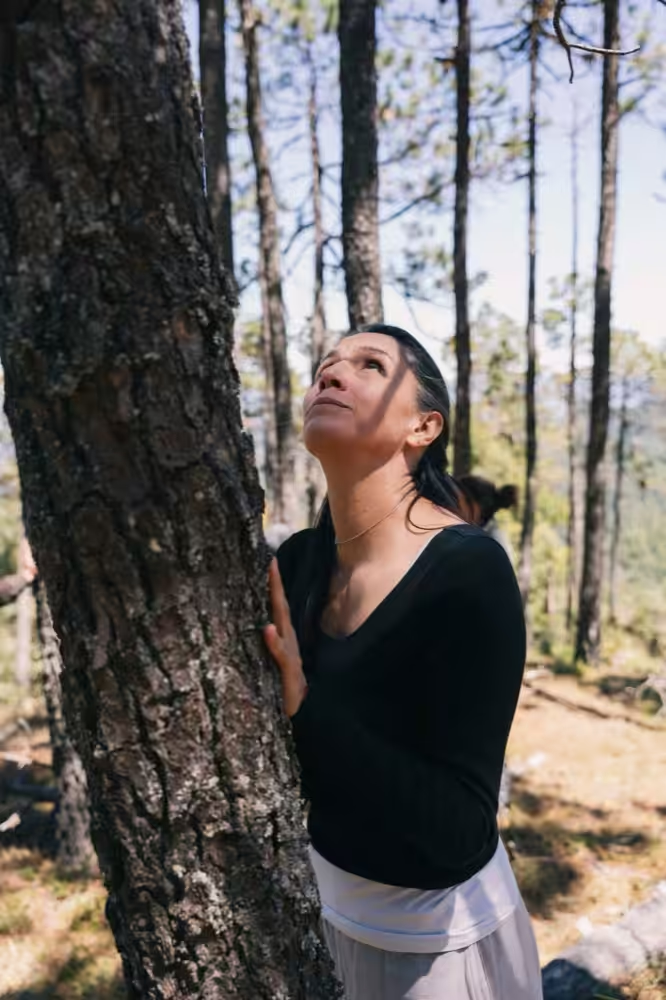
After several minutes, invite another sense into focus. Listen for the nearest sound, then the farthest. Notice scent after rain, dry needles underfoot, or damp earth. If it feels appropriate and permitted, touch the roughness of bark or the smooth surface of a fallen leaf. There is no need to name every experience. Simple noticing is enough.
Take a Sit Spot Pause
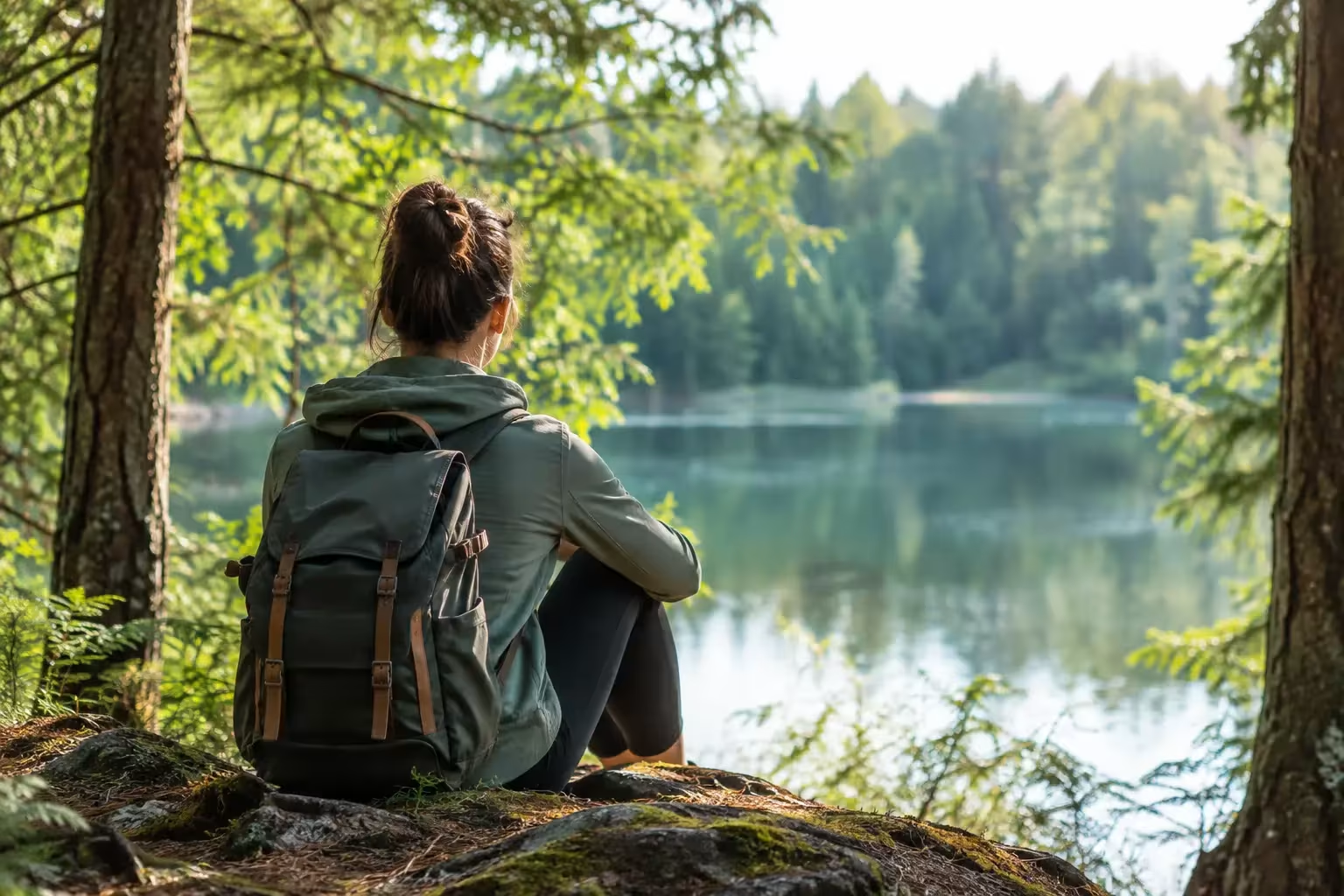
Find a safe place to sit for five to 15 minutes. During this pause, resist the urge to turn the moment into meditation performance. Thoughts may continue. Sounds may interrupt. Your role is not to clear the mind but to meet what is already here with less judgment.
A useful question is: “What is this place offering me right now?” The answer may be calm, but it may also be discomfort, grief, gratitude, boredom, or nothing obvious at all. Every response is information. Nature-based mindfulness is not about forcing a pleasant feeling. It is about practicing honest attention.
Let Technology Serve the Visit, Not Lead It
Your phone can help with maps, weather alerts, and safety. It can also fragment the very attention you came to restore. Put it on airplane mode or Do Not Disturb after you have confirmed your route, while keeping it available for emergencies.
Photography is a personal choice. For some people, a single photo creates a meaningful record. For others, repeated framing and reviewing pulls them away from direct experience. Consider taking one photo near the end of the visit, rather than documenting every stage of it.
If you are a wellness professional planning an experience for clients or groups, establish this expectation in advance. A clear invitation to silence devices helps participants feel permission to step away from constant availability. It also supports the ethical container of a guided practice.
Close the Visit Gently
Do not rush from a quiet trail directly into emails, errands, or social media. Before leaving, stand still for a moment and notice what has shifted, even if the change is subtle. Perhaps your shoulders have dropped. Perhaps your thoughts feel less urgent. Perhaps you are simply more aware of your surroundings.
You might carry one observation home in a notebook: a sound you heard, a detail you had overlooked, or a feeling that arose. This small act of reflection can help translate time in the forest into a sustainable personal practice.
Treeming.org teaches forest bathing as both a personal well-being practice and a professional skill grounded in mindful awareness, safety, and respect for the natural world. Whether you are seeking your own restorative rhythm or considering a path toward guiding others, the foundation begins with learning how to be present outdoors.
The next time the trees call for your attention, choose a place you can reach, give yourself a little more time than seems necessary, and arrive with nothing to prove. The forest will meet you where you are.