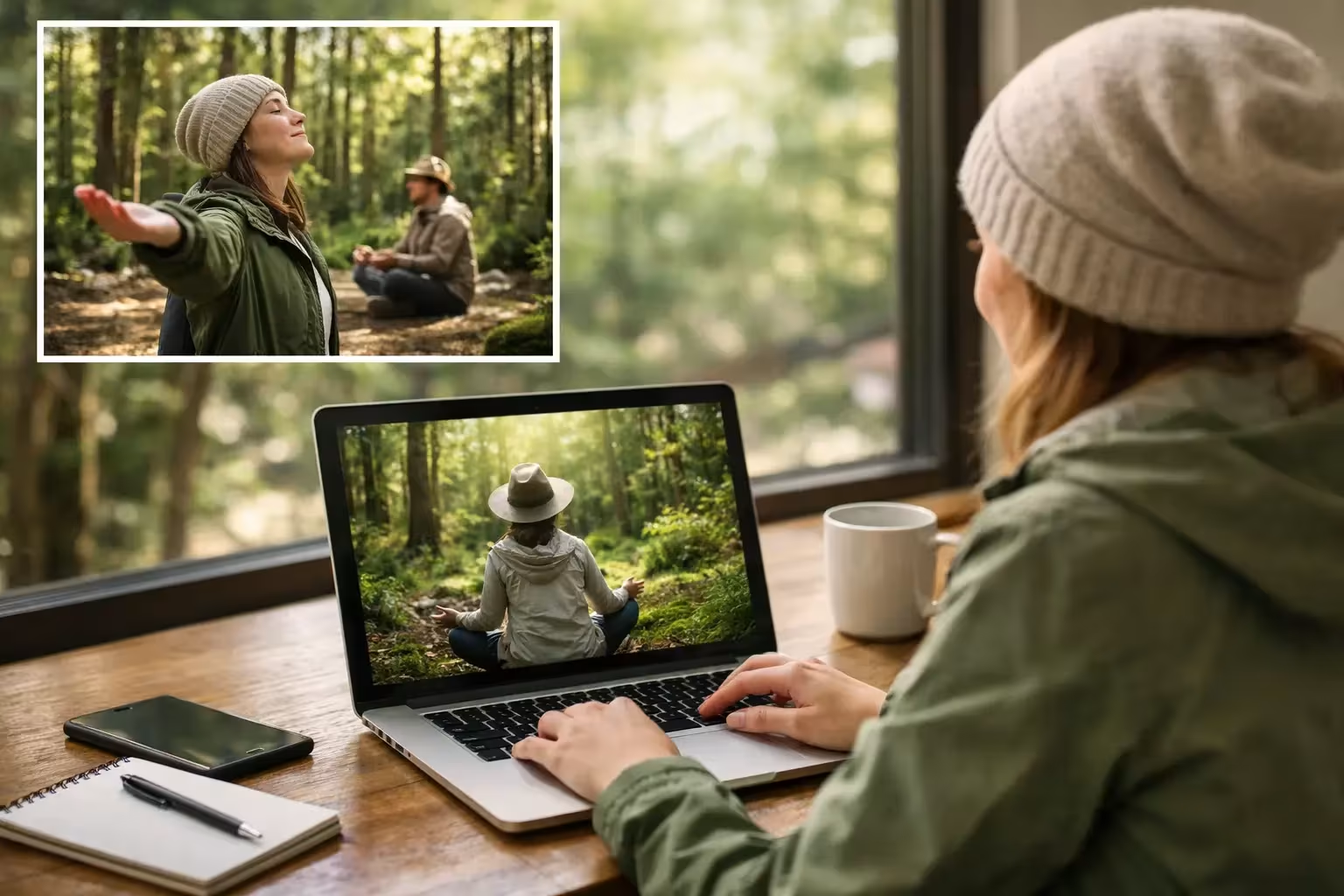
At 42, Maya had spent nearly two decades in a demanding corporate operations role. Her work was stable, but her days were crowded with deadlines, video calls, and the persistent feeling that she was helping people move faster without helping them feel better. A case study online forest bathing certification career change can make this kind of crossroads more tangible: not as an overnight reinvention, but as a measured move toward work that feels calmer, more purposeful, and professionally credible.
Maya’s story is a composite drawn from the common experiences of mid-career professionals who explore nature-based wellness training. The details may differ from person to person, but the questions are familiar. Can an online certification prepare someone to guide others responsibly? Is there room for this work alongside an existing career? And how do you move from loving time outdoors to offering an experience that has real structure and value?
The career-change moment was not a dramatic exit
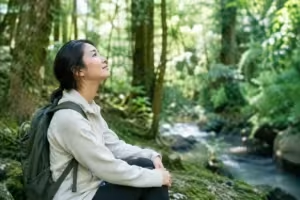
Maya did not leave her job after one difficult week. She began with a quieter realization: her most restorative hours happened outside. Weekend walks in local woods helped her settle her nervous system in a way that passive entertainment and productivity tools never had. She was not looking for another hobby. She wanted to understand why these experiences helped and whether she could support others in finding that same sense of presence.
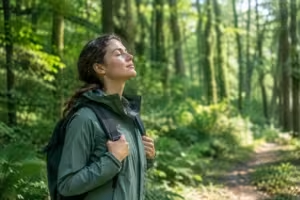
Forest bathing, also known as Shinrin-Yoku, offered language for what she had already sensed. It is not hiking for fitness, identifying every plant, or forcing a meditation practice outdoors. It is an intentional, sensory way of spending time in nature. A guide creates conditions for participants to slow down, notice, and connect with the living world around them.
That distinction mattered. Maya had experience facilitating workplace meetings, but she did not yet have a framework for leading a nature-based wellness session. She wanted training grounded in research, clear ethics, and practical guidance rather than a loose collection of inspirational ideas.
Why online forest bathing certification suited her transition
For a person considering a career change, flexibility is not a minor convenience. It is often the reason training becomes possible at all. Maya could not pause her income, relocate, or attend a fixed series of in-person classes. An online, self-paced forest bathing certification allowed her to study around work and family commitments while giving her time to absorb the material.
The online format also challenged an assumption she initially held: that nature-based work can only be learned in a forest classroom. Direct experience outdoors remains essential, but professional preparation includes much more than being outside. Maya needed to understand the origins and principles of Shinrin-Yoku, the science related to stress reduction and attention restoration, group facilitation, session design, participant care, and the boundaries of a wellness guide’s role.
A credible program provides that foundation in a structured way. Accreditation can be especially meaningful for career changers because it signals that the training is more than a personal interest course. It gives prospective clients, retreat partners, and wellness organizations a clearer reason to trust that the guide has completed recognized education.
Learning the difference between passion and practice
Early in her training, Maya realized that enjoying nature did not automatically make her ready to guide others. A thoughtful forest bathing experience requires pacing, observation, and restraint. The guide is not there to lecture, diagnose, or turn every moment into a lesson.
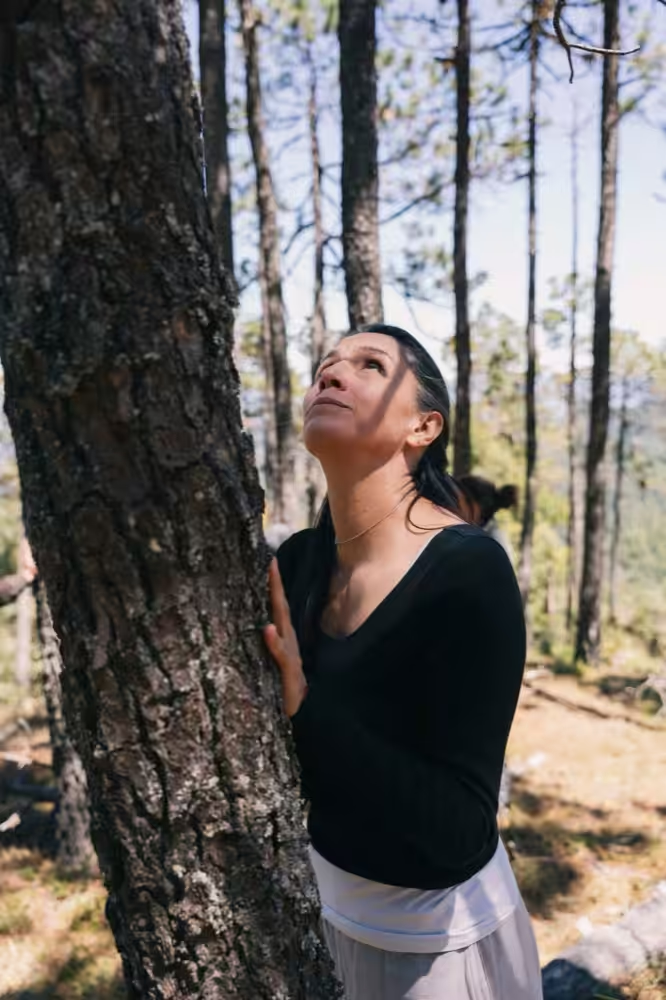
She practiced creating invitations that were open rather than demanding. Instead of telling participants what they should feel, she learned to offer prompts that welcome curiosity: noticing a texture, following a sound, or pausing beside a tree. This approach leaves room for different bodies, backgrounds, and emotional responses.
That was one of the most important professional shifts. Maya’s former work rewarded quick answers. Forest bathing asked her to become comfortable with spaciousness. Her role was to hold an intentional container, attend to safety and accessibility, and let each participant have their own relationship with the place.
Building a forest bathing practice before leaving full-time work
Maya did not treat certification as a promise of immediate full-time income. Instead, she used it to build a gradual, lower-risk transition. She continued in her corporate role while practicing guided sessions with friends, colleagues, and small community groups. Each experience gave her useful feedback about timing, language, weather planning, and the practical needs of participants.
She began with one monthly session at a nearby public nature area. The group was small, and the fee was modest. Her aim was not to fill a calendar immediately. It was to refine her facilitation and learn who was drawn to the experience. Some participants were stressed professionals. Others were yoga students, caregivers, or people who simply wanted a more mindful way to be outdoors.
Over time, Maya developed a simple offer that reflected her strengths. She did not try to serve everyone. Her background in workplace operations helped her communicate clearly with organizations, so she began offering small-group sessions for employee wellness days and leadership retreats. On weekends, she led public experiences for individuals seeking rest and reconnection.
This is where a career change becomes practical. A certification can provide a marketable credential and a strong educational base, but it does not replace relationship-building, local permissions, insurance considerations, or consistent practice. The pace of business development depends on a guide’s location, audience, schedule, and willingness to communicate the value of the work.
The professional credibility question
Maya was careful about how she described forest bathing. She spoke about the research-informed benefits of time in nature and mindful sensory engagement, including support for stress reduction, mood, and mental clarity. She did not claim to treat anxiety, trauma, depression, or medical conditions.
That boundary protected both her participants and her emerging practice. Forest bathing guides can complement the work of therapists, health professionals, coaches, and organizations, but certification does not make someone a licensed clinician. For guides who already hold clinical or wellness qualifications, forest bathing may become a valuable addition to an existing service. For career changers without those credentials, it can be a distinct wellness offering with its own scope and ethical responsibilities.
Her training helped her explain this with confidence. Rather than relying on vague claims about nature healing everything, she could describe a structured practice informed by mindfulness traditions and modern research. That science-backed framing resonated with the audiences she most wanted to serve.
What changed after certification
The visible change was professional. Within a year, Maya had a small but growing practice, a clearer niche, and a credential she could present to potential partners. She had led sessions for local residents, a wellness studio, and one small business team. She was no longer asking whether she was “allowed” to call herself a guide. She had training, practice, and a defined approach.
The deeper change was personal. Her relationship with work became less all-or-nothing. She did not need to reject her previous career to honor what she had learned there. Her organizational skills, calm presence under pressure, and ability to plan a group experience became assets in her new direction.
She also found that guiding reinforced her own well-being. Preparing for a session meant returning to the woods with attention. It reminded her that meaningful work does not always require doing more. Sometimes it asks for better listening – to people, to place, and to the pace of the natural world.
Is this career path right for you?
An online forest bathing certification can be a strong fit if you feel called to nature-based wellness and want a recognized framework for guiding others. It may be especially suitable for coaches, yoga teachers, mindfulness practitioners, outdoor educators, retreat facilitators, and professionals seeking a more values-led second career.
It may be less suitable if you are looking for a quick credential with guaranteed income. Building a practice takes time, local knowledge, and care. You will need to consider where you can guide legally and safely, how you will welcome participants with different mobility needs, and whether you prefer public sessions, private clients, retreats, or organizational work.
For Maya, the answer was not to wait until every detail was certain. She chose accredited training, practiced with humility, and allowed her new work to grow at a sustainable pace. Programs such as Treeming.org can support that beginning by pairing flexible online learning with professionally focused, science-backed forest bathing education and a commitment to reforestation.
A career change does not have to begin with a leap. It can begin with one intentional hour beneath the trees, followed by the decision to learn how to guide that experience with care.