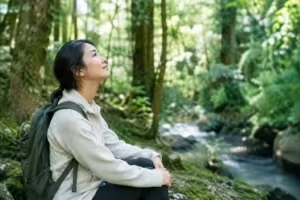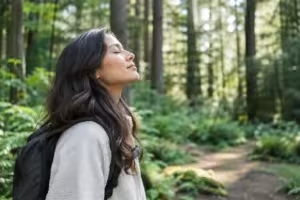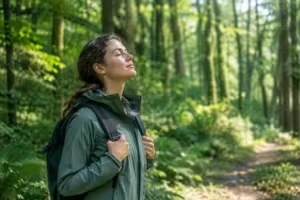
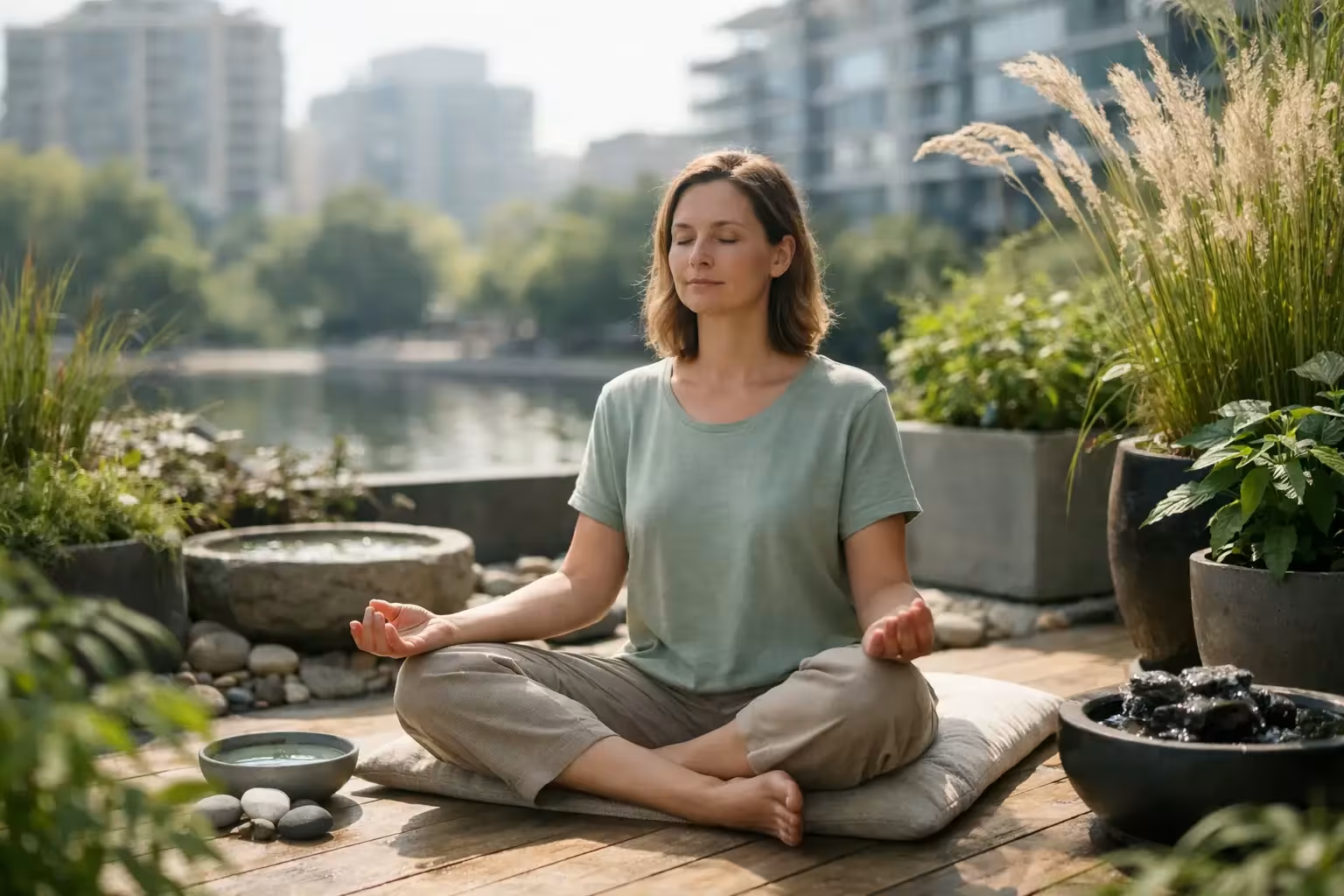
A crowded commute, a windowless office, or a neighborhood short on green space does not disqualify you from nature-based wellness. Forest bathing without a forest nearby begins with a shift in attention: you are not trying to recreate a wilderness hike. You are practicing a slower, sensory relationship with the living world that is available to you now.
Shinrin-Yoku, often translated as forest bathing, is the mindful immersion of the senses in a natural setting. Research into time spent in green environments has associated nature exposure with lower stress, improved mood, and greater mental restoration. A mature forest offers a particularly rich setting, but the underlying practice is not about reaching a specific destination or covering a certain distance. It is about noticing, receiving, and allowing your nervous system a break from constant demand.
For people living in cities, caring for family, working long hours, or managing limited mobility, that distinction matters. A small park, a courtyard tree, a balcony garden, or even a patch of sky can become a meaningful place to pause.
Forest Bathing Without a Forest Nearby Starts Small
The most common obstacle is the belief that nature practice only counts if it is dramatic: tall trees, birdsong, miles of trail, and an entire afternoon free. Those experiences can be deeply restorative, but waiting for ideal conditions often means not practicing at all.
Instead, choose the most accessible living place you can return to regularly. This may be a city park before work, a bench under one street tree, a community garden, a riverside path, or the outdoor area around your apartment. Consistency gives you something valuable that a one-time excursion cannot always provide: familiarity. Over time, you begin to notice which leaves have changed, when the light moves across a wall, and how weather alters sound and scent.
If your nearest green space is small or busy, do not treat that as a failure. Urban nature includes resilient forms of life. Notice grass pushing through a crack in the sidewalk, lichen on stone, a sparrow’s movements, or the shape of clouds passing between buildings. The practice is not an escape from where you live. It is a way to restore your relationship with the place you already inhabit.
Build a Sensory Practice, Not Another Task
Forest bathing is not exercise training, photography, or a productivity challenge. You do not need to count steps, identify every species, or leave feeling blissful. The intention is gentle presence.
Begin by putting your phone on silent and giving yourself 10 to 20 minutes. Stand or sit comfortably. Take a few unforced breaths, then let your attention move outward. What can you see that is alive or changing? What sounds are closest, and which are farther away? Is there movement in branches, grass, water, insects, or shadows?
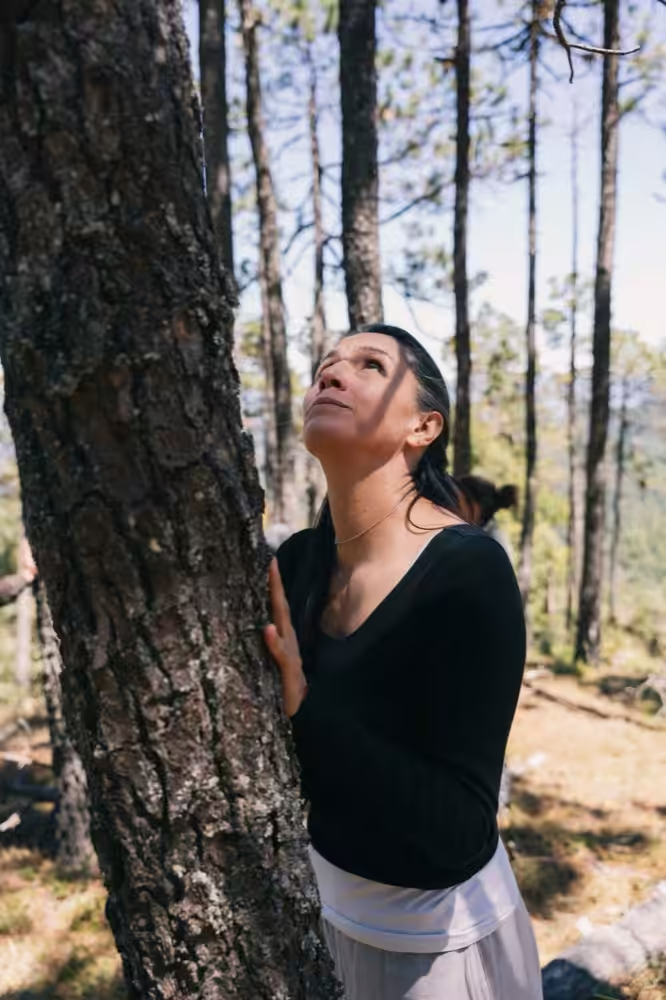
Next, include touch. Rest a hand on the bark of a tree if appropriate, feel the texture of a leaf, or notice the temperature of air on your face. Smell can be especially grounding after rain, near soil, herbs, flowers, or evergreens. There is no need to force a profound experience. Simply remain curious.
A helpful invitation is: “What is here when I stop rushing?” Ask it quietly, then let the environment answer in its own way. Perhaps the answer is birdsong. Perhaps it is traffic mixed with wind. Perhaps it is the realization that your shoulders have been lifted toward your ears all morning.
Try the 5-4-3 nature pause
When time is tight or your surroundings feel overstimulating, use a simple sensory sequence. Notice five natural things you can see, four sounds you can hear, three textures you can feel, two scents you can detect, and one aspect of nature that brings you even a small sense of ease. This is not a test of observation. It is a way to help attention settle into the present.
The exercise works in a park, beside an office planter, or from a balcony. It can also be adapted indoors by sitting near an open window with houseplants, natural materials, or a view of the sky. Indoor practice is not identical to being outdoors, but it may be a supportive bridge on days when getting outside is not possible.
Choose Places That Support Your Nervous System
Not every outdoor space will feel calming at every time of day. A park may be peaceful early in the morning but crowded at lunch. A local trail may be restorative in spring yet uncomfortable during extreme heat. Forest bathing is responsive, not rigid.
Look for settings where you can safely slow down. A botanical garden, cemetery with mature trees, waterfront, school field after hours, or quiet residential street can be more suitable than a large destination park that requires a major trip. If you live near a greenway or bike path, step off the main flow when possible and find a place to sit for a few minutes.
Safety and accessibility come first. Choose well-lit locations, tell someone where you are going when needed, and honor physical limitations. If standing or walking is difficult, a chair beneath a tree, an accessible garden path, or an open window can support the same core intention. Nature connection should feel welcoming, not like another standard you must meet.
Let Everyday Nature Become a Ritual
The benefits of a mindful nature practice often grow through repetition. Rather than reserving it for weekends, attach it to a moment that already exists in your day. Spend ten minutes outside before opening your laptop. Eat one meal near a window without scrolling. Take the longer route home if it passes trees. Water plants slowly, paying attention to the scent of soil and the sound of water.
These small rituals can create a transition between work and rest. They also make it easier to recognize your own patterns. You may notice that afternoon light improves your mood, that rain makes you feel more alert, or that a brief pause outdoors reduces the urge to carry work stress into the evening.
For wellness professionals, this approach is also a useful teaching principle. Clients may assume they need access to a national park or private retreat to benefit from forest bathing. Guiding them toward realistic, local practices makes the work more inclusive and sustainable. A skilled guide helps people deepen perception in the setting available to them, rather than imposing an idealized version of nature.
Use Nature Media With Intention
Nature recordings, photographs, and virtual landscapes can offer a moment of calm, particularly in hospitals, dense urban environments, or seasons of limited outdoor access. They may support relaxation or help you recall a meaningful outdoor experience. Still, they are best viewed as a complement rather than a complete replacement for direct contact with daylight, fresh air, weather, and living ecosystems.
If you use nature media, make it intentional. Sit near a plant or window, silence notifications, and listen to a recording for five minutes without multitasking. Notice your breath and physical sensations. Then, when possible, take one small step toward direct contact: stand outside, touch a leaf, or look up at the sky.
Make the Practice Personal and Purposeful
There is no perfect way to practice forest bathing. Some days will feel peaceful. Other days, your mind will race or the city will feel loud. Both are valid experiences. The goal is not to eliminate thought but to create enough space to notice what is happening within and around you.
A journal can help you recognize change over time. After each practice, write a few words about what you noticed, how your body felt, and what you would like to carry into the rest of the day. Keep it simple. “Cool air, restless mind, softer shoulders” is enough.
If this practice speaks to you as more than personal restoration, formal training can provide a thoughtful foundation in the principles, research, ethics, and facilitation of Shinrin-Yoku. Treeming.org offers accredited online Forest Bathing Guide Certification designed for those who want to cultivate their own practice or support others with confidence and care.
The nearest forest may be hours away. The nearest moment of connection may be just beyond your door, beside your desk, or waiting in the pause before you look down at your phone. Step toward what is living, and give yourself permission to stay there for a while.