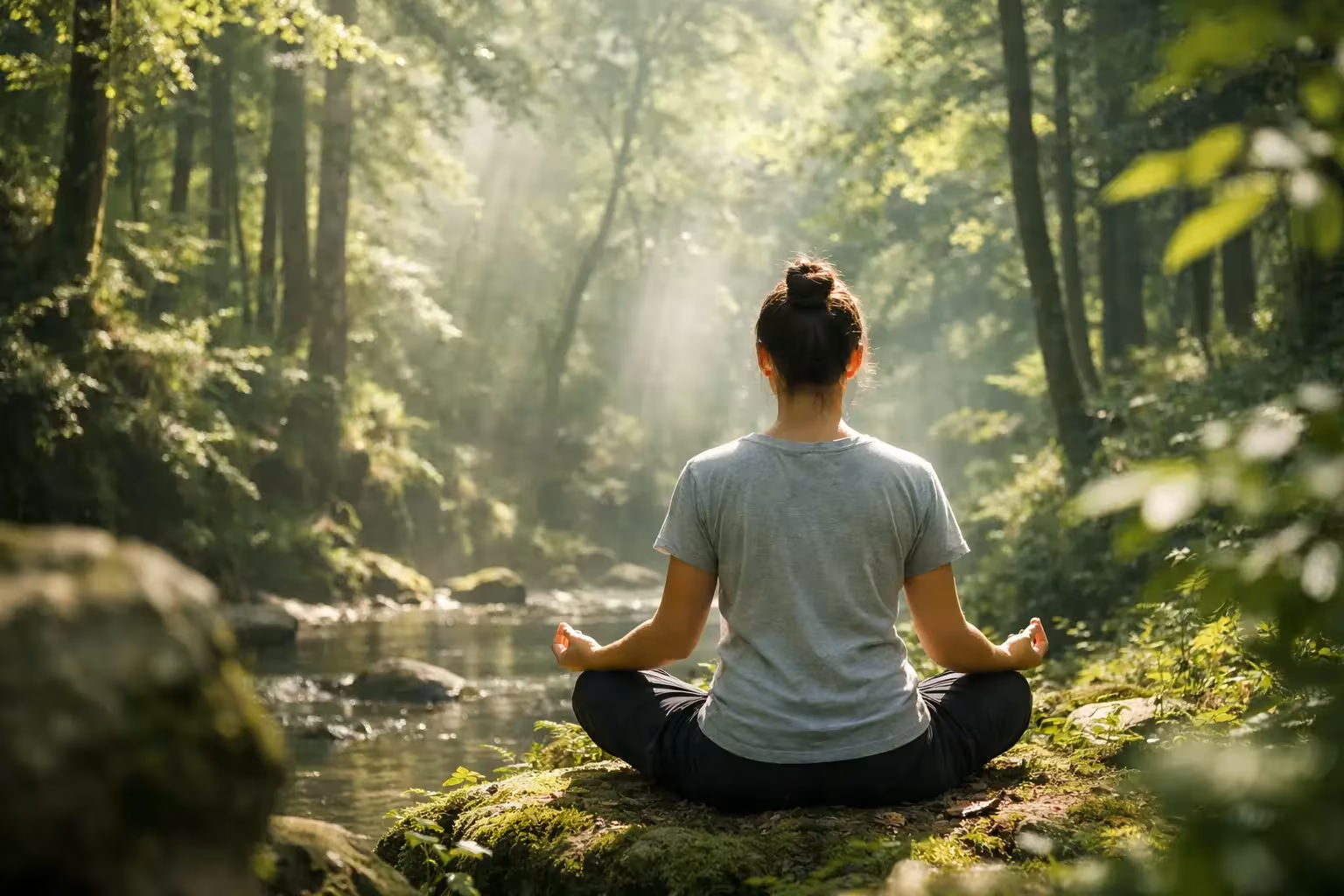
A quiet forest asks very little of you. There is no perfect posture to hold, no need to empty your mind, and no expectation that you will feel peaceful the moment you arrive. But is forest bathing a form of meditation? In many meaningful ways, yes. Both practices invite you to slow down, bring attention to the present moment, and relate to your thoughts with more spaciousness. Still, forest bathing has its own method, purpose, and sensory richness.
Understanding the distinction can help you choose the practice that meets you where you are – whether you want a personal reset after a demanding week or a grounded approach to guiding others in nature-based wellness.
Is Forest Bathing a Form of Meditation?
Forest bathing, also known as Shinrin-Yoku, can be meditative, but it is not simply meditation done outdoors. It is a mindful, unhurried immersion in a natural setting, often a forest, park, garden, or tree-lined neighborhood. Rather than trying to achieve a particular state, you engage your senses and allow the living environment to become part of your awareness.
Meditation usually centers on a deliberate attentional practice. You may follow the breath, repeat a phrase, observe thoughts, or cultivate compassion. Forest bathing can include these elements, yet its attention is more relational. The texture of bark under your palm, birdsong moving across the canopy, the scent of soil after rain, and the temperature of the air all become invitations to return to the present.
That difference matters. For some people, sitting quietly with their thoughts can feel challenging, especially during periods of stress, grief, burnout, or mental overload. Nature offers gentle, external points of focus. You are not forcing stillness. You are noticing what is already here.
Where Forest Bathing and Meditation Overlap
Both forest bathing and meditation support a shift away from automatic living. They create a pause between what happens around you and how quickly you react to it. That pause can make room for clearer thinking, emotional regulation, and a greater sense of calm.
Mindfulness is central to each practice. In meditation, mindfulness may mean noticing the breath and gently returning when the mind wanders. In forest bathing, it may mean noticing the sound of wind in leaves, then recognizing that your attention has drifted back to your to-do list, and returning to the sound without judgment.
Both can also encourage a more compassionate relationship with the self. The goal is not to perform tranquility or erase difficult thoughts. It is to practice awareness. A forest bathing walk may include moments of restlessness, distraction, or discomfort, just as a seated meditation can. These experiences do not mean you are doing it incorrectly. They are part of learning how to be present.
Research on mindfulness and time in natural environments continues to suggest meaningful benefits for stress reduction, mood, and attention restoration. While individual results vary, the combination of intentional awareness and time outdoors can be especially supportive for people whose daily lives are dominated by screens, schedules, and constant stimulation.
The Important Differences Between the Practices
Meditation can happen anywhere. A few minutes in a quiet room, on a train, or before sleep may be enough to establish a consistent practice. Forest bathing depends on access to an outdoor environment and typically asks for more time, slower movement, and willingness to engage with changing conditions such as weather, terrain, and sound.
The object of attention differs, too. Traditional meditation practices often use an internal anchor, such as breathing, bodily sensations, or thoughts. Forest bathing uses the natural world as a companion in the practice. You may still notice your breath, but you also notice the coolness of shade, patterns of light, or the way a leaf moves in the breeze.
Forest bathing is also less focused on distance or exercise than a typical hike. A one-mile forest bathing experience can take longer than a brisk three-mile walk. There is no pace to maintain and no summit to reach. The value is in slowing down enough for sensory awareness to deepen.
This does not make forest bathing better than meditation, or meditation better than forest bathing. They serve different needs. A daily ten-minute meditation may be more realistic for a busy professional. A longer forest bathing session may offer a more complete reset when you feel disconnected from your body, your surroundings, or your sense of purpose.
Why Nature Can Make Mindfulness More Accessible
Many people understand the value of meditation but struggle with the instruction to sit still and focus. The mind may feel louder when there is nothing external to notice. Forest bathing offers a practical bridge.
Natural settings often provide what attention researchers call softly fascinating stimuli. A moving cloud, a stream, or a bird calling nearby can hold your attention without demanding intense concentration. This gives the directed-attention system, which is heavily used during work and decision-making, an opportunity to rest.
Nature also gives the senses something real to respond to. Instead of imagining calm, you may feel it through physical details: cool air on the face, a pine scent, sunlight warming a shoulder, or the ground supporting your feet. These cues can help bring awareness out of repetitive thought and into direct experience.
For wellness professionals, this is one reason forest bathing can be an approachable offering for clients who are skeptical of formal meditation. The practice does not require spiritual beliefs, specialized equipment, athletic ability, or previous mindfulness experience. It asks only for curiosity, care, and a willingness to slow down.
How to Practice Forest Bathing as a Moving Meditation
You do not need a remote wilderness area to begin. A local park, botanical garden, quiet trail, or backyard with mature trees can offer a meaningful setting. Choose a place where you can safely move slowly and remain undisturbed for a while.
Begin by setting aside the idea of accomplishing something. Put your phone on silent or leave it behind if that feels safe and practical. Start walking more slowly than usual, allowing your gaze to soften. Notice color, shape, movement, and depth without needing to name or analyze everything you see.
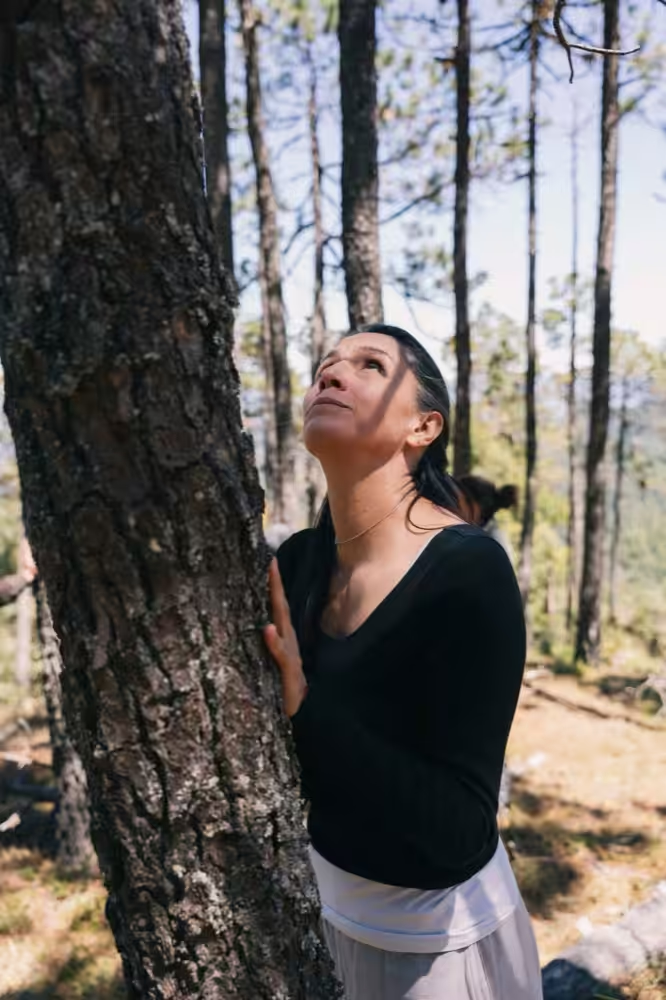
Then bring in the other senses. What sounds are close? What sounds are farther away? Is there a scent in the air or a change in temperature as you move from sun to shade? If it is appropriate and permitted, touch the bark of a tree, a stone, or a fallen leaf. Let each observation be simple.
When thoughts arise, do not treat them as interruptions. Notice them, then choose one sensory detail to return to. This is the same gentle redirection used in meditation, but the forest gives you many anchors. You might spend ten minutes sitting beneath a tree, or pause beside a patch of moss and observe it as if you have never seen it before.
A guided session can deepen this experience through invitations that encourage sensory awareness and reflection without prescribing what participants should feel. Professional forest bathing guides are trained to create a safe, inclusive container while respecting both the people and the place. For those hoping to offer this work professionally, accredited training provides essential grounding in facilitation, ethics, and the science behind nature-based wellness.
When Forest Bathing May Not Feel Meditative
Not every outdoor experience will feel calm. A crowded trail, extreme weather, safety concerns, physical discomfort, or a highly activated nervous system can make it difficult to settle. That is not a failure of the practice.
In these moments, reduce the scope. Stand near one tree for two minutes. Feel both feet on the ground. Notice one sound and one color. A brief, genuine connection is more valuable than pushing yourself through an experience that feels overwhelming.
Forest bathing is also not a replacement for mental health care. It can be a supportive wellness practice alongside therapy, medical care, medication, or other forms of support, but it should not be presented as a cure for anxiety, depression, trauma, or any clinical condition. Responsible guidance honors both the potential of nature connection and the limits of any single practice.
A Practice of Attention and Relationship
The most useful answer is that forest bathing is meditation-adjacent, with a distinctly nature-centered heart. It shares meditation’s mindful awareness while adding movement, sensory immersion, and a relationship with the more-than-human world. For many people, that relationship makes presence feel less like a discipline and more like a homecoming.
The next time you pass beneath a canopy of trees, resist the urge to hurry through it. Pause long enough to hear what is there, feel the ground beneath you, and let the forest remind you that attention can be a quiet form of care.