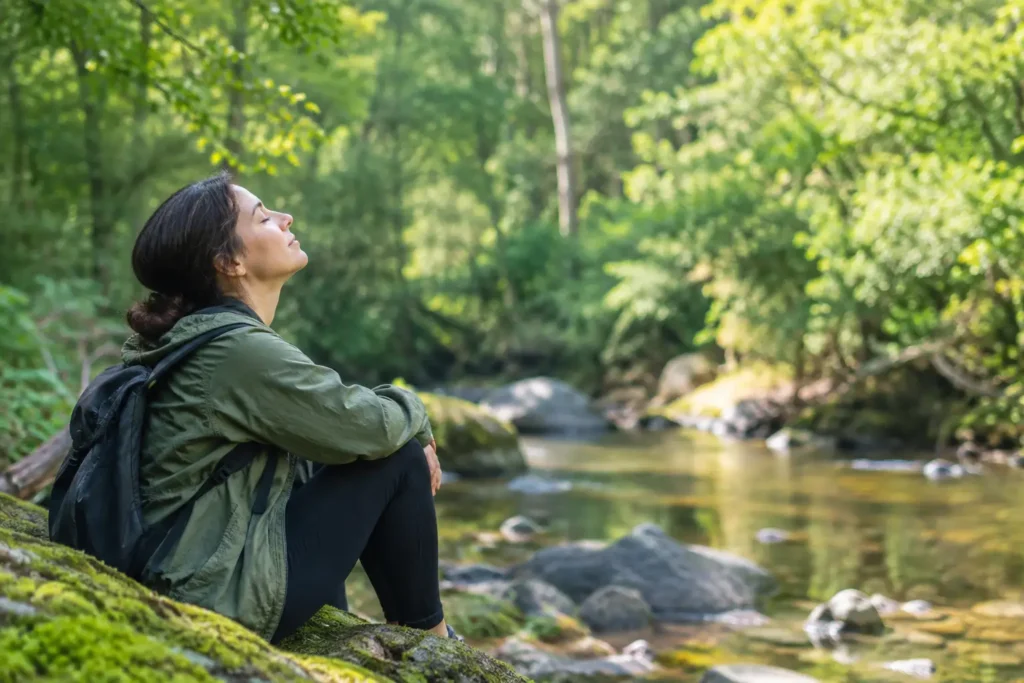

A client arrives carrying the usual signs of overload – shallow breathing, fast speech, a mind already three steps ahead. You could stay in the office, ask a stronger question, and hope their nervous system catches up. Or you could step outside and let the setting do part of the work. That is often where the real question begins: how to integrate forest bathing into coaching in a way that is ethical, structured, and genuinely effective.
For coaches, forest bathing is not about turning a session into a hike or adding a pleasant backdrop. It is a clinically relevant, scientifically backed way to support regulation, attention, reflection, and embodied awareness. When used well, it can deepen the quality of presence on both sides of the coaching relationship. When used carelessly, it can blur scope, reduce rigor, or feel like a wellness add-on with no clear method. The difference is in the framework.
What forest bathing adds to a coaching process
Forest bathing, or Shinrin-Yoku, is the practice of mindfully immersing in nature through the senses. In a coaching context, that matters because many clients do not need more analysis. They need a setting that helps them slow down enough to notice what is true.
Nature-based coaching changes the pace of cognition. Visual softness, natural sound, fresh air, and sensory attention can help reduce stress activation and create conditions for more grounded insight. A client who struggles to access emotion in a chair may suddenly find words while walking beside trees. Another who tends to intellectualize may become more honest when invited to describe what they notice in their body while standing still in a quiet grove.
This does not mean every coaching goal belongs outdoors. If a client needs highly focused planning, crisis support, or work that depends on privacy and documentation, indoor coaching may be the better fit. Forest bathing works best when the coaching objective includes clarity, self-awareness, stress reduction, values alignment, transition, burnout recovery, or reconnecting with purpose.
How to integrate forest bathing into coaching without losing structure
The strongest approach is simple: keep the integrity of coaching, and let forest bathing shape the environment and rhythm. You are not replacing your method. You are shifting the conditions under which your method is delivered.
Start by identifying where nature supports the outcome. If your coaching style already values reflection, somatic awareness, mindfulness, or values-based decision-making, forest bathing may be a natural extension. If your work is more performance-oriented, it can still fit, especially with clients facing stress, decision fatigue, or disconnection from their own signals.
The key is to name the purpose clearly. A forest bathing-based session is not “just being in nature.” It is a guided experience designed to support attention, regulation, and insight. Clients tend to engage more deeply when they understand why the session is structured differently.
Begin with one part of the session, not the whole practice
Many coaches make the shift too big too quickly. A better starting point is to integrate forest bathing into one segment of an existing session. For example, you might begin with ten minutes of sensory grounding outdoors before moving into the core coaching conversation. Or you might place a silent observation practice in the middle of a session when a client feels stuck.
This protects the session from becoming vague. It also helps you observe what actually changes when nature is introduced. Does the client speak more slowly? Notice more? Reach deeper insight with less prompting? Small experiments often teach more than ambitious redesigns.
Use invitations, not performance pressure
Traditional forest bathing relies on gentle invitations rather than goals clients must achieve. That principle matters in coaching as well. If you ask a client to find an answer in the forest, you create pressure. If you invite them to notice texture, sound, breath, and internal response, you create space.
That space often leads to better coaching. Insight tends to emerge when clients stop trying to force it. A simple invitation such as “Notice what draws your attention, and then notice what that might reflect about what you need right now” can open more than a series of rapid-fire questions.
Alternate between silence and dialogue
One of the most effective ways to blend these disciplines is through rhythm. Forest bathing needs pauses. Coaching needs articulation. Put them together, and the session gains depth.
You might guide five minutes of slow walking in silence, then pause for reflection. You might invite a client to sit with one natural object for three minutes, then explore what it mirrored back. The alternation matters because nature helps clients sense, and coaching helps them make meaning.
A practical model for forest bathing coaching sessions
A useful structure is opening, arrival, sensory immersion, coached reflection, and integration.
In the opening, set expectations. Clarify the goal of the session, the pace, the level of conversation, and any logistical boundaries. This is also where informed consent matters. Clients should know what the experience involves, whether there will be walking, silence, weather exposure, and any limits to privacy in public natural spaces.
Arrival comes next. Rather than moving straight into coaching, help the client land in the environment. A few slower breaths, standing still, or noticing five sensory details can help shift them out of mental momentum.
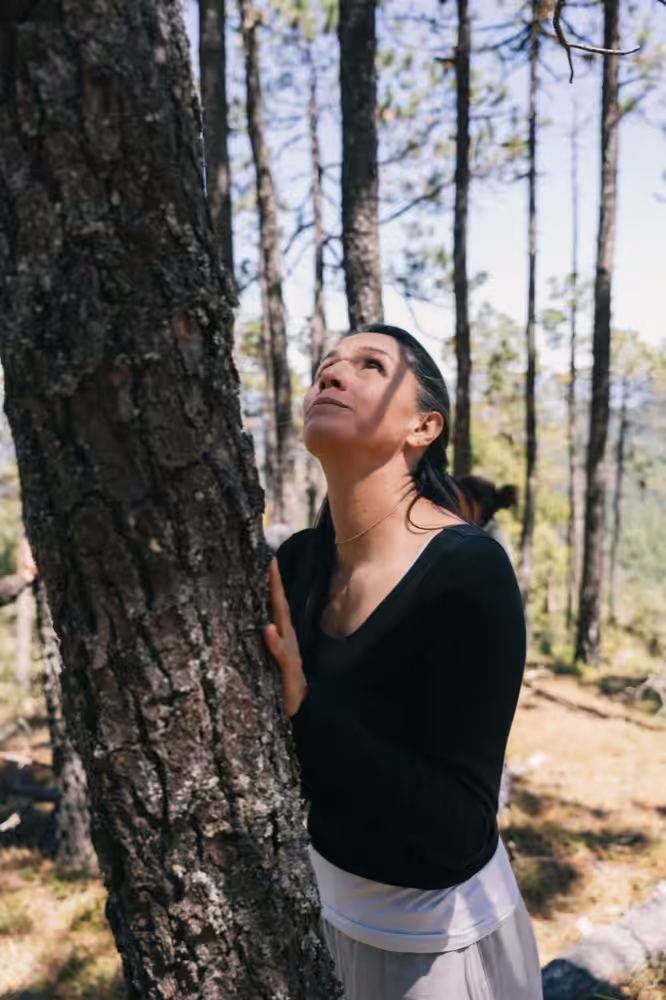
Sensory immersion is the forest bathing portion. This may include slow walking, sitting, noticing light, listening to birdsong, touching bark, or observing how the body responds to different spaces. Keep your language spacious and specific. Avoid over-explaining.
Then move into coached reflection. Here, your coaching skill becomes central again. Ask what changed, what stood out, what felt easier to access, and what the body seemed to communicate. Stay disciplined. Not every symbolic observation needs a deep interpretation. Sometimes a client noticing that they relaxed near water is enough.
Integration closes the loop. Translate experience into next steps, decisions, or practices the client can use beyond the session. Without integration, outdoor insight can remain beautiful but fleeting.
Ethics, scope, and client fit
If you want to know how to integrate forest bathing into coaching responsibly, ethics should guide every decision.
First, stay within scope. Coaching is not therapy, and forest bathing is not a substitute for mental health treatment. Nature can be deeply supportive, but it can also surface emotion. Coaches need to know when to hold space, when to refer out, and when a client needs a different level of care.
Second, assess fit. Not every client feels restored outdoors. Some may have mobility limitations, sensory sensitivities, trauma associations, allergies, or cultural discomfort with unfamiliar outdoor settings. A nature-based session should always be invitational and adaptable.
Third, consider safety and privacy. Public parks are accessible, but they are not confidential. Trails introduce variables like terrain, weather, and interruptions. Your professionalism needs to account for all of that. Sometimes the right choice is a quiet garden, a short accessible path, or even integrating forest bathing principles into a client’s solo practice between virtual sessions.
Why training matters more than enthusiasm
Many coaches feel intuitively drawn to this work, and that instinct can be valuable. But intuition alone is not enough when you are guiding clients in a method that blends mindfulness, nervous system awareness, and professional facilitation.
Training helps you understand the difference between leading a pleasant outdoor experience and facilitating a structured, outcome-oriented session. It gives you language, sequencing, ethical boundaries, and a stronger grasp of the science behind stress reduction and nature exposure. It also helps you communicate credibility to clients who want more than inspiration. They want to know the approach is grounded, repeatable, and professionally held.
For wellness professionals looking to expand their offerings, accredited education adds another layer of trust. A recognized certification signals that your work is supported by more than personal passion. It shows that your approach has been developed with method, research, and professional standards in mind. That is one reason many coaches choose specialized training through providers such as Treeming.org.
Building a practice that feels both calming and credible
The most effective nature-based coaches do not abandon structure for softness. They combine both. Their sessions feel restorative, but not vague. Their presence is calm, but their method is clear.
If you are integrating forest bathing into coaching, start with restraint. Test it with the right clients. Refine your prompts. Notice where nature deepens insight and where a more conventional format serves better. Over time, your confidence will come less from novelty and more from knowing exactly why each part of the experience is there.
Clients are not looking for another wellness trend. They are looking for ways to feel more fully present in their own lives. Sometimes the most skillful thing a coach can do is ask a thoughtful question. Sometimes it is to ask that question under trees, after enough silence for the answer to become audible.