
The right forest bathing setting can change the entire experience. If you are wondering how to choose a forest bathing location, start by noticing this simple truth: not every beautiful natural space supports deep restoration. A place may look impressive and still feel too noisy, crowded, exposed, or demanding for the nervous system to settle.
Forest bathing is not about covering miles or reaching a scenic endpoint. It is about creating the conditions for attention to soften, senses to open, and stress patterns to begin unwinding. That means the best location is usually not the most dramatic one. It is the one that allows your body to feel safe enough to slow down.
How to choose a forest bathing location for the experience you want
A useful way to approach location selection is to think in terms of outcome rather than scenery. Are you hoping to reduce stress after a demanding workweek? Reconnect with your senses after too much screen time? Practice guiding others in a way that feels grounded and professionally responsible? Your intention shapes what kind of environment will serve you best.
If your goal is personal restoration, choose a place that feels emotionally spacious and physically easy to navigate. A small wooded park, a quiet trail system, or a grove near water can be more effective than a rugged wilderness area that requires constant attention to footing. If your goal is professional practice, you also need to think about group flow, accessibility, sound levels, and how the environment supports invitations rather than distractions.
The location does not need to be remote. In fact, urban and suburban green spaces can work beautifully when they offer enough sensory richness and enough separation from the pace of daily life. The nervous system responds to qualities such as natural texture, filtered light, birdsong, plant diversity, and a sense of refuge. Those elements often matter more than whether a location feels wild in the conventional sense.
Start with safety, then move toward sensory depth
A calming experience depends on a foundation of safety. Before you consider atmosphere, ask practical questions. Is the terrain manageable for the people who will be there? Are there clear paths, stable footing, and reasonable access to parking or restrooms if needed? Is there cell service, or at least a plan for emergencies? Are there seasonal hazards such as ticks, extreme heat, icy ground, flooding, or heavy insect activity?
This does not mean the setting must feel manicured. It simply means the body should not stay in a state of vigilance. If participants are worried about slipping, getting lost, or encountering fast-moving bikes every few minutes, it becomes much harder to settle into mindful awareness. In forest bathing, perceived safety is not a minor detail. It is one of the core conditions that allows restoration to happen.
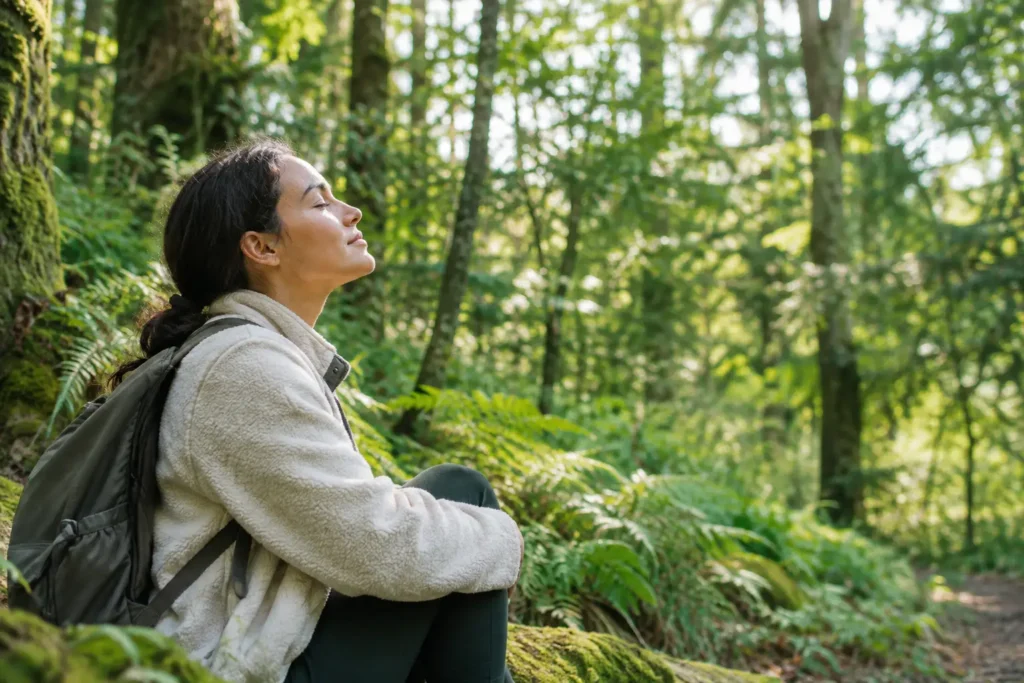
Once safety is established, look for sensory depth. A strong location offers variety without overwhelm. You might notice layered sounds, shifting light, scents from soil or pine, textured bark, open areas balanced with sheltered spaces, and enough plant life to invite curiosity. Sensory richness supports the practice because it gives attention somewhere gentle to land.
There is a trade-off here. A highly stimulating place with waterfalls, dramatic overlooks, and constant visual novelty can feel inspiring, but it may pull people outward rather than inward. On the other hand, a space that is too sparse or exposed may not hold attention well. The most effective forest bathing locations often have a quiet complexity. They reveal themselves slowly.
Look for refuge and gentle fascination
Environmental psychology offers useful language here. Many restorative environments share two qualities: refuge and fascination. Refuge is the feeling that a place holds you. It might come from tree cover, a curved path, a natural boundary, or a soft sense of enclosure. Fascination is what lightly captures attention without demanding effort, such as leaves moving in wind, water ripples, birds, moss patterns, or changing shadows.
When a location offers both, people tend to relax more easily. Their attention becomes alert but unforced. That state is especially valuable for stress reduction, mindfulness, and emotional regulation.
Pay attention to noise, traffic, and pace
One of the most overlooked parts of how to choose a forest bathing location is sound. A trail may appear ideal on a map and still be compromised by highway noise, construction, sports fields, or frequent foot traffic. Some background sound is inevitable, especially in populated areas, but the overall pace of the place matters.
Try visiting at the same time of day you plan to practice. A park that feels peaceful on a weekday morning may be crowded by late afternoon. Listen for repetitive mechanical noise. Notice whether the space encourages lingering or keeps people moving quickly through it. Forest bathing works best where there is permission, both social and spatial, to slow down.
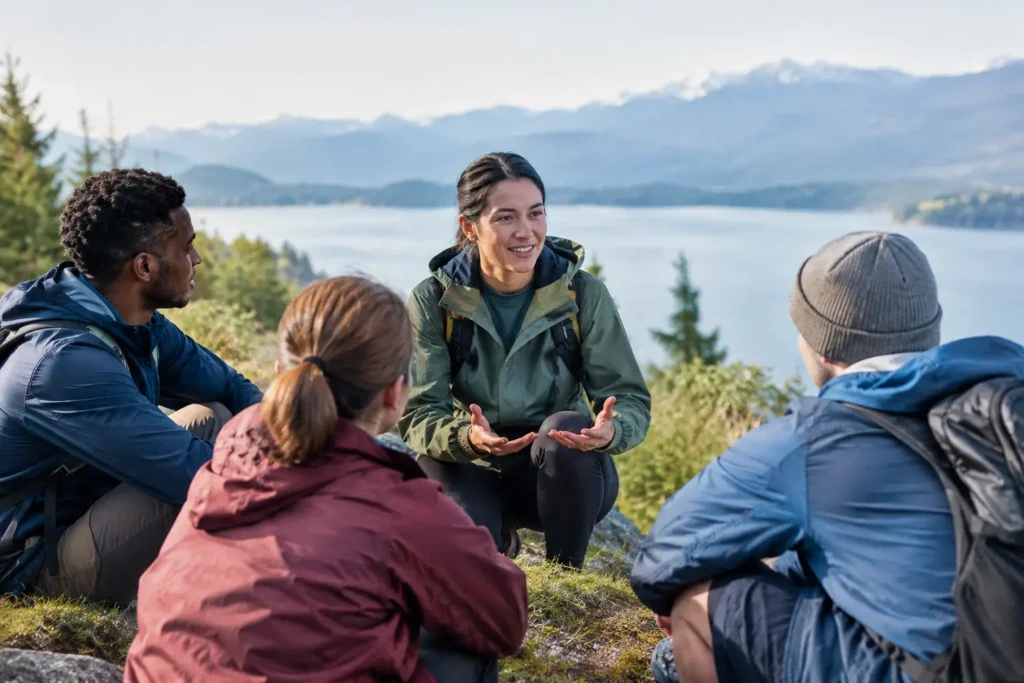
If you are guiding a group, this becomes even more important. Participants need enough quiet to hear invitations and enough breathing room to spread out without feeling watched. A location with intermittent disturbance can still work if there are pockets of shelter or alternate paths. Flexibility matters. Perfect silence is not required, but a chronically overstimulating environment can limit depth.
Size matters less than rhythm
Many people assume forest bathing requires a vast forest. It does not. A relatively small area can be powerful if it supports unhurried movement and repeated noticing. What matters most is whether the location has a usable rhythm.
Can you begin with arrival and grounding near an entrance or gathering point? Is there a slow route that allows for pauses, sensory invitations, and quiet wandering? Are there natural places to stop, sit, or stand in reflection? Can the experience unfold without feeling rushed by distance or terrain?
For personal practice, a single half-mile loop may be enough. For guided sessions, a location with multiple short segments often works better than one long linear trail. It gives you options for pacing, adapting to energy levels, and responding to weather or group needs.
Consider accessibility as part of quality
Accessibility is not separate from excellence. It is part of thoughtful design. A location that excludes many bodies, energy levels, or mobility needs may still be beautiful, but it will not always be the right choice. Wide paths, benches, shade, predictable surfaces, and nearby facilities can significantly deepen comfort and participation.
For wellness professionals, this is also a matter of integrity. A scientifically backed and professionally delivered forest bathing experience should account for how people actually move through space, not how we imagine they should. The more inclusive the setting, the more grounded and sustainable your practice becomes.
Choose a location that matches the season
A good location in spring may be less suitable in midsummer or winter. Seasonal changes affect temperature, light, scent, safety, and accessibility. Dense tree cover can be cooling and protective in hot weather, while the same shade may feel too cold in early spring. A trail near water may be soothing in warm months and muddy or hazardous after storms.
This is why experienced practitioners revisit locations across seasons. They learn where the wind moves, where puddles collect, when insects become distracting, and which places remain welcoming year-round. If you are choosing between several sites, consistency is valuable. A modest location that works reliably through changing conditions is often more useful than a spectacular one with narrow seasonal usability.
Trust both observation and felt sense
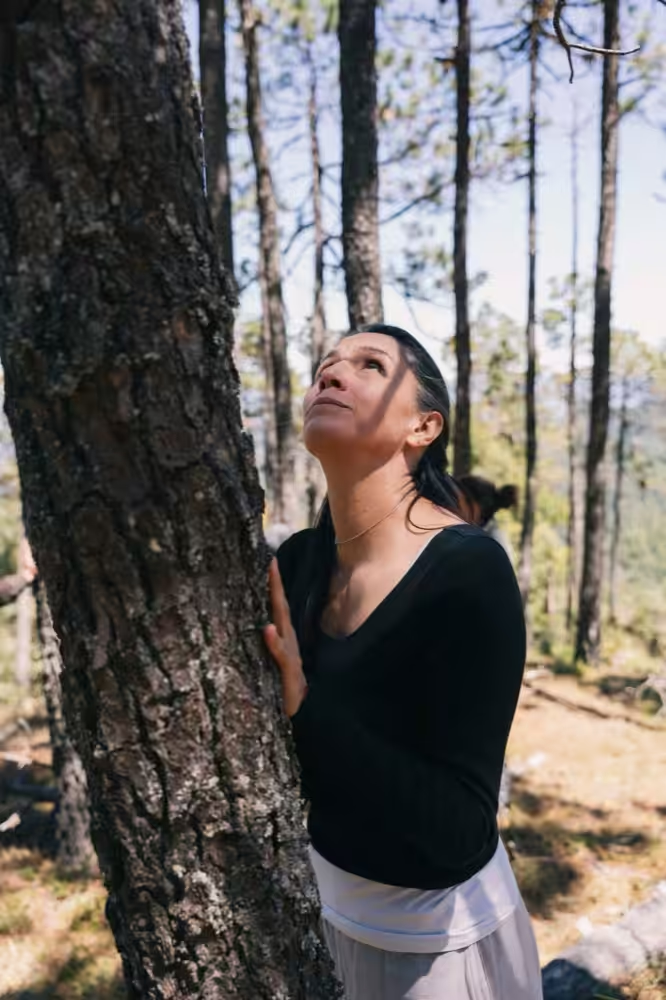
There is a practical side to site selection, and there is also a relational one. After checking safety, access, and logistics, pause and notice what the place does to your own body. Do your shoulders drop a little? Does your breathing lengthen? Do you feel invited to stay? Or do you feel subtly tense, exposed, or hurried?
That felt response is meaningful. Forest bathing is rooted in direct experience, and location choice should reflect that. A place can meet every technical requirement and still not support the kind of quiet presence you want to cultivate. Another place may be simpler, less scenic, and profoundly regulating.
For those developing a personal practice or preparing for professional training, this balance of evidence and embodied awareness matters. Scientifically supported wellness work is not mechanical. It asks for observation, discernment, and respect for how environment shapes human experience. That is part of what makes this practice so transformative.
Treeming teaches forest bathing as both a restorative personal discipline and a credible professional path, and location discernment sits at the heart of both. The better you understand place, the more skillfully you can support calm, attention, and meaningful connection.
A good forest bathing location does not need to impress you. It needs to receive you. Choose the place where your senses become clearer, your pace becomes gentler, and your inner world has room to breathe.