
Stress rarely announces itself with a single dramatic moment. More often, it shows up as restless sleep, a shortened attention span, shallow breathing, and the quiet feeling that your nervous system never fully powers down. A guide to evidence based nature therapy practices matters because nature-based wellness is no longer just a comforting idea. It is a scientifically backed field with practical methods that can support personal well-being and, for many professionals, become a credible part of client care.
Nature therapy sits at an interesting crossroads. It carries the timeless appeal of being outdoors, yet its strongest modern case is built on measurable outcomes – lower stress markers, improved mood, better attention, and a greater sense of restoration. That balance is exactly why it continues to grow among wellness-minded adults, coaches, therapists, educators, and facilitators who want methods that feel both deeply human and professionally grounded.
What evidence-based nature therapy actually means
When people hear “nature therapy,” they sometimes picture an unstructured walk in the woods. That can be helpful, but evidence-based practice asks for more precision. It means the approach is informed by research, delivered with clear intention, and matched to a realistic goal such as stress reduction, emotional regulation, attentional recovery, or increased well-being.
In practice, evidence-based nature therapy often draws from fields such as environmental psychology, behavioral medicine, mindfulness research, and public health. Forest bathing, or Shinrin-Yoku, is one of the clearest examples. Rather than treating nature as a backdrop for exercise or performance, it uses guided sensory awareness and slow, intentional immersion to support the parasympathetic nervous system and reduce mental overload.
That said, evidence-based does not mean rigid. The research supports broad patterns, not one perfect script. A quiet urban park may be more accessible than a forest trail. A 20-minute guided sit spot may be more realistic than a half-day immersion. The best practice is not the most idealized one. It is the one that is safe, repeatable, and aligned with the person in front of you.
A practical guide to evidence based nature therapy practices
The most effective nature therapy practices share a few characteristics. They are intentional, sensory, and paced slowly enough for the body to shift out of constant vigilance. They also avoid turning every outdoor experience into a productivity task.
Forest bathing as structured sensory immersion
Forest bathing is one of the most researched and recognizable forms of nature therapy. At its core, it invites people to move slowly, notice through the senses, and engage the natural world without an agenda to achieve, train, or fix themselves.
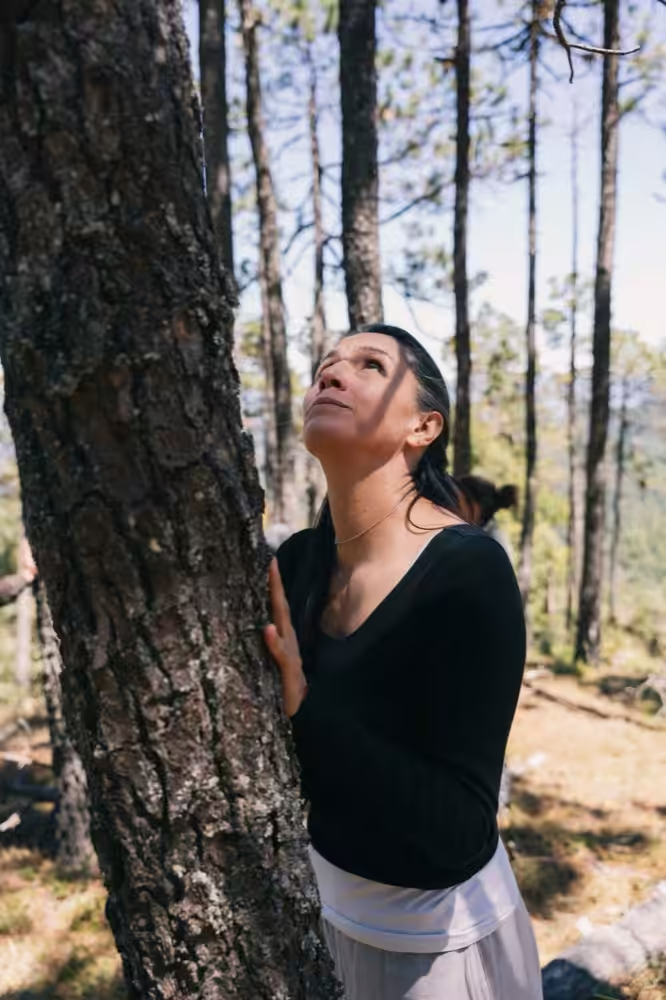
A guided forest bathing session often includes brief invitations such as noticing patterns of light, listening to layered sounds, or feeling the texture of bark, air, and ground underfoot. These cues matter because they direct attention outward in a gentle way. For many people, that creates a measurable sense of relief from rumination and cognitive fatigue.
The trade-off is that forest bathing can be misunderstood if it is taught too casually. Without structure, it becomes just another walk. Without safety awareness or trauma sensitivity, it may not feel restorative for everyone. Good facilitation holds both the calm atmosphere and the practical realities of environment, access, and individual comfort.
Mindful walking in natural settings
Mindful walking is often the easiest entry point. It combines light movement with present-moment awareness, which can help people who find seated meditation difficult. The practice is simple but not simplistic. Walking slowly enough to notice breath, posture, and surroundings can reduce mental scattering while gently restoring a sense of steadiness.
Research in attention and mood suggests that natural settings can support mental recovery more effectively than built environments for many people. Still, context matters. Someone living in a dense city may need to work with tree-lined streets, botanical gardens, or neighborhood greenways. Evidence-based practice respects accessibility instead of insisting on an ideal landscape.
Sit spot and stillness practices
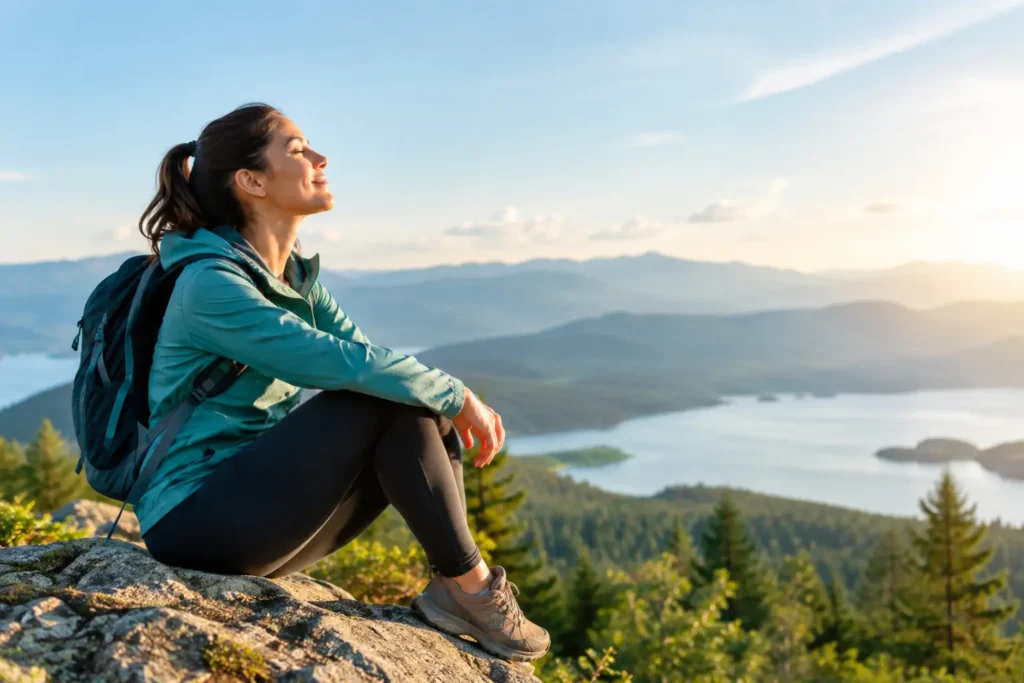
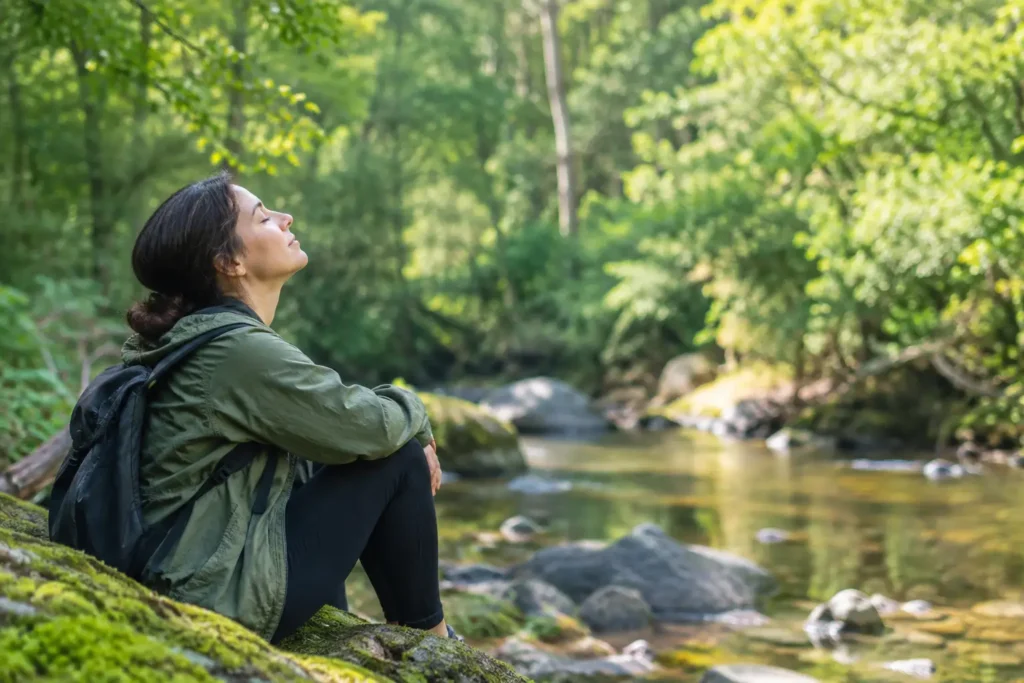
Not every effective method involves movement. Sit spot practice asks a person to remain in one place and observe with patience. Over time, this can strengthen attention, reduce overstimulation, and deepen felt connection with the environment.
This approach is especially useful for people who are exhausted by constant input. The stillness is part of the medicine. Yet it is not right for every season of life. Someone with high anxiety may initially find stillness uncomfortable, and someone in a physically unsafe or noisy area may not relax enough to benefit. As with any evidence-based method, the intervention has to fit the person.
Guided nature-based reflection
Reflection becomes more powerful when it follows regulated sensory experience rather than replacing it. After a period of quiet immersion, a short prompt such as “What feels different in your body now?” can help a person notice change in a concrete way.
For wellness professionals, this is where nature therapy becomes more than inspiration. Guided reflection can help clients track patterns in mood, attention, and stress response over time. It adds observational depth without turning the session into analysis-heavy talk. The experience remains restorative, but it also becomes more clinically and professionally useful.
Why the research matters for personal well-being
People are often drawn to nature therapy because it feels intuitive. The research matters because it validates that intuition and helps shape it into a consistent practice. Studies on nature exposure have linked time in green spaces with reduced stress, improved mood, lower perceived anxiety, and better attentional functioning. Forest bathing research has also explored physiological markers such as cortisol, blood pressure, and heart rate variability.
No single study proves everything, and not every claim online is equally strong. Some outcomes are better established than others. Stress reduction and restoration are generally more supported than dramatic promises about curing complex conditions. That nuance is not a weakness. It is what gives the field credibility.
For individuals, this means nature therapy can be a meaningful part of a wellness routine, but it should not be framed as a replacement for medical or mental health care when that care is needed. For professionals, it means using language that is accurate, calm, and responsible. Confidence built on evidence will always serve clients better than exaggerated claims.
What makes a practice safe, credible, and effective
A credible nature therapy practice is not defined only by beautiful surroundings. It depends on the quality of facilitation, the clarity of intention, and the ability to meet participants where they are.
Safety includes physical considerations such as terrain, weather, pace, hydration, and mobility access. It also includes emotional safety. Some people come to nature sessions carrying burnout, grief, or nervous system dysregulation. Gentle guidance, optional participation, and clear expectations can make the difference between a calming experience and an overwhelming one.
Credibility also comes from training. If you want to integrate forest bathing or nature therapy into your professional work, a structured, accredited program offers more than a certificate. It helps you understand research literacy, session design, ethics, trauma-aware facilitation, and how to communicate benefits without overpromising. That is particularly important for coaches, yoga teachers, retreat leaders, therapists, and wellness practitioners who want to add a science-backed modality to their services.
Turning evidence into an actual routine
The most lasting benefits usually come from consistency, not intensity. A short weekly practice can do more for stress regulation than one occasional, idealized retreat. That is good news for busy adults. You do not need perfect conditions to begin.
Start with one repeatable format. It might be a 30-minute forest bathing-inspired walk every Saturday morning, a sit spot after work three times a week, or a guided sensory practice in a local park. Keep the structure simple enough that you can return to it even during demanding seasons.
If you are a practitioner, think in terms of outcomes and populations. A corporate burnout group may need brief, accessible practices close to the workplace. A retreat setting may support longer sensory journeys and reflection. A one-to-one client dealing with anxiety may need slower pacing and more choice. Evidence-based work is always shaped by context.
For those seeking deeper study, organizations such as Treeming have helped make this field more accessible by offering structured online education that blends scientific framing, mindful practice, and professional preparation. That combination matters because the future of nature-based wellness will belong to programs that are both restorative and credible.
Nature therapy does not ask you to become someone new in the forest. It asks you to notice what changes when your body is given a calmer environment, your attention is gently guided, and your pace finally softens. If you let practice lead before expectation, nature often meets you with more clarity than force ever could.