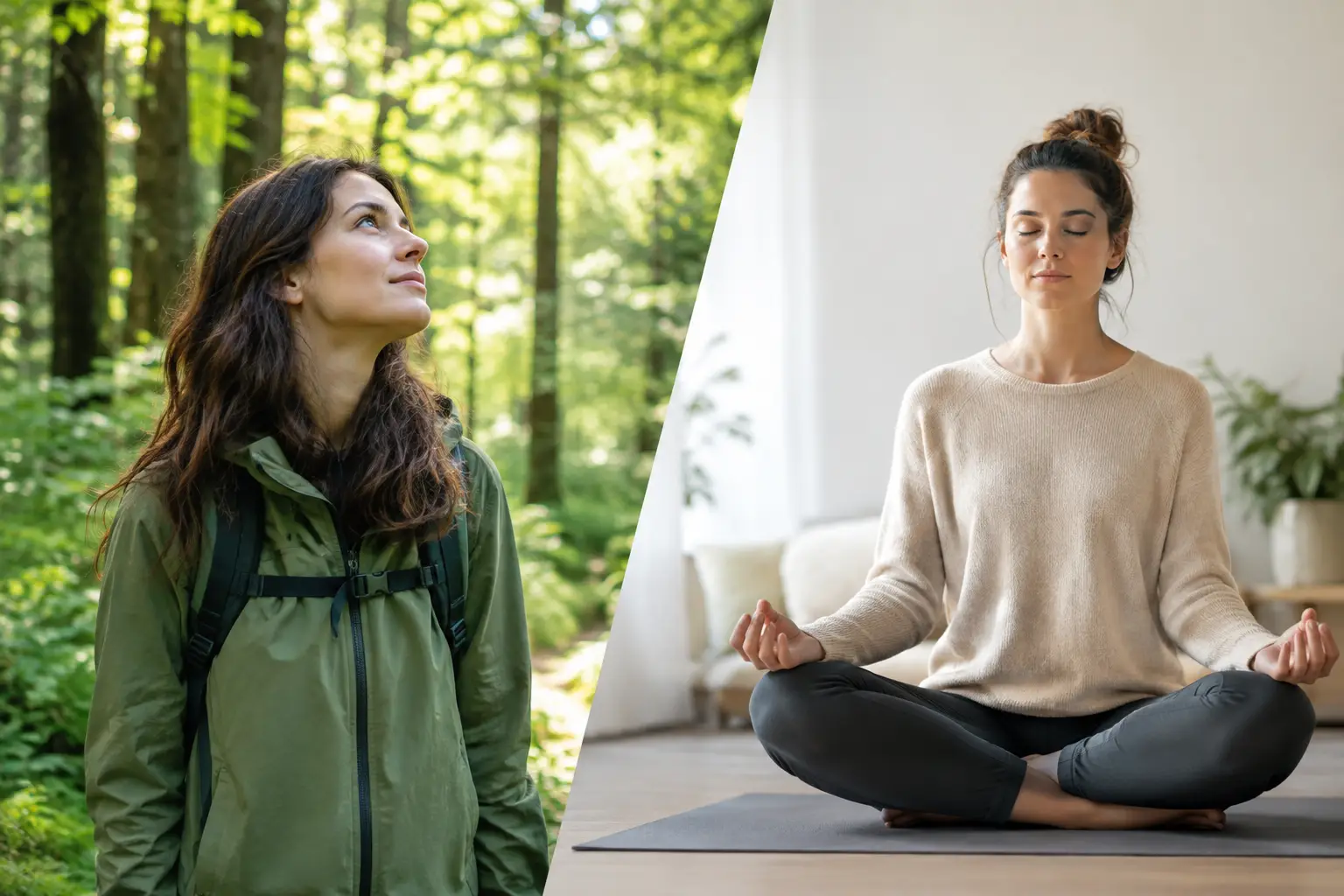
A client arrives at your session carrying a full workweek in their shoulders. Do you guide them to notice their breath in a quiet room, or invite them to slow down beneath a canopy of trees? The question behind forest bathing certification vs mindfulness certification is not which practice is better. It is which training prepares you to offer the experience, setting, and professional direction that feel most aligned with your work.
Both paths can support stress reduction, presence, and more intentional living. Yet they are built around different containers. Mindfulness certification generally develops skills for attention training and meditation-based practice. Forest bathing certification prepares you to facilitate restorative, sensory-led experiences in nature. Understanding that distinction can help you invest in a credential with purpose rather than simply adding another line to your bio.
The Core Difference Between Forest Bathing and Mindfulness Training
Mindfulness is the practice of bringing nonjudgmental attention to the present moment. A mindfulness teacher may guide breath awareness, body scans, seated meditation, mindful movement, or reflective inquiry. The practice can happen almost anywhere: a workplace, studio, school, therapy-adjacent wellness setting, or home.
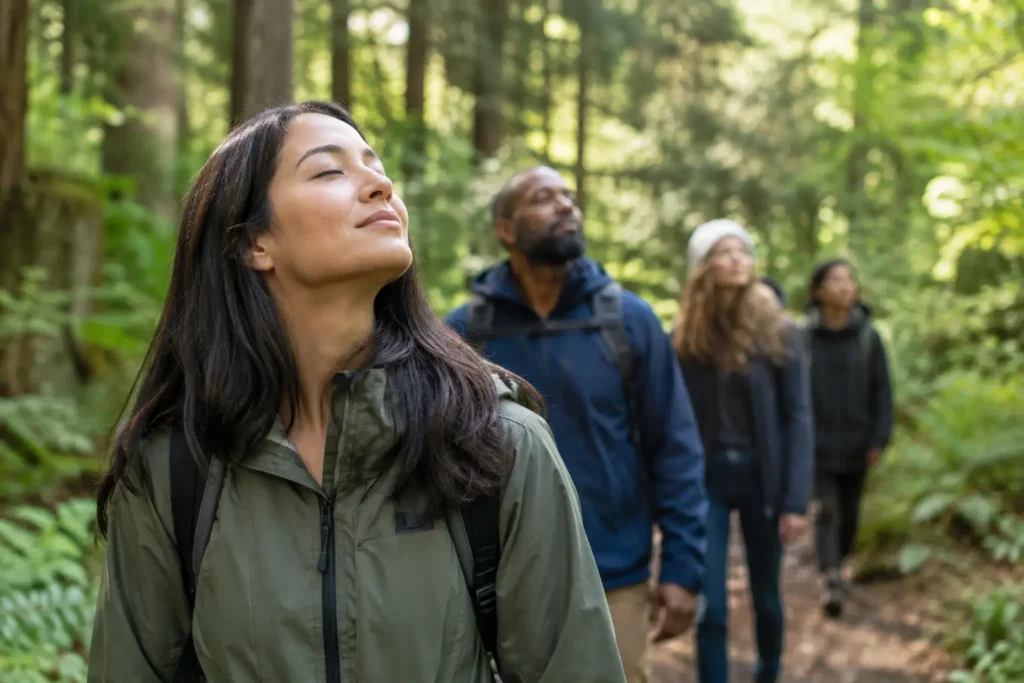
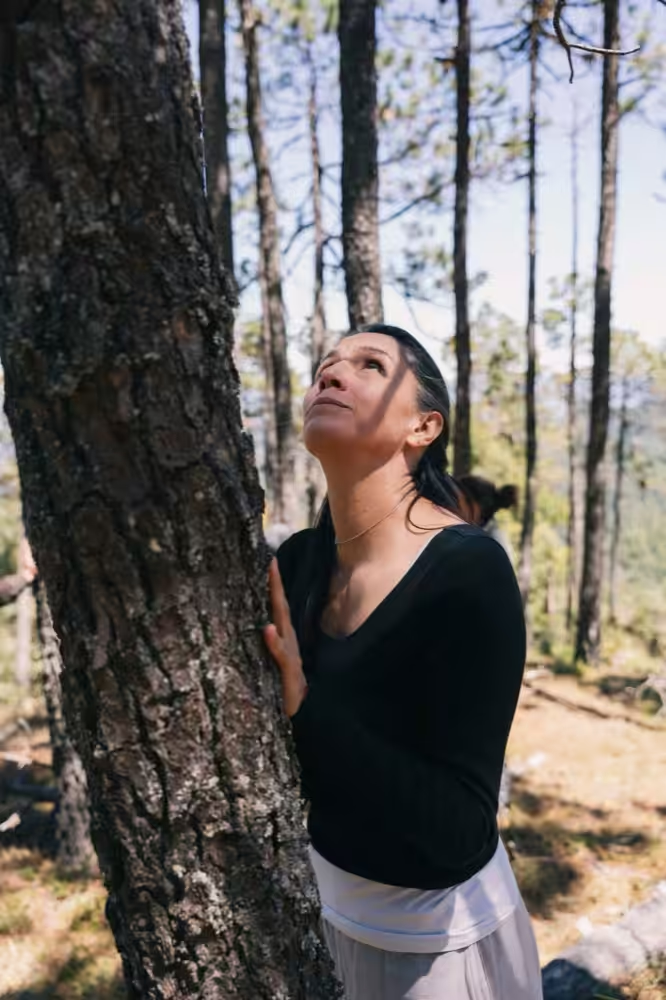
Forest bathing, also known as Shinrin-Yoku, is a guided immersion in the natural environment. It is not a hike, a fitness challenge, or a lesson in identifying trees. A trained guide creates a gentle structure that helps participants slow down, awaken the senses, and build a reciprocal relationship with the living world around them.
There is meaningful overlap. A forest bathing guide uses mindful attention, pauses, breath, and sensory awareness. But the forest is not merely a scenic background for meditation. It is an active partner in the experience. Weather, terrain, seasonal change, sound, scent, and the needs of the group all shape the session.
Forest Bathing Certification vs Mindfulness Certification: What You Learn
A mindfulness certification can vary widely by provider. Some programs focus on personal meditation practice and foundational teaching skills. Others center on established curricula, trauma-sensitive facilitation, workplace mindfulness, or specialized populations. Training commonly addresses the history and principles of mindfulness, meditation techniques, ethics, group guidance, and the development of a consistent personal practice.
A credible forest bathing guide certification also includes contemplative foundations, but its curriculum reaches further into nature-based facilitation. Students learn the principles of Shinrin-Yoku, the research-informed benefits associated with time in natural environments, sensory invitations, group pacing, site awareness, and how to hold a calm, inclusive space outdoors.
The practical difference is significant. In a meditation room, you can largely control lighting, sound, seating, and temperature. In a park or forest, a guide must thoughtfully respond to changing conditions, participant mobility, local regulations, environmental impact, and safety considerations. Good training treats these details as part of the practice, not as an afterthought.
For professionals, look closely at how a program teaches facilitation. A certificate that offers only recorded concepts may strengthen personal knowledge, but it may not prepare you to lead paying clients with confidence. Seek clear instruction in session design, ethical boundaries, accessible invitations, risk awareness, and the real-world logistics of guiding groups outdoors.
Choose Based on the Work You Want to Offer
If your primary goal is to teach meditation, lead workplace wellness sessions, support daily stress-management habits, or bring present-moment awareness into an existing practice, mindfulness certification may be the most direct fit. It offers a flexible foundation that can travel across many settings.
Forest bathing certification is often the more natural choice if you feel called to lead people outdoors, facilitate retreats, expand an eco-wellness business, or create restorative experiences that reconnect participants with nature. It can be especially complementary for yoga teachers, wellness coaches, retreat leaders, outdoor educators, and mindfulness instructors who want a distinct, experiential service.
Your preferred audience matters, too. A client who feels intimidated by silent meditation may find an easier entry point through the sound of leaves, the texture of bark, or the invitation to notice light moving across a trail. Others may want a structured meditation practice they can repeat at home every day. Neither response is wrong. It simply reflects a different relationship to wellness.
There is also a business consideration. Mindfulness is widely recognized, which can make it familiar to prospective clients. At the same time, the field is broad and competitive. Forest bathing offers a more specialized service with a clear sense of place and a memorable client experience. It may require more local site planning and weather contingencies, but that specificity can become a meaningful differentiator.
Accreditation and Scope Matter
Not all certifications carry the same level of preparation or recognition. Before enrolling, review who developed the program, whether it is accredited or recognized by a relevant professional body, how current the curriculum is, and what support is available while you learn. For a professional credential, these signals help you communicate quality to clients, employers, and collaborators.
It is equally important to understand scope. Forest bathing guides and mindfulness teachers can provide education, guided wellness experiences, and non-clinical support. They should not represent their services as psychotherapy, medical treatment, or a replacement for licensed mental health care. When participants disclose significant distress, a well-trained facilitator knows how to respond with compassion while staying within appropriate professional boundaries.
A science-informed program can help you describe benefits responsibly. Research has associated time in nature and mindfulness practices with outcomes such as reduced perceived stress, improved mood, and greater attentional restoration. Individual experiences vary, and responsible guides avoid promises of cures or guaranteed results. Credibility grows when your language is both hopeful and accurate.
Can You Benefit From Both Certifications?
Yes. For many wellness professionals, these paths are complementary rather than competing. Mindfulness training can deepen your ability to work with attention, silence, and inner experience. Forest bathing training can show you how to translate those skills into a grounded, place-responsive outdoor practice.
The order depends on where you are now. An experienced meditation teacher may choose forest bathing certification to bring their work beyond four walls. Someone with a strong relationship to the outdoors may begin with forest bathing training and later add mindfulness education to deepen their facilitation language. If you are new to both, start with the path you can realistically practice often. Personal embodiment matters more than collecting credentials.
Consider the conditions you can sustain. Do you have access to safe natural spaces, a community interested in outdoor wellness, and the willingness to guide in changing seasons? Forest bathing may be an excellent fit. Do you prefer a practice that can serve clients online, indoors, or in a wide range of organizational settings? Mindfulness may offer greater logistical flexibility.
Questions to Ask Before You Enroll
The right course should make your next step clearer. Ask whether the training is designed for personal enrichment, professional facilitation, or both. Find out how much attention it gives to practice, not just theory. Confirm the credential’s recognition, the instructor expertise behind the curriculum, and whether you will learn to design experiences appropriate for real participants.
For forest bathing programs, ask how the training addresses environmental stewardship. Nature-based wellness carries a responsibility to protect the places that make the work possible. Thoughtful guidance includes low-impact practices, respect for wildlife, and an understanding that participants are guests in a living ecosystem.
Treeming’s accredited Forest Bathing Guide Certification is designed for learners seeking flexible, science-backed online training while building a practice rooted in both human well-being and care for the natural world. That combination can be especially valuable when you want your professional development to reflect your values as well as your career goals.
A certification is most valuable when it changes the way you show up. Choose the training that helps you create the kind of calm, ethical, and restorative space you would want to enter yourself – then let consistent practice give that credential its deepest meaning.