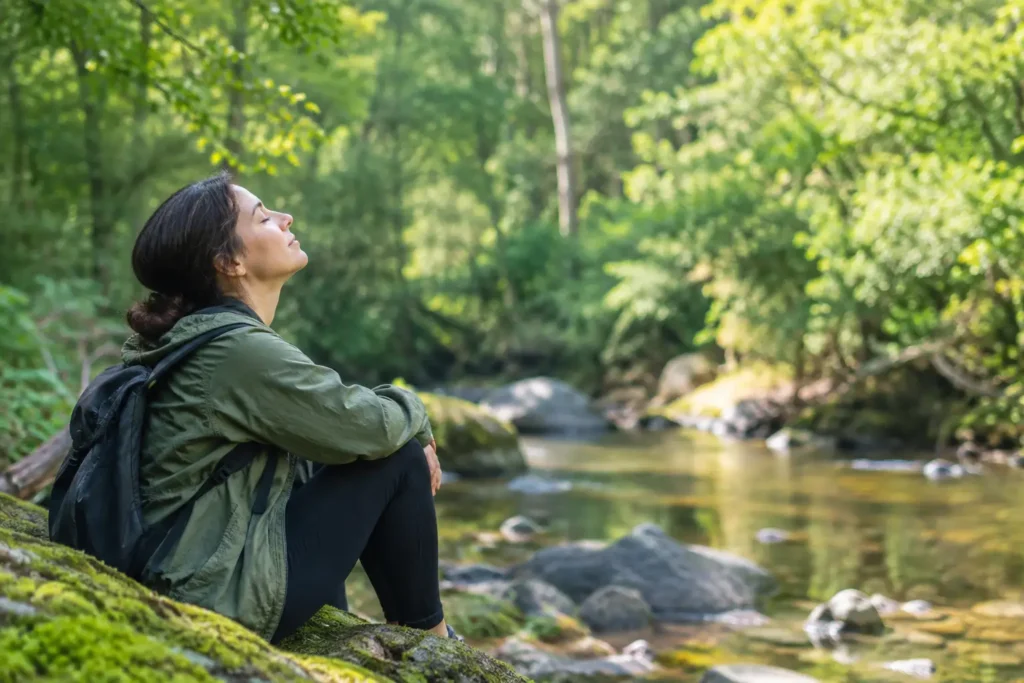

A tense jaw, shallow breathing, and a mind that keeps replaying tomorrow’s demands are familiar signs of a stress response that has stayed switched on too long. So, does forest bathing lower cortisol levels? Research suggests that time spent mindfully in natural settings may reduce cortisol for many people, particularly when compared with time in dense urban environments. But the most useful answer is more nuanced than a simple yes or no.
Cortisol is not a bad hormone to eliminate. It helps regulate energy, blood pressure, metabolism, and the body’s response to challenge. The concern is persistent elevation or a stress rhythm that no longer rises and falls in a healthy pattern. Forest bathing, also known as Shinrin-Yoku, is best understood as a gentle practice that may help the nervous system shift toward restoration.
Does Forest Bathing Lower Cortisol Levels? What Research Shows
A number of studies, especially from Japan and South Korea, have compared physiological markers after participants spent time in forest settings versus urban settings. Many have found lower salivary cortisol after quiet, sensory-based time among trees. Salivary cortisol is commonly used because it offers a noninvasive snapshot of the body’s stress response.
In these studies, the forest experience is usually not a strenuous hike. Participants may walk slowly, sit quietly, look at the landscape, or notice sounds and scents. This matters. Forest bathing is not about reaching a destination, tracking miles, or turning nature into another performance metric. It is about allowing attention to settle.
The findings are promising, but they should be interpreted responsibly. Cortisol naturally changes throughout the day, usually peaking after waking and declining later on. Sleep quality, medication, illness, caffeine, exercise, ongoing stress, and the timing of a saliva sample can all affect results. Study designs also vary in duration, participant group, location, and comparison activity.
That means forest bathing should not be presented as a cure for chronic stress disorders, anxiety, depression, burnout, or endocrine conditions. It can be a supportive wellness practice and a meaningful complement to appropriate medical or mental health care. For people living with persistent symptoms, professional guidance remains essential.
Why a Forest May Help the Stress Response Settle
The cortisol question is only one part of a wider picture. A forest can offer fewer urgent demands on attention than a busy street, inbox, or crowded store. Instead of filtering traffic, notifications, conversations, and advertising, the mind can rest on leaves moving in the wind, shifting light, birdsong, bark texture, and the rhythm of breath.
Researchers often describe this as a restorative attention experience. Natural environments may invite soft fascination: enough sensory interest to hold awareness, without requiring constant effort or vigilance. When attention is no longer working so hard, the body may have more room to move out of a heightened stress state.
The sensory qualities of forests may matter too. Shade can reduce heat stress. Natural soundscapes can feel less jarring than mechanical noise. Green spaces often encourage slower movement and more spacious breathing. Some research has also examined volatile organic compounds released by trees, often called phytoncides, although it is difficult to separate their effects from the full experience of being outdoors, moving gently, and taking a break from daily pressures.
There is no need to chase a single mechanism. The benefit may come from the combination: a calmer setting, fewer screens, unhurried movement, sensory awareness, and permission to be without producing anything.
A lower reading is not the only meaningful outcome
Cortisol is a helpful research measure, but it is not the sole measure of well-being. You may notice that your shoulders soften, your breathing deepens, or your thoughts become less repetitive. You may sleep better that night or return to work with greater patience. These experiences do not replace clinical data, yet they are relevant signs that a restorative practice is working in your life.
For wellness professionals, this distinction is especially important. A guided session can be framed around supporting relaxation, mindful awareness, and connection with nature. It should not promise to diagnose hormonal imbalance or guarantee a particular cortisol result for every participant.
How to Practice Forest Bathing for Stress Support
You do not need an old-growth forest, expensive gear, or an entire day free. A local woodland, quiet park, arboretum, trail with tree cover, or even a green neighborhood path can become a setting for practice. A larger, quieter natural area may feel more immersive, but consistency often matters more than perfection.
Begin by giving yourself 30 to 60 minutes when possible. Put your phone on silent and keep it stored away unless needed for safety or navigation. Walk slowly enough to notice your surroundings. If you find yourself planning, rushing, or evaluating the experience, simply return to one sense.
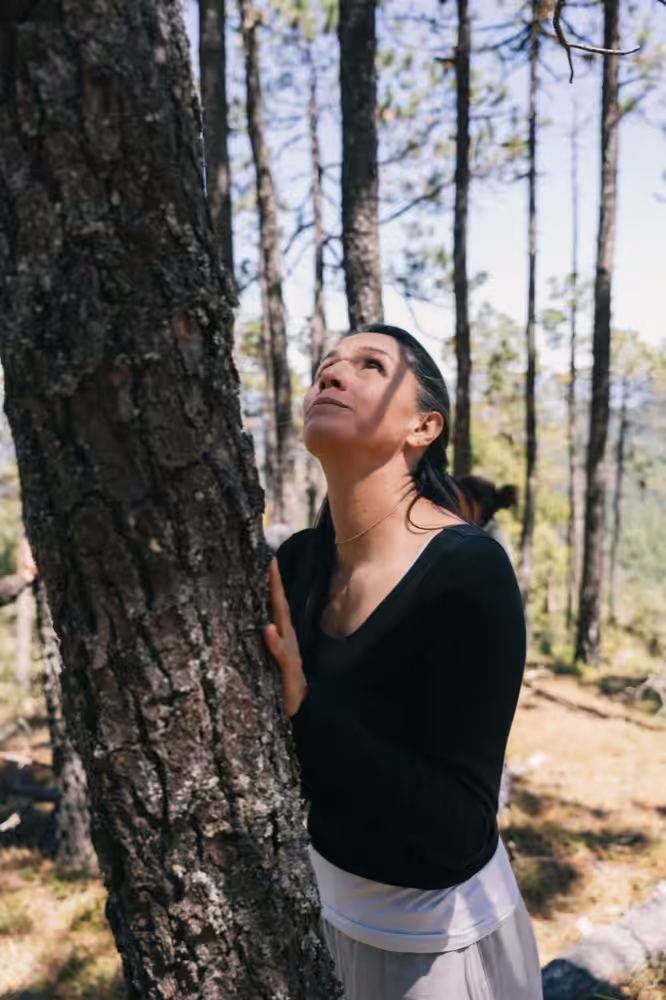
Try looking at the shapes and shades of green around you. Pause to listen for the closest and most distant sounds. Feel the temperature of the air on your hands and face. Notice the firmness of the ground beneath your feet. You can sit against a tree, stand still near a patch of ferns, or take several slow breaths while observing a small natural detail.
The goal is not to force calm. Trying to make yourself relax can become another source of pressure. Instead, offer your body favorable conditions and let the experience unfold. Some days you may feel peaceful quickly. On others, the mind may remain busy for much of the session. Both are normal.
If your schedule is tight, a 10- or 15-minute practice can still create a useful pause. Step outside before a demanding meeting, walk beneath trees during lunch, or spend a few minutes sitting in a green space without scrolling. Short sessions are not a substitute for deeper time in nature, but they can help establish a rhythm of restoration.
What Changes the Results?
Individual responses vary. Someone who feels safe and at ease outdoors may settle quickly, while someone with allergies, mobility limitations, trauma associations, weather concerns, or limited access to green space may need a different approach. Forest bathing should feel invitational, not demanding.
The setting also changes the experience. A forest beside a loud highway may not offer the same sensory refuge as a quiet preserve. A brisk uphill trail can be beneficial exercise, but its effect on cortisol may differ from a slow, contemplative walk. Group sessions can provide connection and structure, while solo practice may offer more silence and personal reflection.
Frequency may be more valuable than treating forest bathing as an occasional escape. A weekly visit, a few short green breaks during the workweek, or a monthly longer practice can help make nature connection part of your stress-care routine. Keep a simple record of how you feel before and after: energy, mood, muscle tension, sleep, and mental clarity. Over time, patterns may become easier to recognize.
When to take extra care
If you are managing a health condition affected by heat, cold, exertion, insects, or uneven ground, plan accordingly. Choose accessible trails, check weather conditions, bring water, and let someone know where you are going when appropriate. If time in quiet outdoor places brings up distressing emotions, it may help to practice with a trusted companion or a qualified professional.
Forest bathing is gentle, but it is still a real experience. Good guidance respects personal boundaries, cultural context, physical access, and the natural environment itself.
From Personal Practice to Professional Facilitation
For coaches, yoga teachers, therapists, retreat leaders, and outdoor educators, the growing interest in nature-based wellness creates an opportunity to offer experiences that are both restorative and responsibly held. The work is more than leading a walk. It involves learning how to create invitations, pace a session, manage safety, welcome different abilities, and communicate research without making medical claims.
A structured, accredited training pathway can help practitioners build this foundation with confidence. Treeming.org’s Forest Bathing Guide Certification is designed for those who want to understand the science, mindfulness principles, and facilitation skills behind a thoughtful forest bathing experience while developing a professional offering rooted in environmental stewardship.
Whether you practice alone or guide others, the central principle remains simple: slow down enough to receive what the natural world is already offering. A lower cortisol reading may be one possible outcome. A more sustainable relationship with rest, attention, and the living landscape may be the deeper one.