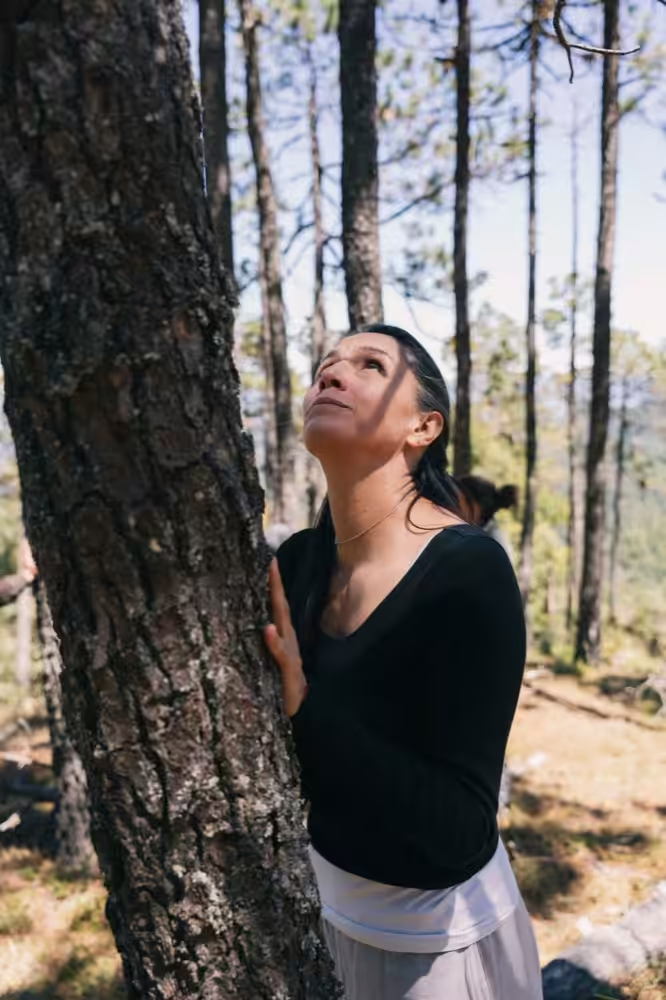
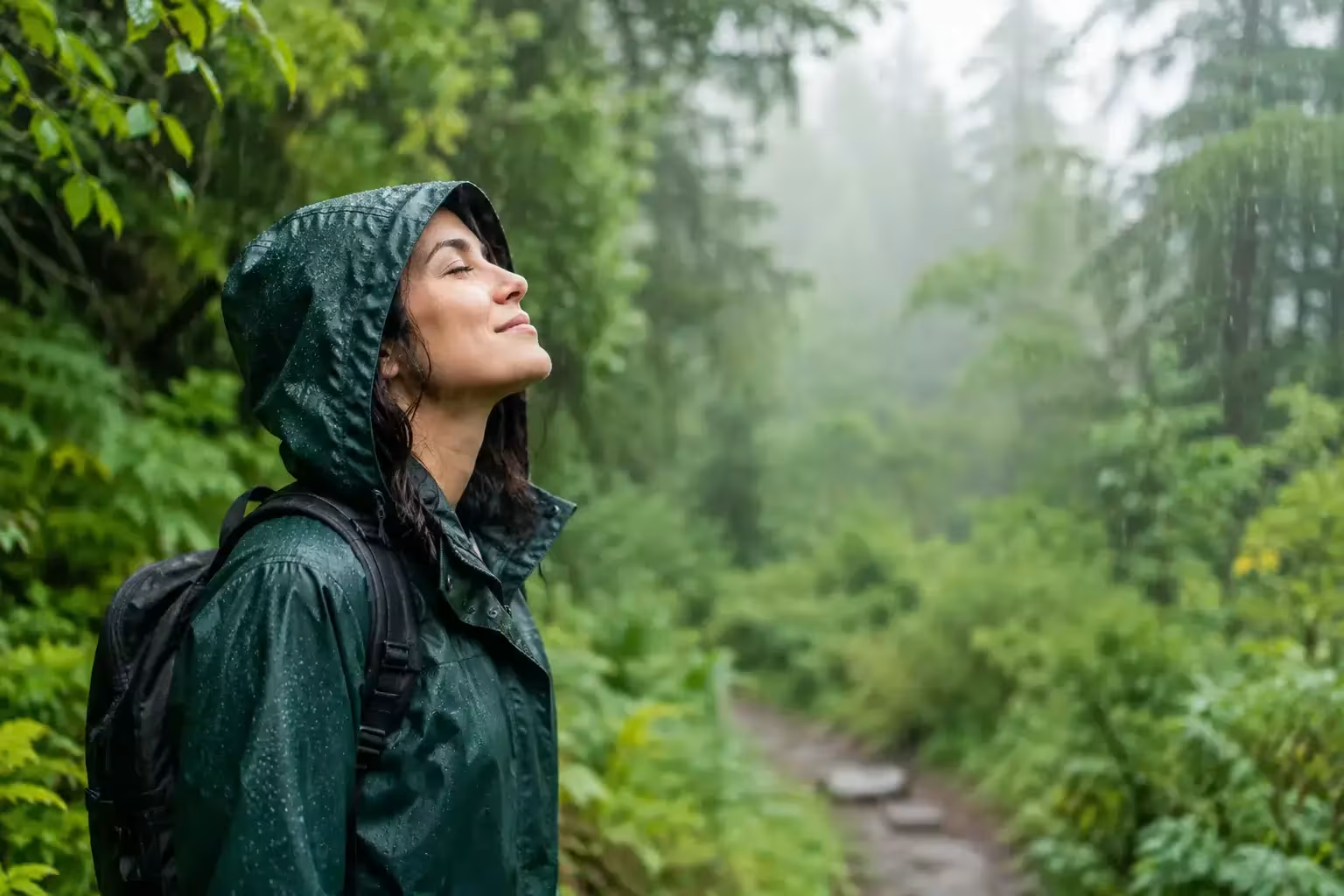
Rain changes the forest before you have even taken ten steps. The air carries a richer scent, leaves hold small pools of water, and familiar paths become quieter beneath a softened sky. To practice forest bathing in rain is not to push through unpleasant weather. It is to meet the forest in one of its most sensory, restorative states – with care for your body, the land, and the conditions around you.
Forest bathing, or Shinrin-Yoku, is a slow, mindful way of being in nature. It does not require mileage, athletic ability, or a destination. In the rain, the practice can become especially powerful because water heightens the details that are easy to miss on a bright, dry day. The key is preparation. When you feel physically secure and comfortable enough, you can give your attention to the living world around you.
Why Rain Can Deepen Forest Bathing
A rainy forest invites a naturally slower pace. You may notice drops collecting at the edge of a fern, the layered rhythm of water on bark and soil, or mist moving through branches. These sensory experiences can draw attention away from repetitive thoughts and back toward the present moment.
The scent after or during rainfall is often part of the experience. Moisture releases earthy aromas from soil, leaves, and wood, creating the distinctive fragrance many people associate with the woods after rain. This is not simply a pleasant backdrop. Deliberately noticing scent, sound, texture, and temperature is central to forest bathing practice.
Rain also reduces visual distance. A wide overlook may be hidden by fog, while a nearby patch of moss becomes more vivid. Rather than seeing this as a limitation, consider it an invitation to engage with the forest at a closer scale. Forest bathing is about relationship, not scenery.
That said, rain is not automatically better. A gentle, steady shower can support a contemplative outing, while thunderstorms, high winds, flooding, ice, or extremely cold temperatures create risks that are not worth spiritualizing. Mindful practice includes knowing when to stay home.
How to Practice Forest Bathing in Rain
Begin by choosing a location that is familiar, accessible, and appropriate for the conditions. A wooded neighborhood trail, local nature preserve, or park with well-maintained paths may be a better choice than a remote route. Let someone know where you are going if you will be alone, and check local weather alerts before leaving.
Wear layers that keep you warm without making you overheat. A breathable waterproof outer layer, sturdy shoes with dependable traction, and dry socks can make the difference between a nourishing experience and one spent counting the minutes until you can leave. Bring water, even when the weather is cool, and keep your phone protected in a waterproof pouch.
Once you arrive, resist the urge to start walking immediately. Stand under a safe canopy of trees or at the trail entrance and take a few unhurried breaths. Feel the temperature on your face. Listen for the nearest sound of rainfall, then the farthest sound you can hear. Notice whether the rain is tapping, dripping, hissing, or falling in waves.
There is no need to force calm. If you arrive carrying work stress, grief, restlessness, or a full mental to-do list, let those experiences be present. Forest bathing is not a performance of serenity. It is a practice of returning to direct experience, one sensory moment at a time.
Follow the Pace of the Weather
In rain, your usual walking speed may be too fast. Wet roots, leaves, and stones demand care, but the slower pace also serves the practice. Walk a short distance, then pause. Look at how rain changes the surface of a leaf. Watch water gather on a pine needle before it falls. Rest your attention on one small natural detail for several breaths.
Try moving without a goal for five or ten minutes. If a particular tree, sound, or patch of light draws you in, allow yourself to stop. This is a useful departure from the productivity mindset that often follows us outdoors. You are not there to complete the trail. You are there to be in relationship with the place.
Use Invitations Rather Than Instructions
Forest bathing guides often use invitations because they leave room for each person’s own experience. In a rainy forest, you might quietly offer yourself one of these prompts:
- What is the rain touching around me?
- Where do I hear water moving through this landscape?
- What colors become clearer in the wet?
- What changes in my body when I pause?
Stay with one question rather than trying to answer them all. Let the response arrive through attention, not analysis. You may notice a feeling, a memory, an image, or simply the sensation of cool air and damp ground. All are valid parts of the practice.
Safety and Stewardship in Wet Conditions
A meaningful forest bathing session should never come at the expense of safety or ecological care. Avoid trails that are closed, flooded, or known for unstable terrain. Do not shelter under isolated trees during lightning, and leave promptly if you hear thunder. In high wind, be alert to falling branches and choose open, protected alternatives when possible.
Wet forests are also more vulnerable to impact. Stay on established paths where required, especially near streams, steep slopes, and sensitive plant communities. Mud may tempt you to walk around a puddle, but widening a trail can damage vegetation and accelerate erosion. Move through the landscape with the same attentiveness you hope to receive from it.
If you bring a journal, tea, or a small sitting mat, keep your footprint light. Pack out everything you bring in. Avoid collecting moss, mushrooms, feathers, or other natural objects. A forest bathing practice can strengthen environmental stewardship because it asks us to appreciate nature without needing to take a piece of it home.
When Rain Feels Like Too Much
Not every rainy day is the right day for outdoor practice. If cold, fatigue, anxiety, mobility limitations, or unpredictable weather make the outing feel burdensome, adjust without judgment. You might sit near an open window, listen to rain from a covered porch, or spend several mindful minutes with a houseplant while recalling a favorite forest.
For wellness professionals and aspiring guides, this flexibility is especially valuable. A well-held session considers participant comfort, accessibility, group experience, and site conditions. Offering alternatives is not a lesser version of the practice. It is a sign of skilled, responsible facilitation.
Professional forest bathing training can help deepen this judgment. A science-informed, accredited education gives guides a stronger foundation in sensory invitations, group safety, ethical practice, and the distinct difference between leading an experience and simply taking people for a walk. For those called to share nature-based wellness professionally, structured preparation supports both confidence and care.
Let the Forest Set the Lesson
A rain-soaked forest does not ask you to be cheerful about discomfort. It asks for honesty and attention. Some days, you may feel deeply settled by the sound of water on leaves. On others, you may notice impatience, damp sleeves, and the desire for a warm car. Both experiences belong.
Before you leave, take a final pause. Notice one thing you had not seen when you arrived: a new scent, a darker shade of green, a bird call between raindrops, or the quiet strength of a tree standing through weather it cannot control. Carry that small observation with you, not as an escape from daily life, but as a reminder that slowing down is a practice you can return to whenever the rain begins.