You can spend an hour on a wooded trail and come home feeling completely different depending on how you moved through it. If you are comparing forest bathing vs hiking for stress, that difference matters more than most people realize. Both take place in nature. Both can support mental health. But they work through different mechanisms, ask different things of the body, and serve different kinds of stress.
For many adults balancing work pressure, digital overload, caregiving, and constant mental stimulation, the real question is not which practice is better in the abstract. It is which one helps your nervous system settle today, and which one builds resilience over time.
Forest bathing vs hiking for stress: the core difference
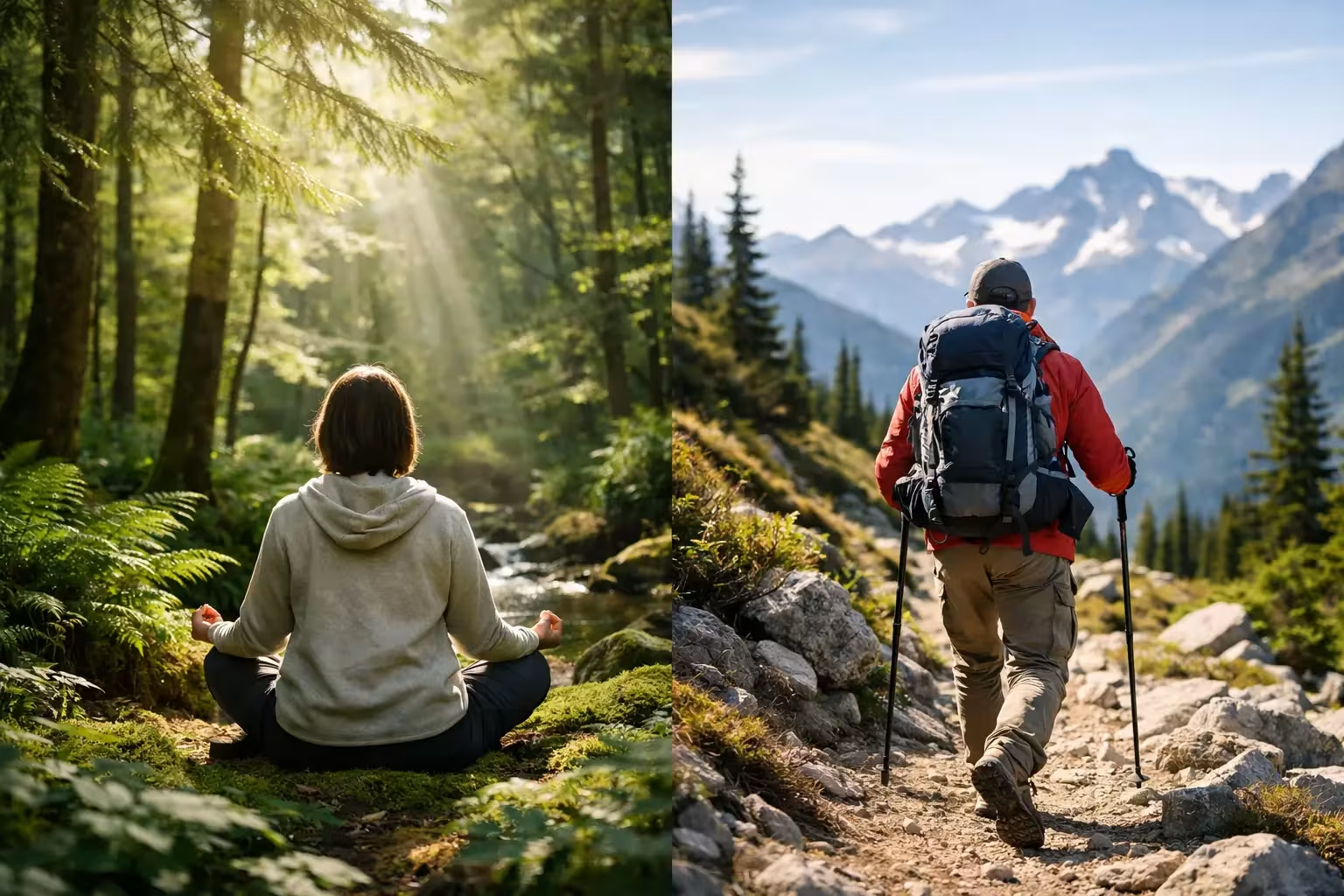
Hiking is typically goal-oriented. You cover distance, elevate your heart rate, navigate terrain, and often focus on reaching a viewpoint, completing a loop, or getting a workout. Even a relaxed hike has a directional quality. You are going somewhere.
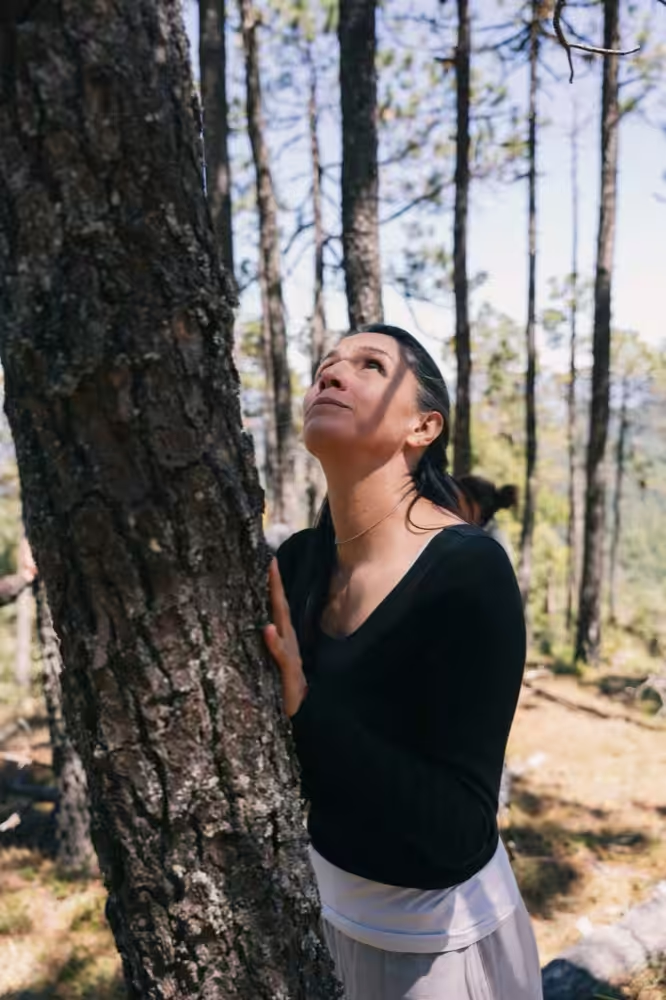
Forest bathing, or Shinrin-Yoku, is different by design. It is a guided or self-guided practice of sensory immersion in nature, usually at a slow pace, with attention placed on presence rather than performance. Instead of tracking mileage, you notice texture, scent, sound, temperature, light, and subtle bodily shifts. The point is not exercise. The point is relationship – with the natural world, with your senses, and with your own internal state.
That distinction changes the stress response. Hiking can discharge tension through movement and cardiovascular effort. Forest bathing can reduce overstimulation by lowering the demand for effort, decision-making, and speed. One tends to mobilize and regulate. The other tends to soften and restore.
How each practice affects the stress response
Stress is not one thing. Sometimes it shows up as agitation, racing thoughts, and pent-up energy. Sometimes it shows up as fatigue, irritability, emotional flatness, or the sense that your attention has been stretched too thin for too long.
Hiking often helps when stress has accumulated physically. If you have been sitting all day, staring at screens, or carrying anxiety in your muscles, a brisk walk uphill can feel clarifying. Rhythmic movement, fresh air, and moderate exertion support mood regulation and can interrupt repetitive thought patterns. For some people, hiking provides the psychological relief of momentum. You feel yourself moving forward, literally and mentally.
Forest bathing tends to be especially supportive when your system is already overloaded. Slowing down in a forest setting invites the parasympathetic response, the branch of the nervous system associated with rest and recovery. Research on nature exposure and forest-based practices has linked this kind of immersion with reduced stress markers, improved mood, and calmer attention. The pace is part of the medicine. You are not adding another task. You are reducing demand.
This is one reason forest bathing can feel surprisingly powerful for high-functioning adults who are used to pushing through stress. Many people assume they need to do more to feel better. In practice, they may need a structured way to do less.
When hiking may be the better choice
There are days when stillness feels inaccessible. If your mind is looping, your body is restless, or your mood feels heavy, a hike may be more effective than asking yourself to slow down immediately.
Movement can help stress metabolize. A moderate hike increases circulation, engages the large muscle groups, and creates a natural rhythm between breath and step. If you enjoy challenge, that sense of accomplishment can also be regulating. Reaching the top of a trail, completing a familiar route, or simply feeling physically capable can restore confidence when stress has made life feel constricted.
Hiking may also be the better fit if your primary goal includes fitness, endurance, or social connection. Many people use hiking to combine emotional well-being with physical conditioning, and that is a valid reason to choose it.
The trade-off is that not all hiking is inherently calming. Steep terrain, crowded trails, pressure to keep pace, or turning the outing into another achievement metric can recreate the same activation you were trying to leave behind. Nature helps, but the way you engage with it still matters.
When forest bathing may work better for stress relief
Forest bathing is often more effective when your stress is rooted in mental overload rather than lack of movement. If you are emotionally tired, overstimulated, decision-fatigued, or feeling disconnected from yourself, a slower practice can meet you more gently.
This matters for professionals and caregivers especially. People who hold space for others all day often do not need more intensity. They need sensory restoration, nervous system regulation, and a way to return to presence without performing wellness.
A well-held forest bathing experience creates conditions that modern life rarely offers. There is no expectation to optimize. No pressure to produce. No need to narrate your experience into a result. You simply arrive, notice, and receive what the environment offers.
That is also why forest bathing has become more than a personal wellness trend. It is increasingly taught as a structured, evidence-informed modality within coaching, mindfulness, outdoor education, and holistic health settings. For practitioners, it offers a gentle yet credible way to support stress reduction that feels both ancient and current.
Forest bathing vs hiking for stress if you are burned out
Burnout changes the equation. When stress has become chronic, the body often loses flexibility. Some people feel wired and exhausted at the same time. Others find that even enjoyable activities start to feel effortful.
In that state, hiking can help if it is easy, unpressured, and aligned with your energy. But intense hiking may ask too much from an already depleted system. Forest bathing usually has a lower barrier to entry. Because it does not require athletic effort or a productivity mindset, it can be more accessible when resilience is low.
If you have ever returned from a vigorous outdoor activity feeling proud but not actually rested, you have already felt this distinction. Exercise and restoration overlap, but they are not identical. Burnout often requires both – just not always at the same time.
You do not have to choose only one
The most sustainable answer for many people is not forest bathing or hiking. It is knowing when to use each practice skillfully.
A hike can energize and clear mental fog. Forest bathing can deepen recovery and help your system downshift. Some people begin with a short walk to discharge restlessness, then pause for 20 minutes of intentional sensory awareness under the trees. Others separate the two completely, using hikes on weekends and forest bathing during the workweek when stress is more cognitive than physical.
This blended approach is especially useful if you are building a long-term wellness routine. Stress changes from week to week. Your nature practice can be responsive instead of rigid.
How to tell what you need before you go outside
Before heading to the trail, pause for a quick internal check. Do you feel keyed up and in need of movement, or scattered and in need of softness? Is your body craving exertion, or is your attention begging for quiet? Are you looking for challenge, or for relief from demand?
Your answer will usually point you in the right direction.
If you choose hiking, let the experience stay supportive. Pick a trail that matches your current capacity. Notice when pace becomes pressure. If stress relief is the goal, you do not need to turn every walk into a test.
If you choose forest bathing, give yourself permission to move slowly enough that your senses can catch up. Turn off the usual impulse to document, measure, or evaluate. Let the forest be a place where nothing is required of you for a little while.
For those who want a deeper understanding of how this practice works, formal training can add meaningful structure. Treeming.org has helped bring forest bathing into modern wellness education through a globally recognized, science-backed online learning model that speaks to both personal well-being and professional application.
The deeper value of forest bathing
Hiking is widely respected because it is visible. It looks active, healthy, and productive. Forest bathing asks for a different kind of maturity. It asks whether you can value restoration before collapse forces you to.
That may be the real turning point in the conversation around stress. Not whether one outdoor practice burns more calories or sounds more impressive, but whether it helps you live with greater steadiness, clarity, and care.
If your stress comes from living too fast, the healing practice may be the one that teaches you how to stop hurrying long enough to feel the forest – and yourself – again.