
A busy schedule can make wellness feel like another task to buy, track, or optimize. Eco wellness offers a quieter alternative: practices that support your health while strengthening your relationship with the living world around you. It is not about being perfect, living off-grid, or replacing every item you own. It is about making choices that restore your nervous system and reduce unnecessary strain on the planet.
For many people, that begins outside. A slower walk beneath trees, a few minutes of sunlight on a balcony, or an afternoon without constant digital input can shift the quality of a day. These moments do not solve every source of stress. They can, however, create the conditions for clearer thinking, steadier attention, and a more grounded response to what comes next.
What Eco Wellness Really Means
Eco wellness connects human well-being with environmental well-being. It recognizes that clean air, green spaces, healthy food systems, accessible parks, and a stable climate are not abstract environmental concerns. They are part of the foundation of physical and mental health.
The personal side of eco wellness may include mindful time outdoors, lower-waste routines, locally informed food choices, gentler movement, and more intentional consumption. The ecological side asks a related question: does this habit demand more from the environment than it gives back?
That question matters because wellness can sometimes become overly product-driven. New supplements, elaborate home equipment, disposable packaging, and frequent deliveries may promise transformation while adding clutter, cost, and waste. A sustainable wellness practice is often less complicated. It makes room for rest, attention, movement, community, and nature – resources that do not require constant consumption.
This does not mean every choice must be minimal or that all eco-friendly products are automatically healthy. A reusable water bottle is useful only if it replaces repeated single-use purchases. Organic food can be a meaningful choice, but cost and local access vary widely. The most sustainable routine is usually the one you can maintain with consistency, not the one that looks most impressive.
Why Nature Belongs in a Wellness Practice
Humans are not separate from natural systems, even when work and daily life keep us indoors. Research into nature exposure suggests that time in green environments can support stress recovery, attention restoration, and improved mood. The details depend on the person, the setting, and the quality of the experience. A crowded trail while checking work messages may feel very different from a quiet, unhurried walk in a neighborhood park.
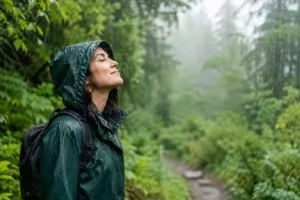
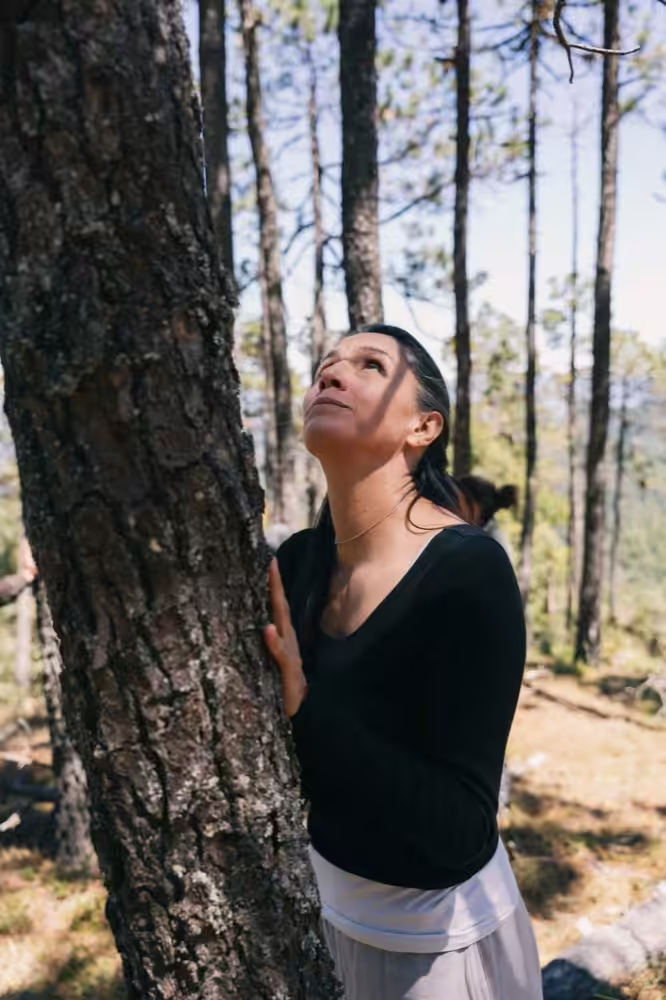
Forest bathing, also known as Shinrin-Yoku, brings intention to this connection. It is not a hike measured by distance, nor a fitness challenge. It is a mindful practice of slowing down and receiving the forest through the senses. You may notice the texture of bark, the changing temperature of the air, birdsong layered in the distance, or the scent released after rain.
This deliberate pace can be especially valuable for people whose days are shaped by screens, deadlines, caregiving, or decision fatigue. Rather than treating nature as scenery to pass through, forest bathing invites a reciprocal relationship. You arrive with attention. The natural environment offers space, sensory richness, and a rhythm that does not ask you to perform.
For wellness professionals, this distinction is essential. A guided nature experience should be designed with care for participant safety, accessibility, consent, and the land itself. A credible training pathway can help guides create meaningful sessions without overstating health claims or treating nature as a backdrop for a commercial activity.
Build an Eco Wellness Routine That Fits Real Life
The strongest routines are modest enough to survive a demanding week. Instead of redesigning your entire lifestyle, begin by noticing where nature and restoration already fit.
Start with a daily outdoor pause
Set aside ten minutes outdoors without using the time to scroll, make calls, or rush between errands. Stand near a tree, sit on a stoop, walk a quiet block, or visit a nearby green space. Let your attention settle on what is present: light, sound, temperature, movement, and breath.
The goal is not to force calm. Some days your mind will remain busy. The practice is simply returning to sensory awareness without judgment. Over time, this can become a reliable transition between work and home, or between one obligation and the next.
Choose fewer, more useful wellness tools
Before buying a new wellness product, ask whether it supports a practice you will actually use. A comfortable pair of walking shoes, a refillable bottle, or a simple journal may have more lasting value than a cabinet full of short-lived trends.
This approach protects both your budget and your attention. It also makes wellness more accessible. You do not need a perfect home, expensive gear, or remote wilderness to develop a restorative relationship with nature.
Eat with awareness, not anxiety
Food choices can be part of eco wellness, but they should not become a source of shame. If you have access, prioritize meals that are nourishing, minimally processed, and aligned with your needs and values. Reducing food waste by planning portions, using leftovers, and storing produce well is often as meaningful as chasing an idealized diet.
Seasonal and local options can lower transportation demands in some circumstances, though local is not always automatically lower impact. Growing methods, packaging, and availability also matter. Keep the focus on progress and practicality rather than rigid rules.
Let your care for nature be visible in your habits
Bring a reusable bag when it is convenient. Repair what can be repaired. Choose experiences over unnecessary purchases. Support green spaces through respectful use and community care. These actions may seem small, but they reinforce an identity rooted in stewardship rather than extraction.
Eco wellness becomes more powerful when it is not confined to private self-care. A healthy community needs shade, safe walking routes, clean public spaces, and access to nature for people of different ages and abilities. Personal restoration and environmental responsibility are connected to the conditions we help create together.
Practice Nature Connection With Respect
A meaningful relationship with nature includes restraint. When visiting forests, parks, beaches, or trails, stay on designated paths where possible, avoid disturbing wildlife, carry out what you bring in, and keep noise low. Do not collect plants, stones, feathers, or other natural materials unless it is explicitly permitted.
This is especially relevant when leading others. A guide’s presence shapes how participants understand the land. Invitations should encourage curiosity without encouraging harm. Rather than asking someone to pick a leaf or leave an object behind, invite them to observe what is already there. Rather than claiming that a forest will cure distress, create a supportive experience that complements appropriate medical and mental health care.
Professional preparation adds depth to this work. Treeming.org’s accredited Forest Bathing Guide Certification is designed for people who want to develop a science-informed, structured approach to guiding nature-based wellness experiences while supporting reforestation through enrollment.
The Deeper Benefit of Living More Lightly
Eco wellness is not a polished aesthetic. It is a practice of remembering what truly restores you. For some people, that may mean weekly forest bathing. For others, it may be tending herbs on a windowsill, walking to a local park, cooking a simple meal, or pausing before an unnecessary purchase.
The common thread is attention. When you pay attention to your body, your surroundings, and the impact of your choices, wellness becomes less about chasing an ideal version of yourself. It becomes a steadier way to care for the life you are already living.
This week, choose one small place outdoors and return to it more than once. Notice what changes there, and what changes in you when you give that place your full attention.