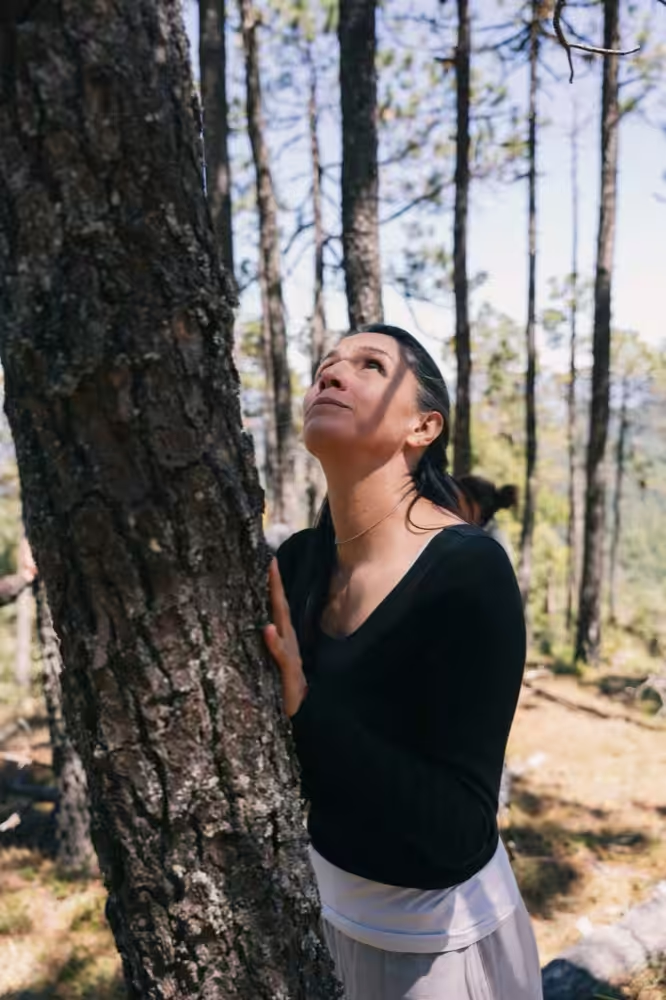

A woodpecker tapping somewhere beyond the trail can become a gentle anchor for attention. So can the rush of a creek, the movement of leaves, or the sound of your own footsteps settling into softer ground. When people ask about the best forest bathing music or silence, the most useful answer is not a universal rule. It is an invitation to notice what helps you arrive fully in the place you are standing.
Forest bathing, or Shinrin-Yoku, is not about hiking farther, reaching a destination, or creating the perfect mood. It is a mindful practice of receiving the forest through the senses. Sound matters because it can either deepen that relationship or place a layer between you and the living environment.
Why sound changes a forest bathing practice
The auditory environment helps shape the nervous system’s sense of safety and attention. In a forest, natural soundscapes offer continual, subtle variation: birds calling from different distances, wind moving through branches, water changing pace over stone. This is not silence in the strictest sense. It is an opportunity to rest from the concentrated, task-driven listening demanded by calls, traffic, notifications, and conversation.
For many people, this natural soundscape supports a slower, broader form of attention. Rather than searching for the next thing to do, the mind can begin to notice what is already here. That shift is central to forest bathing. Research into time spent in natural settings continues to associate nature immersion with lower perceived stress, improved mood, and restored attention. Forest bathing is not a replacement for medical or mental health care, but it can be a meaningful supportive practice for well-being.
Music can also influence mood and physiology. A familiar instrumental piece may help someone transition out of a demanding workday, especially when their thoughts are racing. The question is whether the music serves as a short bridge into presence or becomes the main event.
Is silence best for forest bathing?
In most cases, natural quiet is the strongest starting point. This does not mean seeking an impossibly silent forest or judging every airplane overhead as a failure. It means intentionally reducing added sound so the forest has room to speak in its own textures.
Without headphones, you may notice the direction of the wind, the small pauses between bird calls, or the way rain changes the scent and tone of a trail. These observations bring the body into the present moment. They can also improve situational awareness, which is especially valuable when practicing alone or on a shared trail.
Silence is not always easy at first. Some people encounter restlessness when there is no podcast, playlist, or conversation to occupy the mind. That response is common. It may be a sign to make the practice gentler, not to abandon it. Begin with ten unhurried minutes. Let your attention move among three sounds: one close by, one in the middle distance, and one far away. There is no need to force calm. Simply listen.
For guides and wellness professionals, natural quiet also creates space for participants to have an unfiltered experience. A carefully facilitated invitation followed by quiet can be more powerful than continuous explanation. It respects the forest as a co-facilitator rather than treating it as background scenery.
When forest bathing music can help
Music is not inherently at odds with forest bathing. Its value depends on timing, intention, volume, and the individual. Someone living near a loud urban park may use quiet, nonverbal music briefly to settle before beginning a practice. A person new to mindfulness may find that a simple sound cue helps them move from work mode into a receptive state.
If you choose music, let it be minimal and temporary. Instrumental music without lyrics is generally less likely to pull attention into memories, interpretation, or mental rehearsal. Keep the volume low enough that you can still hear birds, approaching cyclists, and changes in the environment. Better yet, listen before you enter the trail, then remove your headphones for the main portion of the practice.
Avoid using music to manufacture an emotion. A forest bathing session does not need to feel serene every minute. You may feel tired, distracted, grateful, sad, energized, or neutral. The practice is about meeting your experience with curiosity while remaining connected to nature. A playlist designed to produce a specific emotional peak can make that honest connection more difficult.
There are practical considerations as well. Headphones can reduce awareness of wildlife, weather changes, other visitors, and trail hazards. They may also create a sense of private enclosure in places where shared etiquette matters. If you are guiding a group, playing music aloud can interrupt other visitors’ experiences and is rarely necessary.
Choose based on your purpose, not a rule
The best choice becomes clearer when you identify what you need from the session. If your aim is sensory restoration and a deeper relationship with place, begin without music. If you need help crossing the threshold from a noisy, pressured day into a quieter state, use a short musical transition, then let the natural soundscape take over.
Consider these four questions before you leave the trailhead:
- Am I using music to arrive in my body, or to avoid what I might feel without it?
- Can I hear the environment clearly enough to remain safe and responsive?
- Will this sound support my attention to the forest, or compete with it?
- Is this a solo practice, or could my audio choice affect others sharing the space?
Your answers may change from day to day. A familiar neighborhood park at noon may call for a different approach than a quiet woodland after rainfall. Flexibility is part of mindful practice.
A simple sound practice for deeper immersion
Try this before deciding whether you need music. Stand or sit comfortably at the edge of the forest for one minute. Do not name or evaluate what you hear. Just receive it.
Next, identify the nearest sound. It may be your breath, a leaf moving against your jacket, or gravel under a shoe. Then open to the farthest sound you can perceive. Finally, notice the sounds in between. Allow your attention to widen and soften rather than locking onto one source.
Continue walking slowly for several minutes. Each time you feel pulled into planning or problem-solving, return to listening. You are not trying to clear the mind by force. You are giving it a more nourishing place to rest.
If you still feel highly activated after this exercise, pause on a bench or at a safe spot and use one or two minutes of gentle instrumental audio. When you remove it, notice whether the forest sounds feel sharper, softer, or simply more available. That comparison can teach you more about your own needs than any fixed prescription.
Guidance for professionals leading sessions
For aspiring forest bathing guides, sound choices are part of ethical, participant-centered facilitation. Before a session, communicate that quiet periods are intentional and that participants may step aside if they need support. Offer invitations that direct attention toward sound, but avoid interpreting what participants should feel.
Music may have a place in an opening grounding exercise or a closing indoor reflection, particularly in a retreat setting. In the forest itself, use it sparingly. Natural sound helps participants build confidence in their own sensory awareness, and it honors the particular character of the place.
High-quality training in forest bathing helps guides understand this distinction: a meaningful session is not created by adding more stimulation. It is created through skillful pacing, clear safety practices, thoughtful invitations, and respect for both people and ecosystems. Treeming’s accredited Forest Bathing Guide Certification approaches these practical decisions through a science-informed, professionally grounded framework.
The next time you enter a forest, leave a little room before pressing play. Pause at the threshold, listen for what is already alive around you, and let that first honest sound guide the practice that follows.