A forest bathing session does not begin when someone reaches a remote trailhead. It begins when they are invited to notice the living world around them. To adapt forest bathing for mobility needs is to honor that essential truth: meaningful nature connection is not earned through distance, speed, balance, or endurance.
Shinrin-Yoku, often translated as forest bathing, is the mindful practice of immersing the senses in a natural environment. Research associated with time in nature suggests benefits for stress, attention, mood, and physiological relaxation. Yet standard images of forest bathing often feature people walking through wooded trails. That image can unintentionally exclude people who use wheelchairs, walkers, canes, oxygen equipment, or who live with pain, fatigue, limited stamina, or changing mobility.
An accessible practice is not a watered-down version of forest bathing. With intentional preparation and inclusive guiding, a patio, garden, accessible park path, shaded courtyard, or view from an open window can become a place for restoration. The goal is not to cover ground. It is to deepen relationship.
Adapt Forest Bathing for Mobility Without Lowering the Experience
Forest bathing is sensory, unhurried, and invitational. Those qualities make it naturally adaptable. A guide or individual practitioner can shift the focus from movement through a landscape to presence within it.
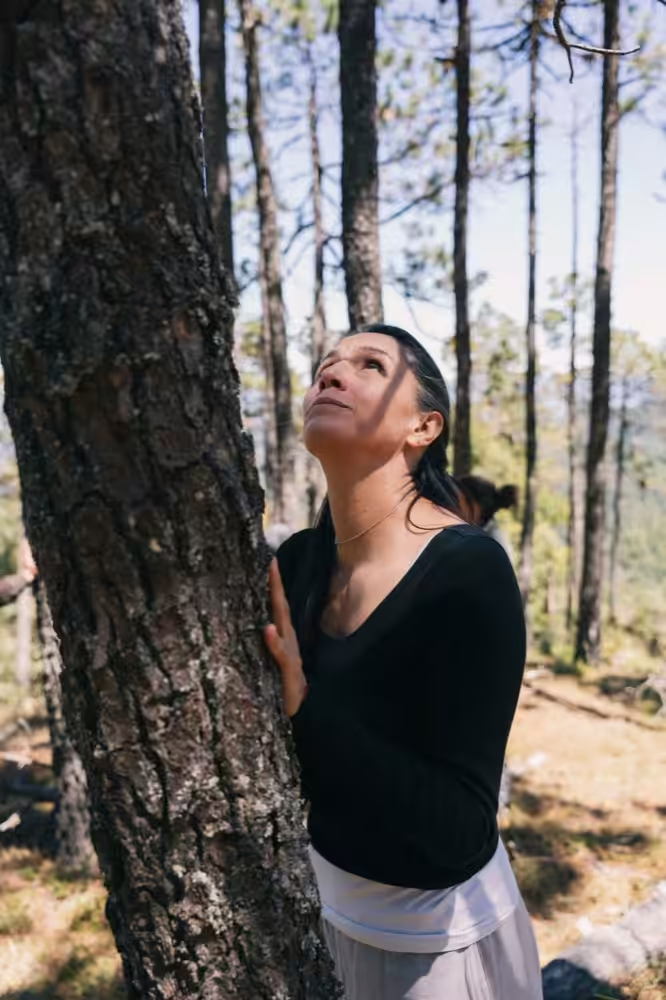
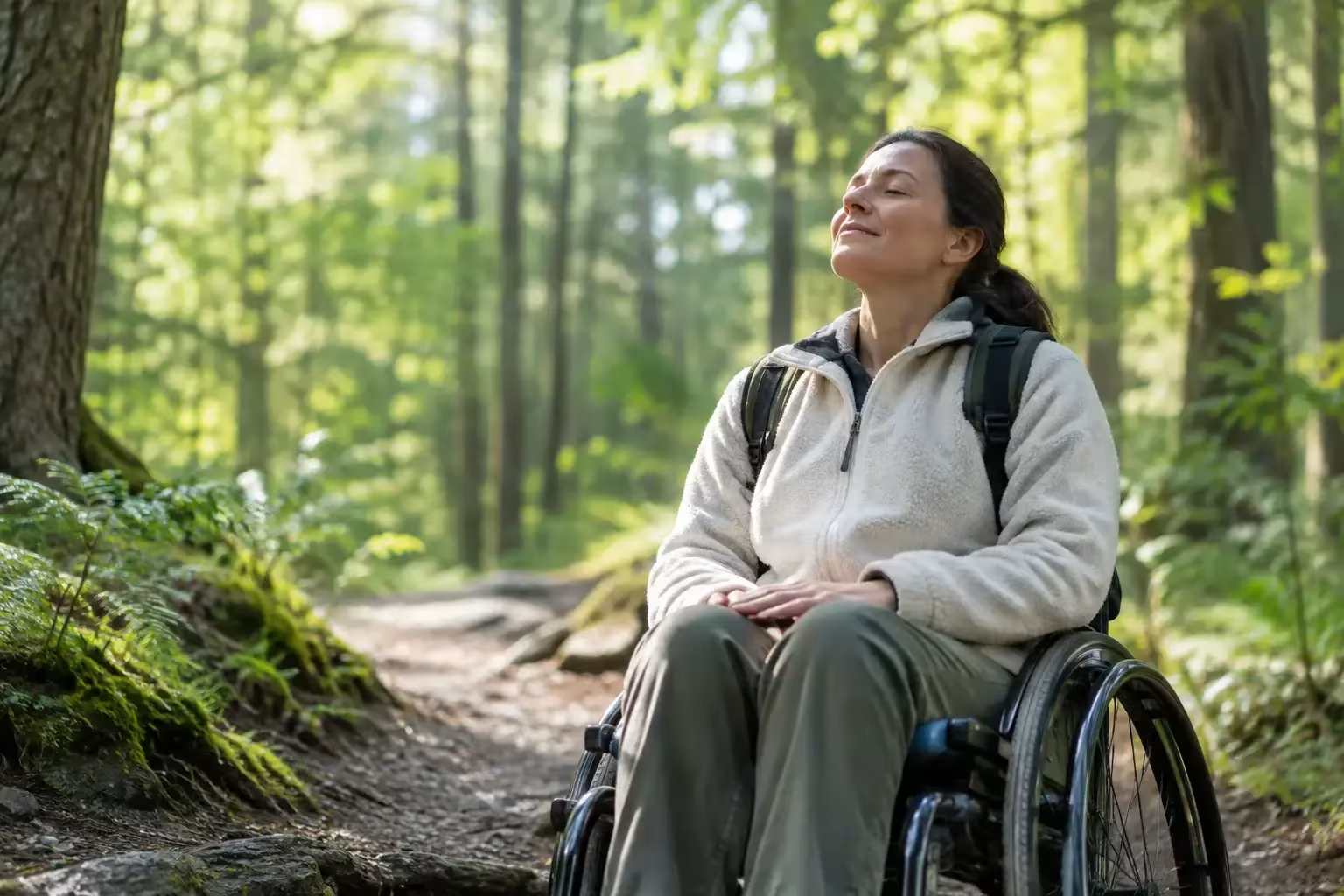
A person may spend an entire session seated beneath a tree, feeling shifting air on their hands, listening to birds move between branches, or tracing the texture of bark with their eyes. Another may choose a smooth, paved loop with frequent pauses. Someone managing fatigue may participate in shorter intervals, resting between invitations. Each approach can support the core practice: opening the senses and allowing the natural world to be encountered without pressure to perform.
The most useful question is not, “How far can we go?” It is, “What would help you feel safe, comfortable, and fully present here?” That question changes both the physical plan and the emotional tone of a session.
Avoid assuming that mobility needs are visible or fixed. Chronic pain, neurological conditions, sensory processing differences, cardiac concerns, recovery from injury, and fluctuating energy can all affect how a person experiences outdoor time. Ask participants what support they prefer, then respect their answer without requiring personal medical details.
Choose the Place Before You Choose the Practice
Access begins with site selection. A beautiful location that creates anxiety about parking, surfaces, restrooms, or getting stranded is unlikely to feel restorative. For personal practice, choose the setting that makes returning to nature realistic. For professional sessions, describe access conditions accurately before people register.
A suitable site does not have to be deep wilderness. Community gardens, botanical gardens, urban tree canopies, accessible nature centers, quiet waterfronts, and residential green spaces can all offer rich sensory experiences. The best setting depends on the participant, weather, transport options, and the purpose of the session.
Before arriving, consider practical details such as the firmness and width of paths, slope, curb cuts, accessible parking, seating, shade, restroom availability, cell reception, and the distance between key points. Check whether gates, gravel, roots, mud, sand, or seasonal flooding may affect access. Online descriptions can be incomplete, so visiting the site yourself is often the most reliable preparation.
For group guides, offer a clear access note rather than vague wording like “easy walk.” Explain the route length, typical surface, elevation changes, available seating, restroom distance, and whether participants can remain in one location while others explore. This information gives people agency before the session begins.
Build a Session Around Choice and Rest
Forest bathing invitations work best when they are offered, never imposed. That principle is especially valuable when adapting for mobility. Use language such as, “If it feels comfortable, you might…” or “You are welcome to explore this from where you are.” Participants should know that changing position, resting, opting out, or ending early are all welcome choices.
A slower pace is not merely an accommodation. It can be central to the practice. Plan more time than you think you need. A session may include only a short movement period followed by extended sensory invitations, shared reflection, and quiet rest. This creates room for everyone to settle rather than feeling hurried to keep up.
Seating deserves careful thought. Some people prefer to bring their own camp chair, wheelchair, or mobility device; others may benefit from a stable bench with arms and a back. Portable stools can help, but only when the ground is level and transfers are safe. Do not assume someone wants help standing, pushing, or navigating an obstacle. Ask first, wait for consent, and follow their direction.
Weather planning also matters. Heat can intensify fatigue, while cold, wind, rain, or uneven leaf cover can change a route quickly. Provide a simple weather contingency, such as a sheltered outdoor space, a shorter route, or a nature-based practice near a large window. Flexibility protects the quality of the experience.
Use Invitations That Bring the Forest Closer
When walking is not the center of the session, the senses become even more available. A strong invitation is specific enough to offer direction and open enough to allow an individual response.
You might invite participants to notice the furthest natural sound they can hear, then the closest. They may observe how many shades of green, brown, or gold are present in one small area. They can feel the temperature difference between sun and shade, watch a branch move in the breeze, or hold a fallen leaf if they choose. A tabletop collection of natural materials can support touch-based exploration when reaching the ground is difficult.
Visual and auditory practices are particularly adaptable, but do not overlook scent and the body’s felt experience. Invite someone to notice the smell after rain, the warmth of sunlight on a sleeve, or the rhythm of their breath while looking at a tree. If scent sensitivity, allergies, or respiratory conditions are present, make every sensory invitation optional and avoid strongly scented materials.
Technology can be useful when it serves presence rather than distraction. A participant might use a phone to magnify a lichen pattern, identify a birdsong later, or photograph a detail that feels meaningful. There is no single correct way to attend. The practice should meet the person where they are.
Create Inclusive Group Culture
Accessibility is not solved by terrain alone. Participants also need to feel that they belong. Begin by naming the group agreement: each person is invited to move, rest, observe, or participate in ways that support their body. Normalize different paces from the start, rather than presenting adaptations as exceptions.
For shared circles, choose a gathering location where everyone can enter and position themselves comfortably. Keep voices audible without requiring people to stand close together. During reflective sharing, allow participants to speak, write, remain quiet, or pass. Silence is a valid response in forest bathing, and so is choosing not to disclose personal experiences.
If you guide professionally, accessibility planning is part of ethical, high-quality practice. Training that combines mindful facilitation with a science-backed understanding of nature-based wellness can help guides design sessions with more confidence. Treeming.org’s Forest Bathing Guide Certification emphasizes structured, flexible facilitation that can be applied across many settings and participant needs.
At the same time, know the scope of your role. Forest bathing can complement well-being practices, but it is not a substitute for medical assessment, physical therapy, or mental health care. Do not promise medical outcomes. When a participant has health concerns that may affect outdoor participation, encourage them to consult an appropriate healthcare professional and make choices aligned with their care plan.
A Small Practice Can Be a Complete Practice
The belief that nature connection must be dramatic can keep people from receiving its everyday benefits. Five quiet minutes near a tree outside an apartment building may be more nourishing than an ambitious outing that leaves someone depleted. Consistency often matters more than intensity.
Try creating a personal ritual that is easy to repeat. Visit the same accessible green space once a week. Sit by a window during morning light and observe the sky, leaves, or visiting birds. Place a chair near a planted area and spend a few minutes listening without trying to achieve anything. Returning to the same place can reveal small seasonal changes and build a deeper sense of relationship.
Forest bathing asks for attention, not athleticism. When access, comfort, and personal choice are treated as essential parts of the practice, nature becomes more available to more people. The next restorative encounter may be waiting at the end of a paved path, beside a garden bench, or just beyond the nearest open door.